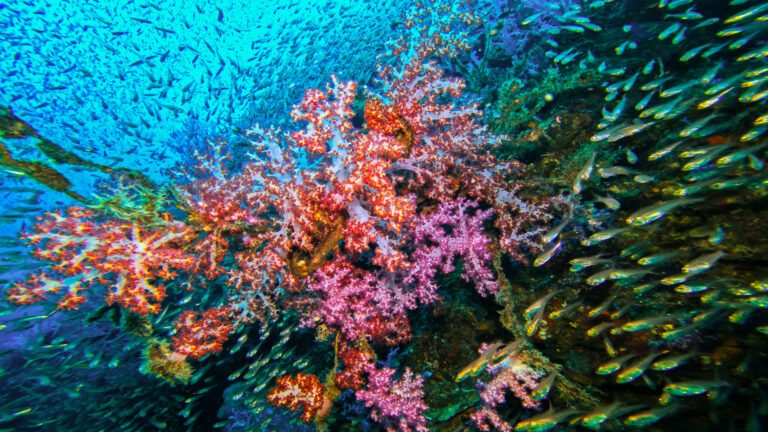

Central Raja Ampat Dive Sites: Expert Guide to Conditions, Currents & Marine Life (2026)
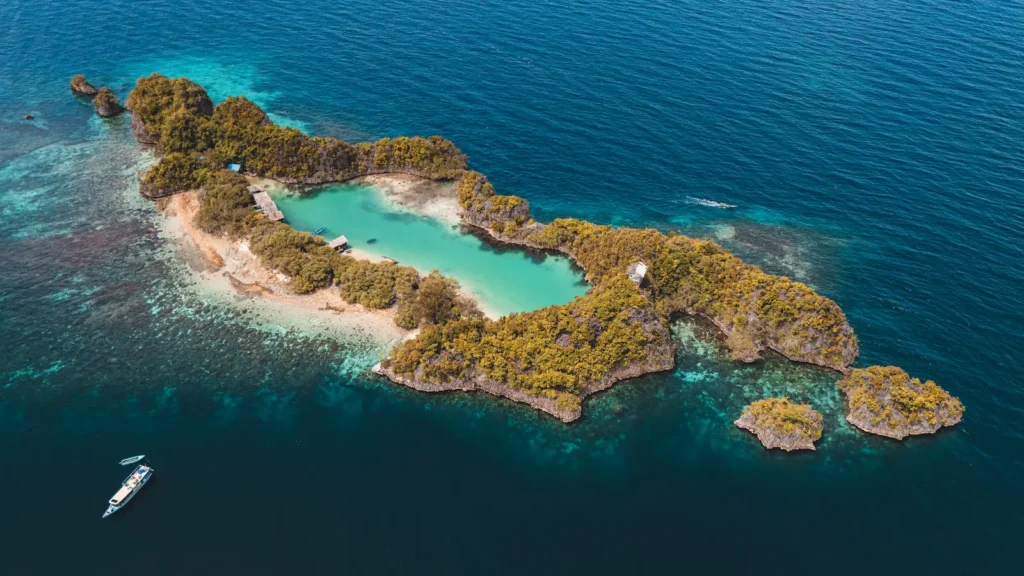
Advanced Divers Edition — What You Really Need to Know Before Diving Central Raja Ampat Dive Sites and the Dampier Strait
Most guides to Raja Ampat describe a tropical paradise untouched by time.
But if you’re planning a trip now, in 2026, you need an updated, realistic, professionally informed perspective — especially on the Dampier Strait, the beating heart of diving in Central Raja Ampat.
This guide goes beyond “top 10 lists” and into:
Site-by-site current patterns
Marine life signatures
2025 bleaching observations
Entry strategies & depth considerations
Suitability by diver level
How conditions compare to pre-bleaching years
It is written for divers who want depth, accuracy, and expert insight — not generic overviews.
Table of Contents
🌊Why the Dampier Strait Demands Experience
Even before the 2023–2024 global bleaching event, Central Raja Ampat was known for:
Strong horizontal currents
Sudden downcurrents & back eddies
High-energy split entry techniques
Exposed pinnacles rising from deep water
In 2026, these conditions remain — but the margin for error is smaller because coral structures are more fragile after thermal stress.
This region is not suitable for:
Newly certified divers
Divers who struggle with positioning in current
Divers who cannot manage depth changes under stress
Minimum recommended level:
➡️ Advanced Open Water
➡️ 30+ dives
➡️ Good trim and buoyancy
➡️ Comfortable clearing masks and equalising in current
➡️ Familiar with negative entries
🪸 How Bleaching Has Changed Central Raja Ampat Dive Sites (2026)
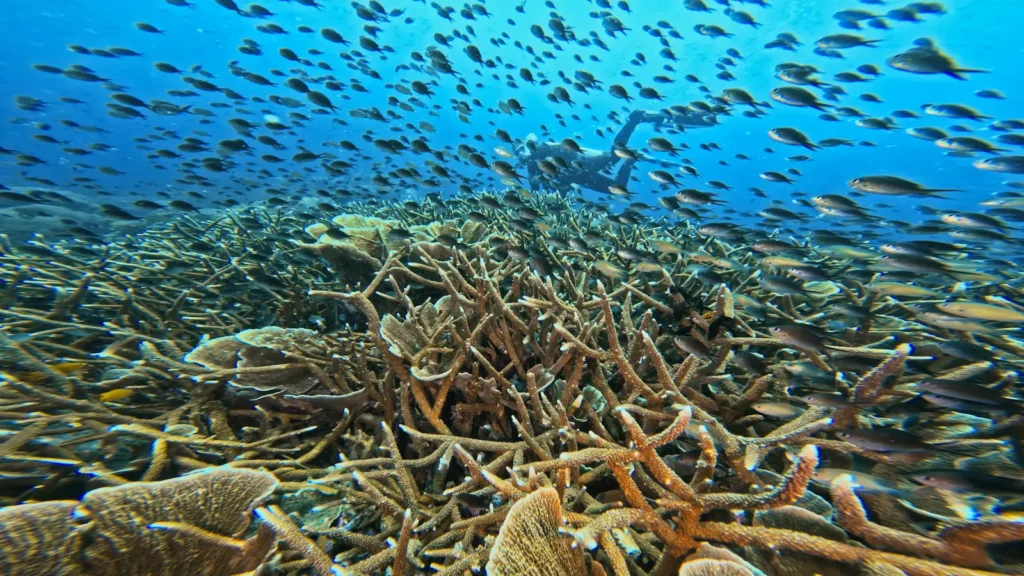
Bleaching affects structure-dependent species first, particularly:
Table corals (Acropora hyacinthus)
Staghorn corals (Acropora cervicornis equivalents)
Cabbage corals (Montipora spp.)
Shallow acropora fields
This means:
Some sites show patchy damage
Others still look astonishingly healthy
Fish biomass remains high
Manta cleaning stations fluctuate in activity
The overall takeaway:
Marine life remains phenomenal, but shallow coral ecosystems are under visible stress — especially at sites like Chicken Reef and parts of Cape Kri.
🐠 Expert Central Raja Ampat Dive Site Guide (Marine Life, Currents, Bleaching)
Cape Kri — The Biodiversity Benchmark
Depth: 5–35m
Difficulty: Advanced
2025 Coral Status: Patchy bleaching
Why It’s Famous
Cape Kri has recorded the highest fish species count on a single dive site anywhere on Earth (Dr. Gerry Allen, Conservation International).
Marine Life Signatures
Barracuda & trevally hunting
Tuna pass-bys
Massive sweetlips and snappers
Pygmy seahorses on gorgonians
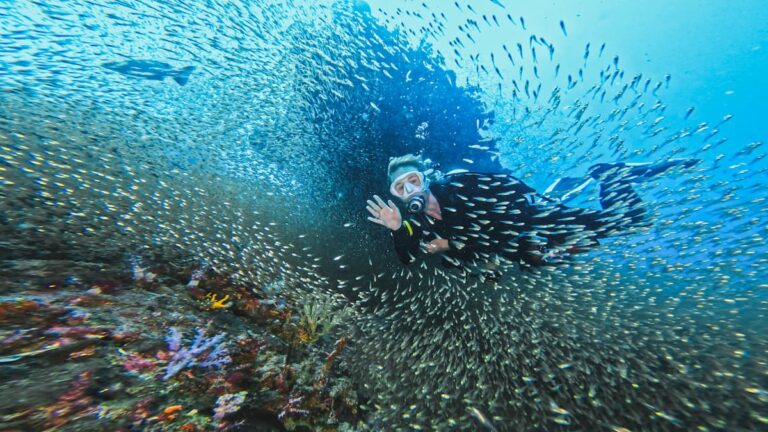
Dense anthias clouds
Blacktip and whitetip reef sharks
Current Pattern
The site sits on the point where two tidal systems meet — resulting in unpredictable surges.
2026 Reality Check
When current is weak, the bleaching is starkly visible.
When current is strong, animal biomass still explodes across the reef.
Sardine Reef — Pelagic Action & Surprising Resilience
Depth: 5–30m
Difficulty: Intermediate–Advanced
Coral Status: One of the healthier central sites
Why Divers Love It
The circular reef topography creates an amphitheatre effect, trapping big fish action.
Marine Life
Barracuda rings
Surgeonfish rivers
Batfish squads
Wobbegong sharks
Occasional mobulas
Hardier coral species thriving despite heat stress
Sardine performed far better than expected during our trip in 2025.
Chicken Reef — Once Iconic, Now Highly Impacted
Depth: 5–25m
Difficulty: Intermediate
Bleaching Level: Severe
What It Was Known For
In 2019: coral bommies so alive they appeared to “pulse,” with halos of juvenile fish.
2026 Condition
Many bommies now 50–70% reduced
Large dead patches
Broken sea fans
Table corals have collapsed
Marine Life Still Present
Mixed reef fish
Sweetlips
Occasional small sharks
Healthy coral pockets guided by experienced DMs
A sombre, essential dive for understanding Raja Ampat’s fragility.
Mioskon — The Snapper Cathedral
Depth: 5–25m
Difficulty: Moderate
Coral Status: Mild bleaching but visually rich
Why It Often Surprises Divers
The site’s unusual shape and sandy transitions attract tons of life, including:
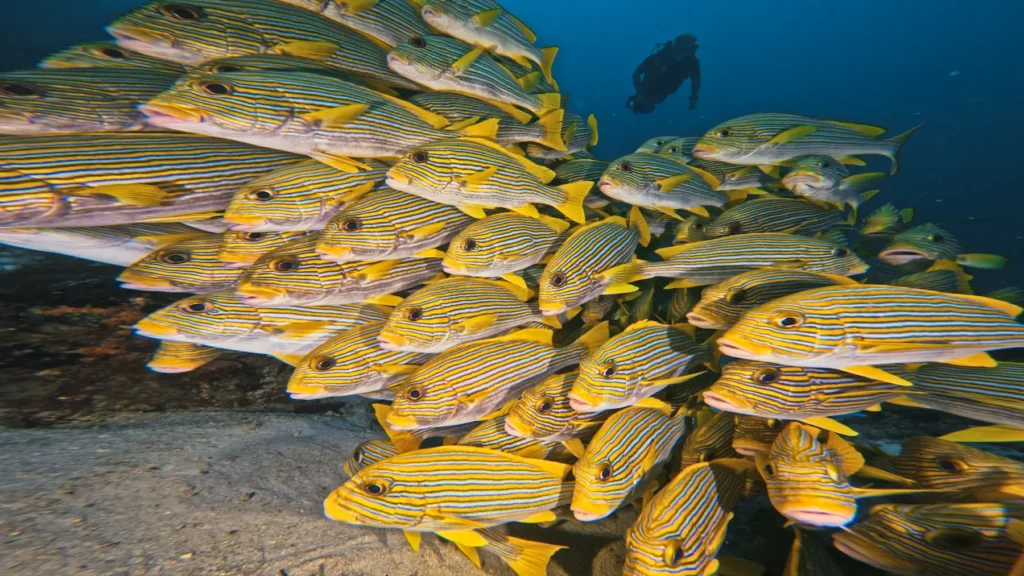
Huge schools of yellow snappers
Sweetlips columns
Baitfish tornados
Wobbegongs on the sandy slopes
Morays and juvenile species
Visibility is typically low, but biomass is high.
Blue Magic — The Manta Wildcard
Depth: 10–30m
Difficulty: Expert
Coral Status: Moderate
Historic Reputation
One of the most iconic manta cleaning stations in Raja Ampat.
Why It’s Challenging
Rapid current acceleration over the pinnacle
Frequent need for negative entry
Risk of being blown off the site
2026 Reality
Some professionals admitted to fewer manta sightings
New boat restrictions require pre-booking (to encourage manta activity back more frequently)
Our dive: extremely strong current, zero chance to hold position
Still worth attempting, but requires perfect conditions.
Watch the Vlog Featuring:
• Manta Sandy — cleaning stations and close manta encounters
• Arborek Island — iconic coral gardens & local village life
• My Reef, Piaynemo — vibrant reef slopes & schooling fish
• Fam Islands — crystal lagoons & perfect end to a dive day
Melissa’s Garden — The Coral Crown of Raja Ampat
Depth: 5–25m
Difficulty: Intermediate
Bleaching: Mild patches affecting cabbage corals
Crowning Glory Features
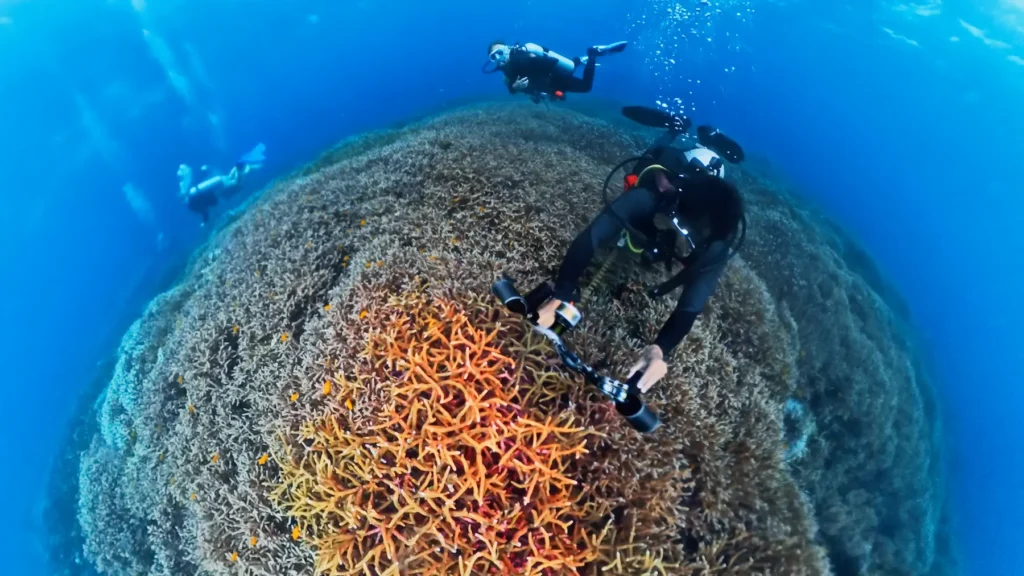
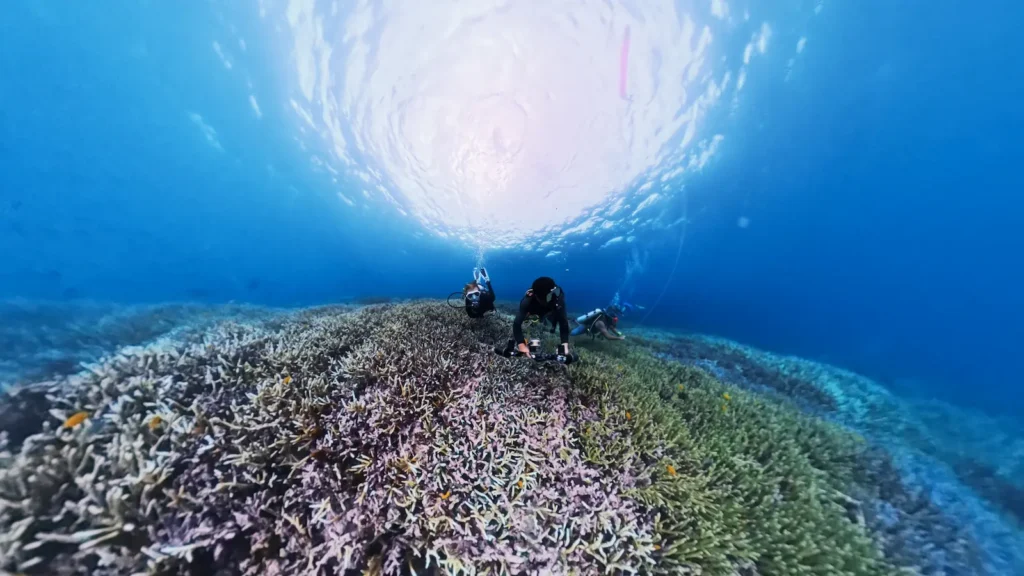
Massive fields of staghorn acropora
Endless anthias clouds
Juvenile reef fish nurseries
Blacktip shark patrols
2026 Condition
Still one of the healthiest and most visually spectacular reefs in the Dampier Strait — a genuine relief after Chicken Reef.
Batu Rufus — Soft Coral Walls & Sea Fan Archway
Depth: 5–30m
Difficulty: Moderate
Bleaching: Mild, but lagoon trash present
Site Highlights
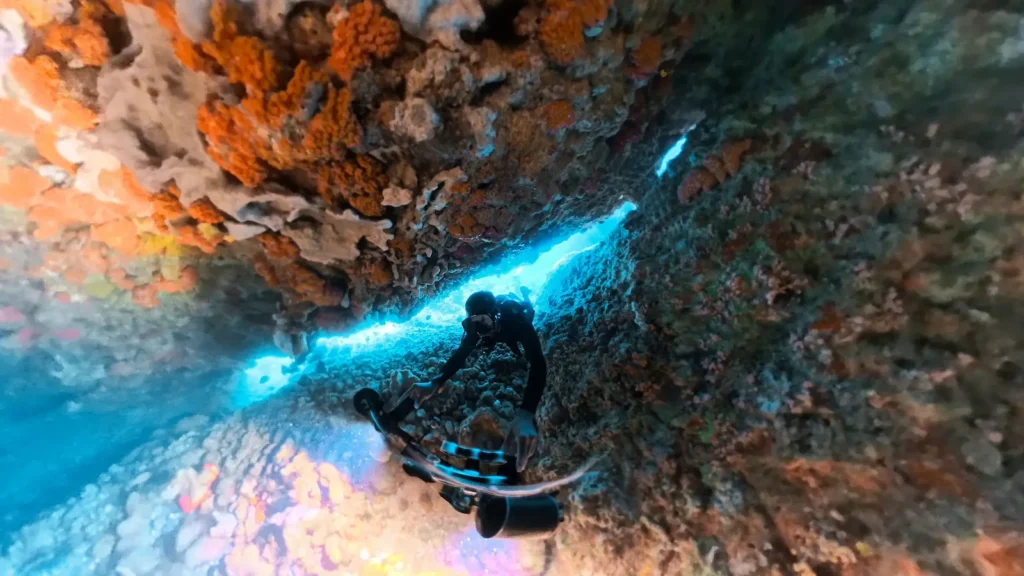
Dramatic wall covered in soft corals
Overhangs with giant sea fans
A natural stone archway leading into a blue lagoon
Pygmy seahorses (Denise & Bargibanti species)
A site that feels like three dives in one.
Mayhem — Predator Playground
Depth: 10–28m
Difficulty: Advanced
Bleaching: Mild–Moderate
Why Advanced Divers Love It
Named for the swirling fish chaos created by converging currents:
Trevallies
Barracuda
Giant sweetlips
Swarming fusiliers
Despite some heat stress, Mayhem remains one of the top “fish action” dives in Central Raja Ampat.
Watch The Vlog Featuring:
• Melissa’s Garden — Raja Ampat’s most expansive staghorn coral reef
• Batu Rufus — The underwater archway of dreams
• Mayhem — Central Raja Ampat’s adrenaline-filled pinnacle
Yenbuba Jetty — A Lesson in Sustainability
Depth: 1–10m
Difficulty: Easy
Bleaching: Human impact more severe than thermal bleaching
Problems
Fish-feeding
Snorkellers standing on coral
Disrupted predator-prey dynamics
Plastic waste
A powerful reminder of how quickly tourism can damage fragile ecosystems.
Current Behaviour in Dampier Strait and Central Raja Ampat Dive Sites
Currents are influenced by:
Tidal swings
Narrow channels between islands
Rising submarine topography
Wind direction
Expect:
Split currents at pinnacles
Downcurrents on reef edges
Back eddies behind coral structures
This is why buoyancy mastery is essential.
🧭Safety & Environmental Considerations
Negative entry when instructed
Stay streamlined
Avoid contact with walls in high flow
Maintain safe distance from bleached corals
Use finger spools for SMBs in drift exits
Never chase mantas or large predators
WATCH NOW...
❓ FAQs
Are Central Raja Ampat Dive Sites still worth diving in 2026?
Yes — fish biomass remains world-class and many reefs are still breathtaking.
Are these sites suitable for beginners?
No. Strong currents and fragile coral structures require experience.
Will oceanic manta rays still appear at Blue Magic?
Possibly, but sightings have been reported as more irregular than previous years.
Is bleaching permanent?
Some coral may recover, but many table and cabbage corals are severely impacted.