
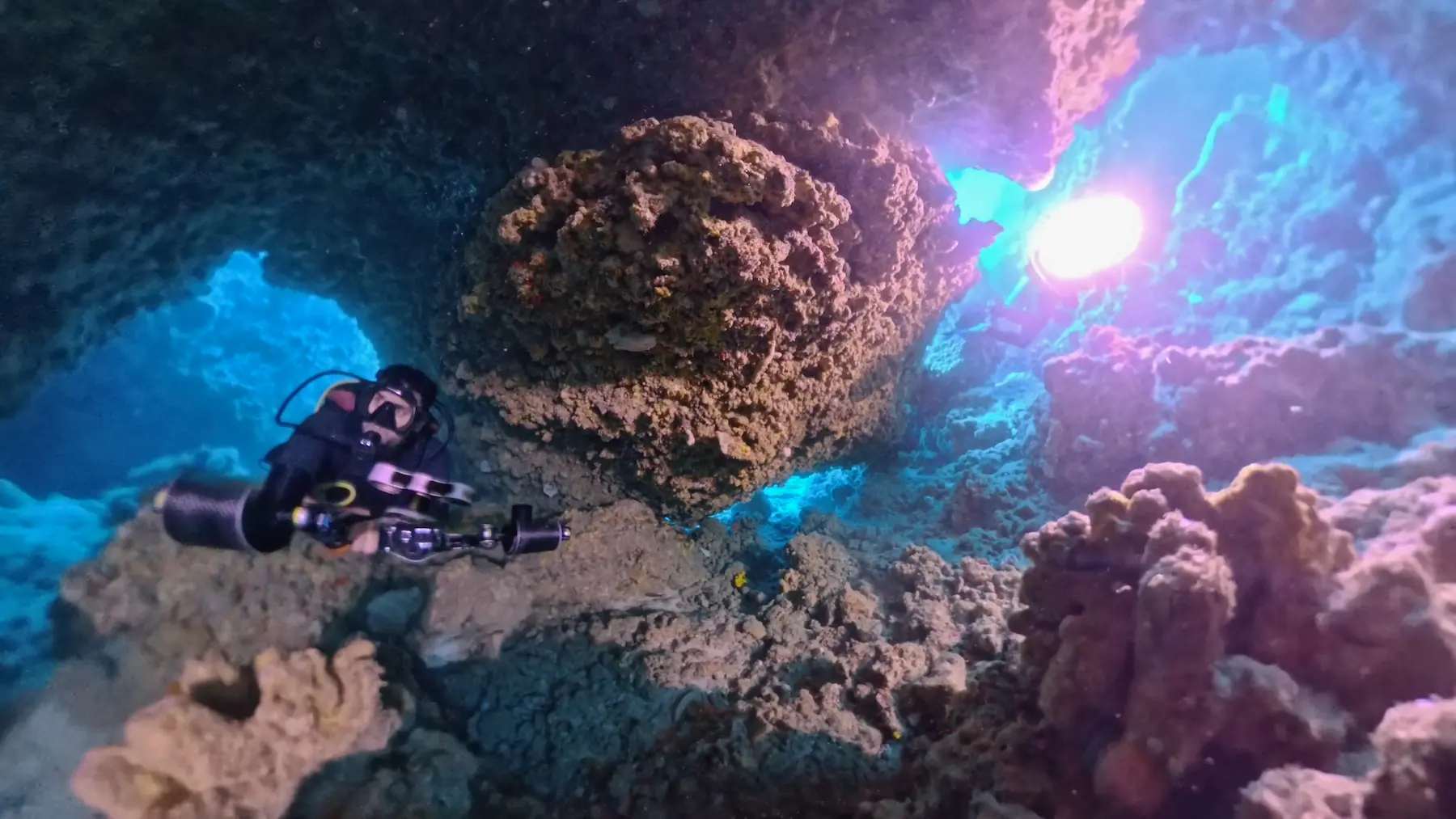
Best Dive Sites Near Kuta Lombok: South Lombok’s Hidden Reefs
When most people think about Kuta Lombok, diving isn’t the first thing that comes to mind.
The town has built its reputation around surfing, drawing wave riders to the dramatic bays scattered along Lombok’s southern coastline.
But just beyond those same cliffs and headlands lies a series of dive sites that remain surprisingly under the radar.
While destinations like Komodo and Raja Ampat dominate Indonesia’s dive headlines, the reefs off South Lombok offer something increasingly rare: uncrowded dive sites, interesting topography, and excellent macro life.
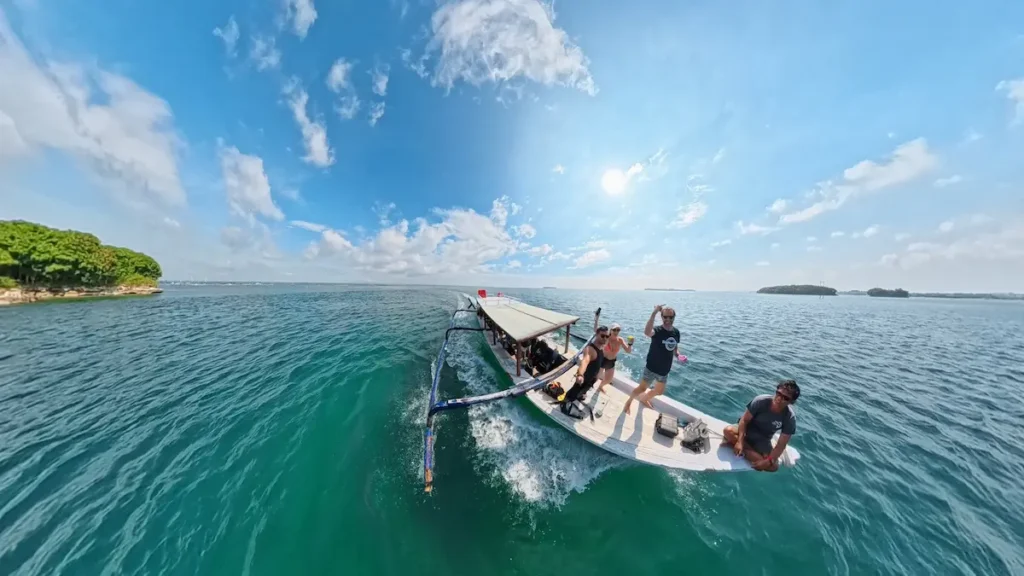
Most divers exploring these sites visit with operators such as Blue Marlin Dive Kuta Lombok, who run daily trips from Kuta town to the southeastern coast of the island.
After a scenic drive through Lombok’s countryside and a short boat ride, divers reach a collection of reefs, walls, and sandy slopes that together form one of Indonesia’s most underrated dive regions.
Kuta Lombok Diving: Quick Overview
Feature | Details |
Dive region | South-East Lombok |
Dive hub | Kuta Lombok |
Access | Drive + boat trip |
Boat travel time | 30–45 minutes |
Dive style | Reef, wall and macro diving |
Skill level | Beginner to advanced |
Crowds | Low |
Where Are the Dive Sites Near Kuta Lombok?
Unlike many Indonesian dive destinations, the dive sites near Kuta Lombok are not located directly offshore from town.
Instead, divers travel by road across Lombok’s southern countryside to reach a small jetty along the south-eastern coastline.
From there, dive boats travel offshore to a cluster of reefs and rocky outcrops scattered along the coast.
Because of this setup, these reefs are generally accessed only through dive centres based in Kuta Lombok, making the town the main base for exploring South Lombok’s underwater world.
Best Dive Sites Near Kuta Lombok
| Dive Site | Skill Level | Dive Type | Highlights |
|---|---|---|---|
| Gamechanger | Intermediate–Advanced | Wall / Cavern | Dramatic wall dive with cavern swim-through |
| Halfway House | Intermediate | Reef / Macro | Coral ledges and strong macro life |
| Coral Garden | Beginner | Shallow Reef | Calm reef ideal for training dives |
| Macro Bay | All Levels | Sandy / Macro | Excellent macro photography site |
| Cumi Cumi | All Levels | Muck / Macro | Dedicated muck diving site with rare critters |
| Nusa Tiga | Beginner–Intermediate | Reef | Colourful coral reef and schooling fish |
| Gili Gede | Beginner–Intermediate | Reef | Healthy coral reef and diverse marine life |
| Secret Reef | Intermediate | Reef / Macro | Mixed coral terrain with strong macro potential |
| The Reef | Beginner | Coral Reef | Gentle reef dive ideal for new divers |
Dive Site Conditions and Experience Levels
Conditions can vary between dive sites near Kuta Lombok, particularly depending on currents and depth. The table below provides a quick overview of typical dive conditions.
| Dive Site | Depth Range | Current | Experience Level | Best For |
|---|---|---|---|---|
| Gamechanger | 18–30m | Moderate | Advanced Open Water | Wall diving and cavern swim-through |
| Halfway House | 15–25m | Mild–Moderate | Intermediate | Macro life and coral ledges |
| Coral Garden | 6–18m | Mild | Beginner | Training dives and relaxed reef exploration |
| Macro Bay | 10–22m | Mild | All Levels | Macro photography |
| Cumi Cumi | 8–20m | Mild | All Levels | Muck diving and rare macro species |
| Nusa Tiga | 12–25m | Mild | Beginner–Intermediate | Colourful reef diving |
| Gili Gede | 10–20m | Mild | Beginner–Intermediate | Coral formations and reef fish |
| Secret Reef | 12–24m | Mild–Moderate | Intermediate | Macro discoveries |
| The Reef | 8–18m | Mild | Beginner | Easy reef dive |
Best Dive Sites Near Kuta Lombok
Here are some of the best dive sites near Kuta Lombok:
Gamechanger
If there is one dive site that captures the adventurous spirit of South Lombok diving, it’s Gamechanger.
This dramatic site features a steep wall formation carved into volcanic rock, creating a striking underwater landscape.
One of the highlights is a large cavern swim-through, where divers can pass through the rock face before emerging back onto the reef.
Conditions here can be dynamic.
Currents occasionally sweep along the wall, and cooler water upwellings sometimes bring nutrients from deeper layers.
For that reason, Gamechanger is generally best suited for Advanced Open Water divers or experienced divers comfortable with current.
The payoff is an exciting dive profile and the chance to encounter larger pelagic visitors.
Halfway House
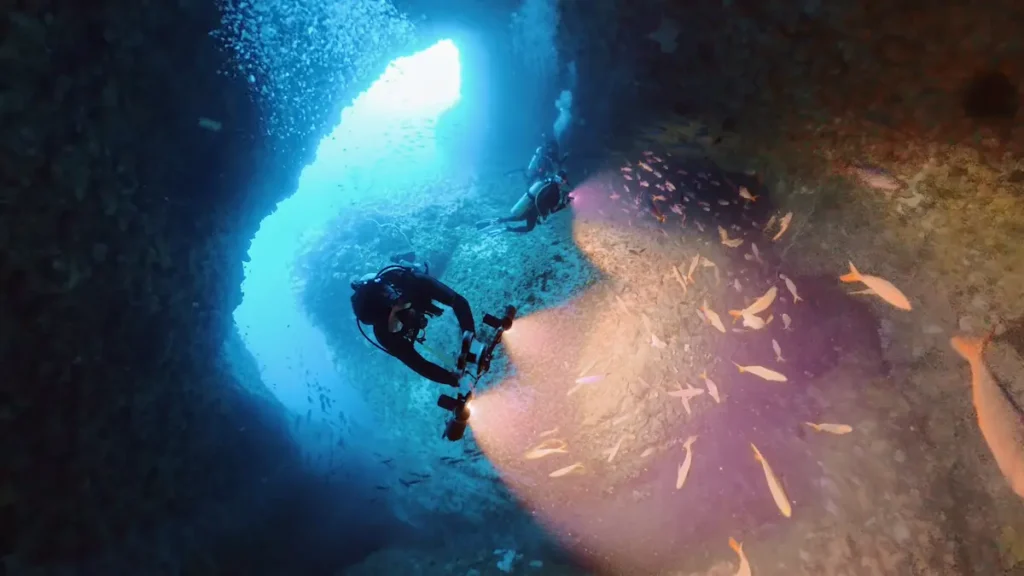
Halfway House is a fascinating mix of rocky overhangs and coral ledges.
The reef structure here forms natural shelters that attract a wide range of marine life.
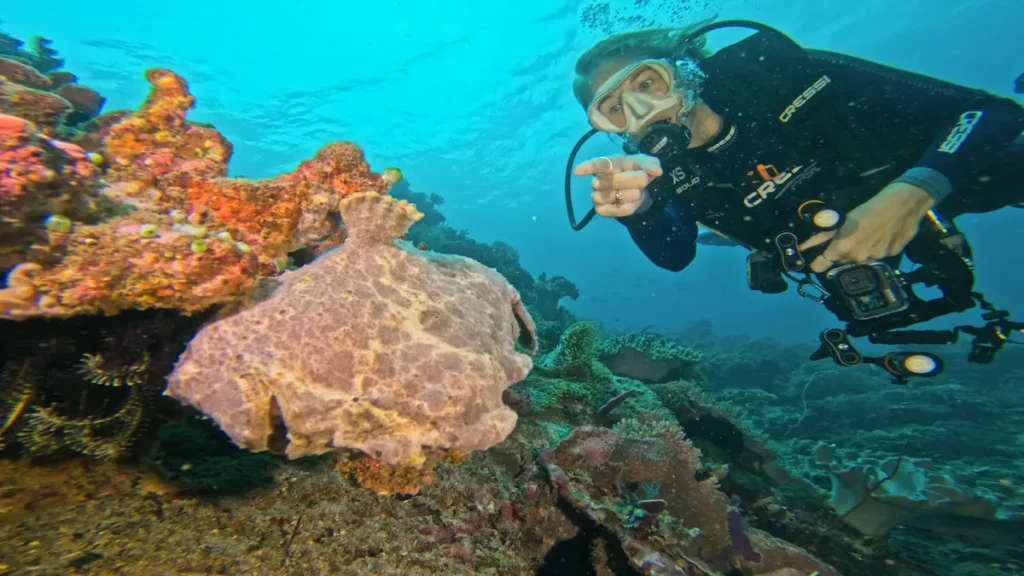
During our dives we encountered a huge frogfish hidden beneath one of the rock ledges — a perfect example of the site’s reputation for unusual macro finds.
Above the overhangs, the reef transitions into a colourful coral garden where reef fish patrol the edges of the drop-off.
Because conditions can vary depending on current, Halfway House is typically recommended for intermediate to advanced divers, although it can be accessible to less experienced divers when the sea is calm.
Coral Garden
Coral Garden is one of the most accessible dive sites in the region.
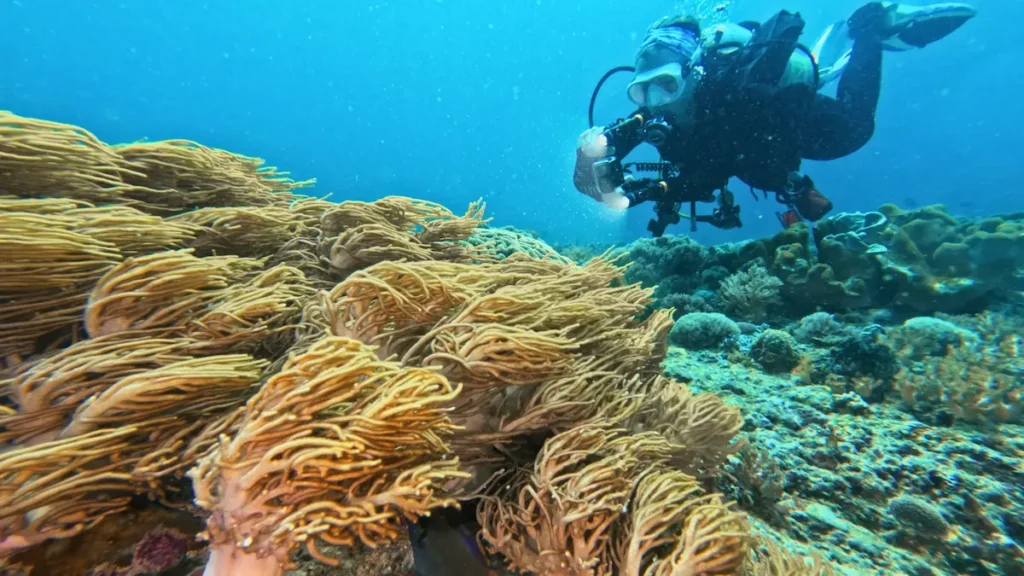
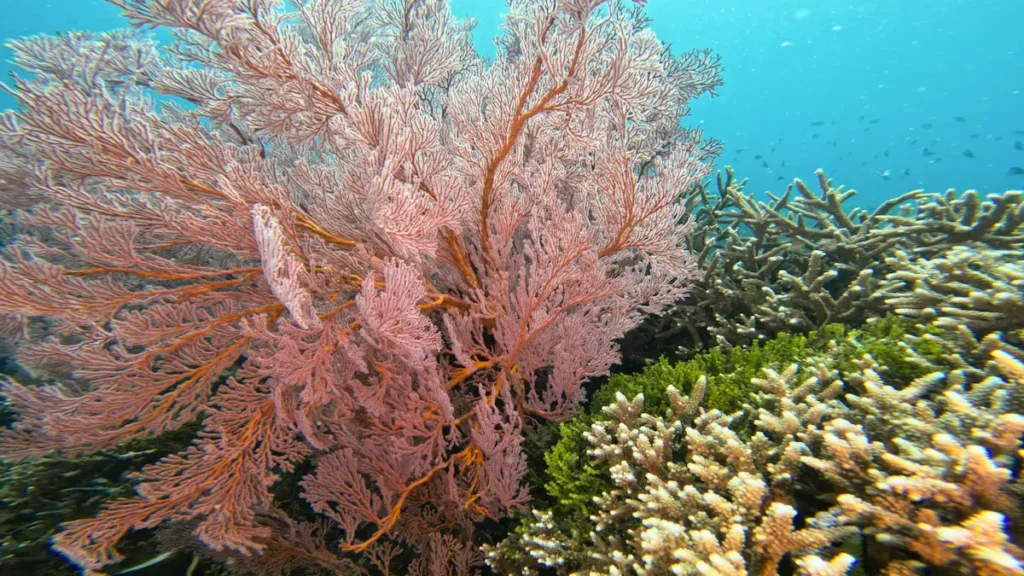
As the name suggests, the reef here is covered with a wide variety of coral formations.
The site is relatively shallow and sheltered, making it an ideal location for:
- beginner divers
- Open Water training dives
- relaxed underwater photography
Reef fish are plentiful here, and the calm conditions allow divers to explore slowly while developing buoyancy control.
For divers completing courses, Coral Garden is one of the most comfortable places to start diving in South Lombok.
Nusa Tiga
Nusa Tiga is a reef system made up of small islands and rocky outcrops, creating a varied underwater landscape.
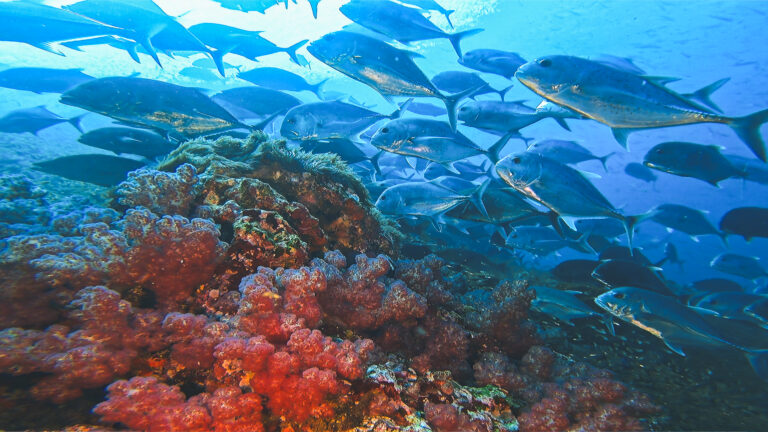
The topography here includes coral slopes and reef ledges that attract schools of reef fish.
Compared with some of the more macro-focused sites nearby, Nusa Tiga often feels more like a classic reef dive, with good visibility and colourful coral formations.
Because of the varied terrain and moderate depths, this site is usually suitable for a wide range of certification levels.
Macro Bay
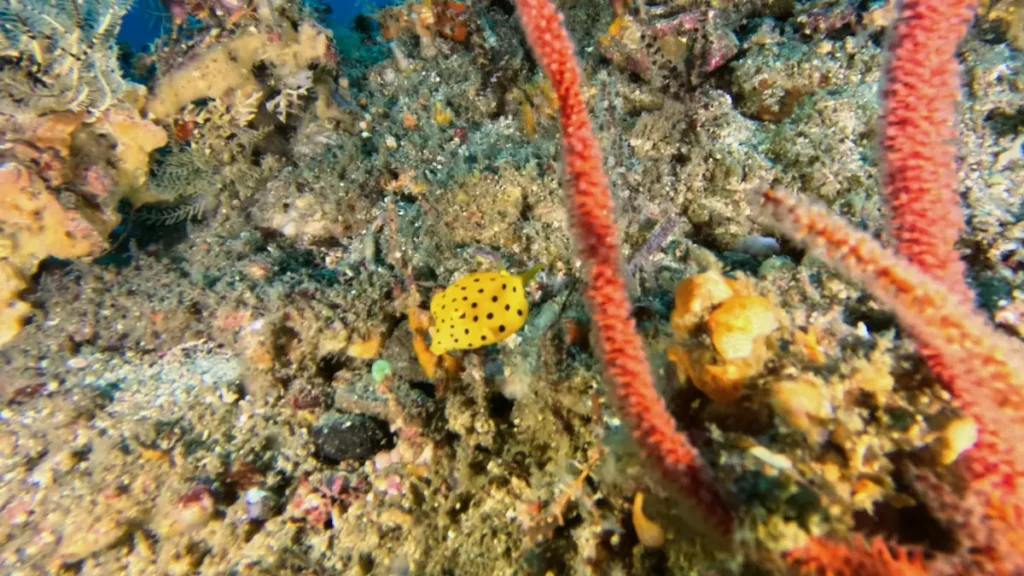
Macro Bay is exactly the kind of dive site underwater photographers dream about.
The combination of sandy seabed and scattered reef structures creates ideal habitat for rare macro species.
With a skilled dive guide, the list of creatures spotted here can be impressive.
During our dives in South Lombok we encountered:
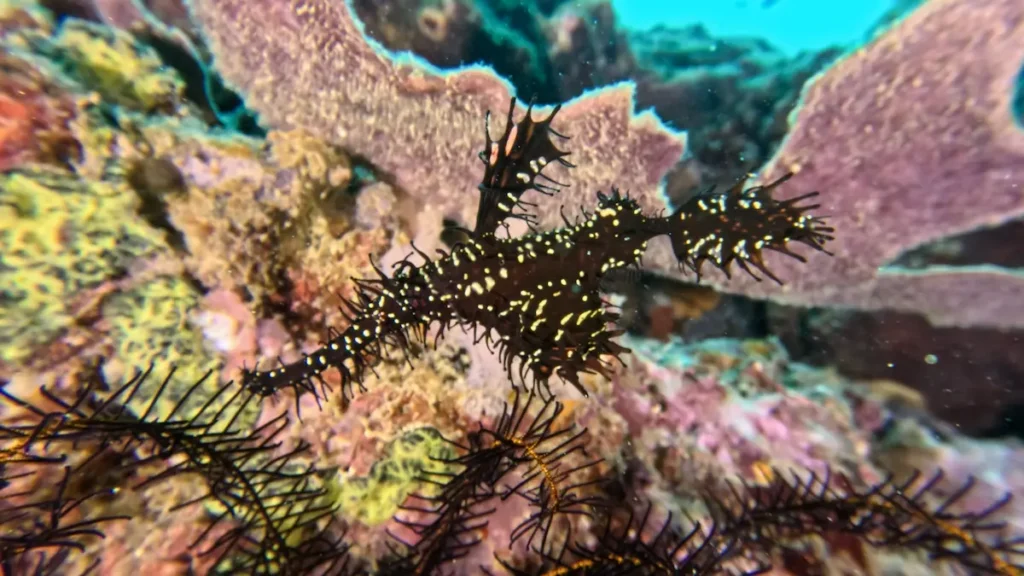
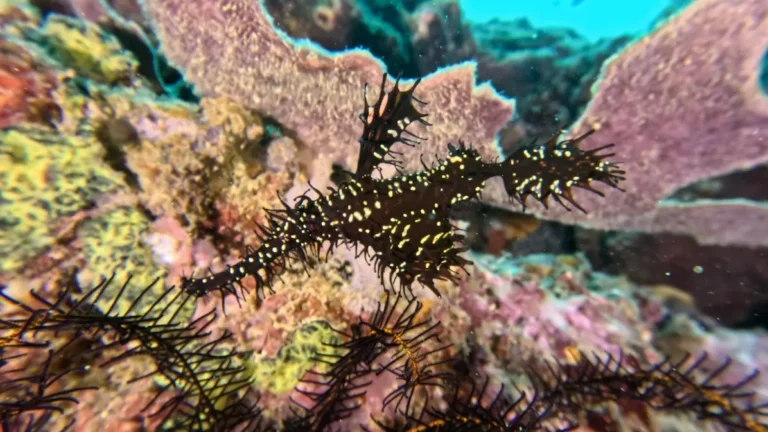
- ghost pipefish
- seahorses
- nudibranchs
- porcelain crabs
- juvenile boxfish
- cuttlefish
Macro Bay is the kind of site where patience pays off.
Spend time searching the sand and coral carefully and you may discover some of the ocean’s strangest and most fascinating creatures.
Sites like Macro Bay and Cumi Cumi are particularly well known for this style of diving, offering some of the best macro opportunities near Kuta Lombok.
Cumi Cumi
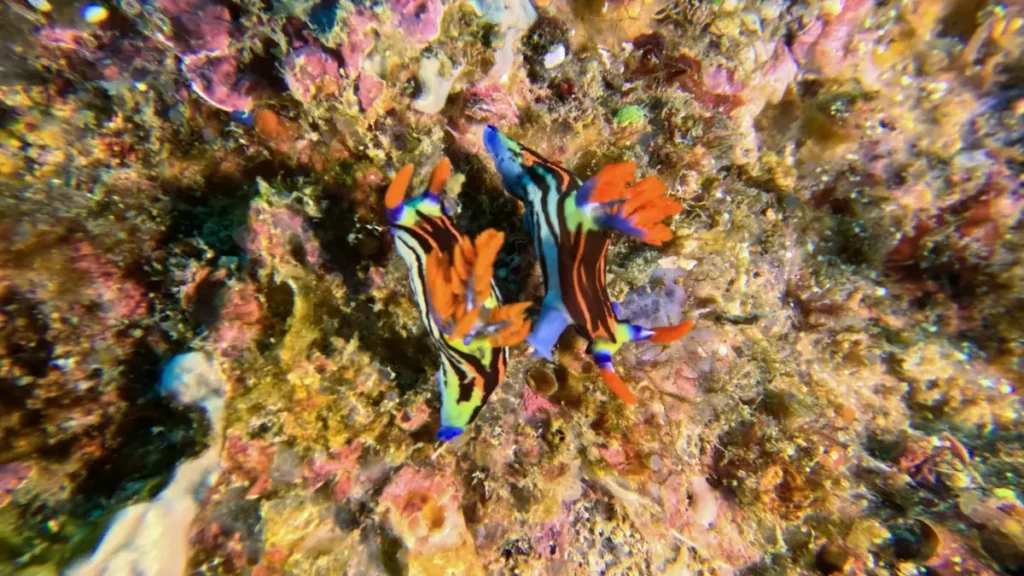
Cumi Cumi is one of the most interesting dive sites near Kuta Lombok for macro lovers — and one that often surprises divers visiting the region for the first time.
Unlike the coral-heavy reefs found at sites like Nusa Tiga or Coral Garden, Cumi Cumi is a muck diving site, made up of sandy seabed, scattered rubble, and small reef patches. At first glance, it can appear relatively barren — but this is exactly what makes it so special.
With the help of an experienced guide, the site reveals an entirely different world.
Divers here regularly encounter:
• nudibranchs
• cuttlefish
• frogfish
• ghost pipefish
• juvenile reef species
• well-camouflaged critters hidden in the sand
The calm conditions and relatively shallow depth make Cumi Cumi accessible to a wide range of experience levels, including newer divers interested in macro photography.
However, like most muck diving sites, the experience depends heavily on:
• patience
• slow, controlled diving
• and the skill of your guide
For divers willing to take their time and look closely, Cumi Cumi can easily become one of the most memorable dives in South Lombok.
Is There Muck Diving in Lombok?
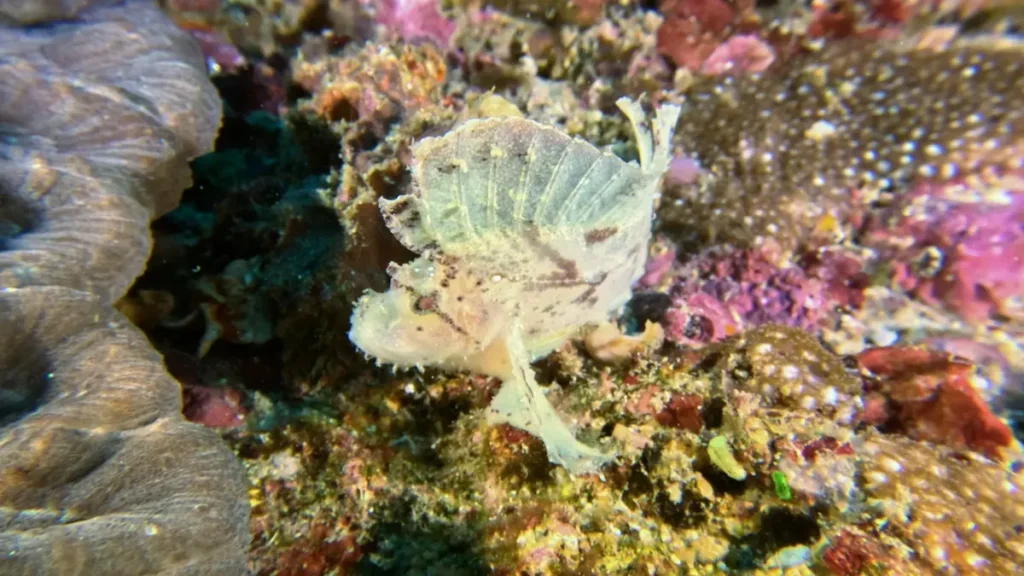
Yes — and it’s one of the most underrated aspects of diving in South Lombok.
While many visitors associate Lombok with coral reefs and drift diving, sites like Cumi Cumi and Macro Bay offer a completely different experience. These sandy, rubble-based dive sites are ideal for muck diving, where the focus shifts from large reef scenes to spotting rare and unusual marine life.
With the help of experienced guides, divers here may encounter:
• ghost pipefish
• seahorses
• frogfish
• nudibranchs
• cuttlefish
• and other well-camouflaged critters
Unlike traditional reef dives, muck diving requires patience, slow movement, and attention to detail — but the reward is discovering some of the ocean’s most fascinating species.
👉 We’ve created a full guide to macro and muck diving in Lombok, including what species you can expect to see and how to dive these sites effectively.
How to Reach the Dive Sites from Kuta Lombok
Although Kuta Lombok is the main base for divers in South Lombok, the dive sites themselves are not located directly offshore from the town.
Instead, dive operators begin the day with a drive across Lombok’s countryside to a coastal jetty along the south-eastern coastline.
The journey usually takes around one hour, passing rice fields, villages, and coastal scenery.
From the jetty, divers board traditional Indonesian outrigger boats or speedboats.
The boat ride to the reefs typically takes 30–45 minutes, depending on sea conditions.
Because of this setup, the dive sites are generally accessed exclusively by dive centres based in Kuta Lombok.
Typical Dive Day from Kuta Lombok
Time | Activity |
07:30–08:00 | Meet at dive centre |
08:00 | Drive to jetty |
09:00 | Boat departure |
09:45 | First dive |
11:15 | Surface interval |
12:00 | Second dive |
13:30 | Return to jetty |
14:30–15:00 | Arrive back in Kuta |
Marine Life You Might See
| Marine Life | Where Seen |
|---|---|
| Frogfish | Halfway House, Cumi Cumi |
| Ghost Pipefish | Macro Bay, Cumi Cumi |
| Seahorses | Sandy rubble areas |
| Nudibranchs | Most reef sites, Cumi Cumi |
| Porcelain Crabs | Coral ledges |
| Cuttlefish | Coral Garden, Cumi Cumi |
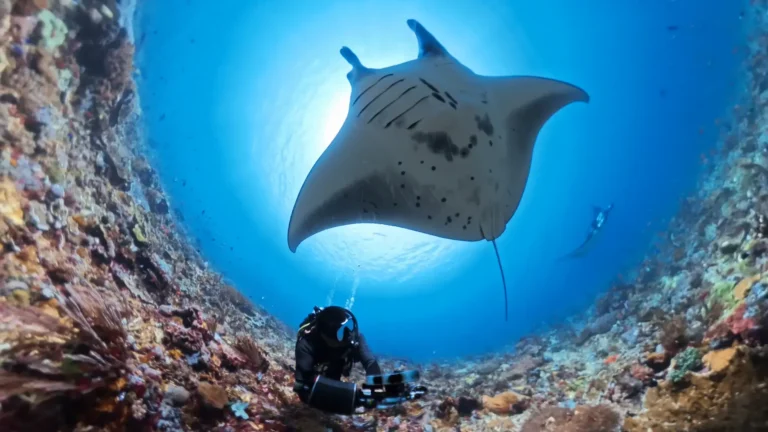
Occasionally guides report sightings of larger species such as manta rays or thresher sharks passing through deeper waters.
Best Time to Dive Kuta Lombok
Season | Conditions |
April – October | Best visibility and calm seas |
November – March | Rainy season but fewer crowds |
What Makes South Lombok Diving Unique
What really sets diving near Kuta Lombok apart isn’t just the dive sites themselves.
It’s the sense of exploration.
Unlike heavily developed dive regions in Indonesia, South Lombok still feels relatively undiscovered.
On many dive days, you may not see another dive boat at all.
That kind of solitude is becoming increasingly rare in Southeast Asia’s most famous dive destinations.
The marine life here can also be surprisingly diverse.
While the reefs may not match the overwhelming biodiversity of Raja Ampat, the combination of macro species, interesting reef structures, and occasional pelagic sightings keeps every dive interesting.
Guides in the region have reported encounters with:
- manta rays
- thresher sharks
- mola mola
- large schools of reef fish
It’s a reminder that Lombok’s waters remain part of the Coral Triangle, the most biodiverse marine ecosystem on Earth.
Diving from Kuta Lombok
Although the dive sites themselves are located along Lombok’s southeastern coastline, Kuta Lombok acts as the main base for divers.
Most dive trips begin early in the morning, with divers meeting in Kuta before driving across the island to the departure point.
From there, traditional Indonesian outrigger boats or speedboats transport divers to the reefs.
The journey itself offers a glimpse of Lombok’s coastal landscape, passing fishing villages, bamboo fishing structures, and dramatic cliffs along the shoreline.
It’s an experience that feels very different from the busy dive ports of Indonesia’s larger destinations.
Is It Worth Diving in Lombok?
For divers looking for quiet dive sites, strong macro life, and a sense of exploration, Lombok is absolutely worth considering.
It may not yet be Indonesia’s most famous dive destination.
But in many ways, that’s exactly what makes it special.
South Lombok still feels like a place where diving is evolving, with new sites being explored and relatively few divers in the water.
For travellers visiting Kuta Lombok — whether for surfing, beaches, or adventure travel — spending a few days diving here offers a chance to experience a side of the island many visitors never see.
FAQ: Diving Near Kuta Lombok
Are there good dive sites near Kuta Lombok?
Yes. South Lombok offers diverse dive sites including walls, coral reefs and macro habitats located along the island’s southeastern coastline.
How far are the dive sites from Kuta Lombok?
Most trips involve a one-hour drive from Kuta Lombok followed by a 30–45 minute boat ride.
Is Lombok good for beginner divers?
Yes. Sites like Coral Garden offer calm conditions suitable for beginner divers and training dives.
What marine life can you see diving in Lombok?
Divers commonly see frogfish, ghost pipefish, seahorses, nudibranchs and cuttlefish.
Kuta Lombok Diving: Full South Lombok Diving Experience
Planning to go scuba diving in Kuta Lombok?
In this video, we show exactly what to expect when diving along Lombok’s south-east coast — including the full journey from Kuta Lombok to the dive sites, real dive conditions, and the marine life you’re likely to encounter.
You’ll see:
• the drive and boat transfer from Kuta Lombok
• conditions across different dive sites
• macro marine life and reef biodiversity
• what diving in South Lombok actually feels like
If you’re deciding whether diving in Lombok is worth it, this will give you a realistic, first-hand perspective before you book.
🎥 If you found this helpful and want more dive travel guides, underwater encounters, and honest insights from destinations like Lombok, Komodo, and Raja Ampat…
(It takes 2 seconds and really helps us keep creating content like this 🙏)


2 Comments