How to Choose Ethical Marine Wildlife Tours: 10 Red Flags Before You Book
Swimming alongside a whale shark, watching manta rays glide overhead or snorkelling with sea turtles can be an unforgettable experience. But not every tour marketed as a once-in-a-lifetime wildlife encounter puts the animals — or its guests — first.
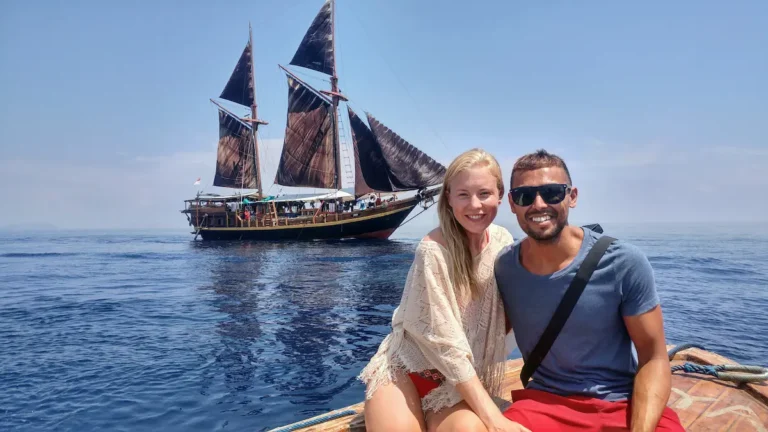
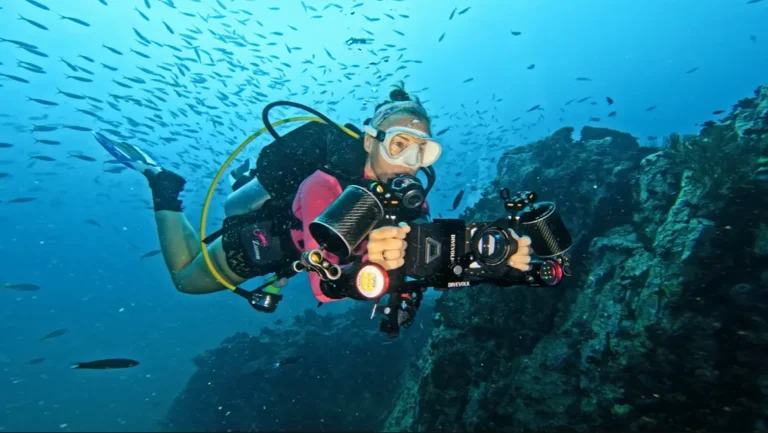
As professional scuba diving instructors, we’ve spent years working in marine tourism, guiding divers and experiencing wildlife encounters across destinations including the Maldives, Indonesia and Australia.
We’ve seen how incredible these experiences can be when they’re managed responsibly. We’ve also witnessed how quickly an encounter can become chaotic when too many people, too many boats and too little supervision are involved.
The challenge for travellers is that unethical snorkelling tours don’t always look unethical when you’re booking them. Beautiful photographs, glowing reviews and promises of close wildlife encounters can make it difficult to know what actually happens on the water.
So how do you identify ethical marine wildlife tours before handing over your money?
Here are ten warning signs to look for, the questions worth asking and what responsible marine wildlife encounters should actually look like.
Planning an ocean wildlife experience?
Table of Contents
What Makes a Marine Wildlife Tour Ethical?
An ethical marine wildlife tour allows people to observe wild animals while minimising disturbance to their natural behaviour, habitat and wellbeing.
That sounds straightforward, but responsible wildlife tourism involves more than simply telling guests not to touch animals.
A good operator should consider how its boats approach wildlife, how many people enter the water, how guides manage the group, whether animals can move away freely and how the experience affects sensitive habitats.
Guest safety matters too. Crowded snorkelling groups, poor briefings, strong currents and careless boat movements can turn an exciting encounter into a dangerous situation.
Importantly, there isn’t one universal rulebook covering every marine species and destination. Some areas have legally enforceable wildlife interaction regulations, while others rely on voluntary codes of conduct or operator policies.
What matters is whether an operator understands the species involved, follows applicable local rules and actively manages its activities to reduce avoidable harm.
Responsible vs Unethical Marine Wildlife Tours
Responsible marine wildlife encounters | Warning signs |
Wildlife can approach or leave freely | Animals are chased, surrounded or blocked |
Guides explain appropriate distances and behaviour | Little or no wildlife interaction briefing |
Participant numbers are managed | Crowds compete to get closest |
Boats approach cautiously | Boats crowd animals or operate dangerously near swimmers |
Guests are supervised throughout the encounter | Guides ignore touching, chasing or harassment |
Sensitive habitats are protected | Guests stand on coral or damage the reef |
Wildlife sightings are presented honestly | Operators guarantee unrealistic encounters or promote physical contact |
The aim isn’t to eliminate wildlife tourism. It’s to support experiences where people can enjoy extraordinary encounters without putting unnecessary pressure on the animals or themselves.
Watch: Dive Pro Reacts to the WORST Ocean Wildlife Tours on TikTok
→ Want to see what some of these warning signs look like in real life?
In this video, we react to viral footage of whale shark, manta ray and turtle encounters, explain the behaviour we’re seeing and discuss the safety and wildlife-tourism concerns that travellers should understand.
10 Red Flags to Watch for Before Booking a Marine Wildlife Tour
1. The Operator Promises You'll Touch or Get Extremely Close to Wildlife
If a tour advertises touching, holding, riding or deliberately approaching wild marine animals at extremely close distances, that’s an immediate reason to investigate further.
Whale sharks, manta rays and sea turtles aren’t attractions designed for human interaction. They’re wild animals with their own feeding, resting and movement patterns.
Even when an animal appears calm, that doesn’t automatically mean it welcomes contact.
Responsible guides should explain how to observe wildlife without chasing, touching or obstructing it.
Before booking, ask: Does the operator have a no-touch policy, and how do guides enforce it?
2. Wildlife Is Fed or Baited to Guarantee Encounters
Some marine tourism operations attract animals using food or bait.
This is a complex issue. Provisioning practices vary between species, destinations and types of tourism, and their impacts cannot all be treated as identical.
However, feeding can alter how animals interact with people and boats, and may affect their behaviour or movement patterns.
For example, whale shark encounters associated with fishing platforms in parts of Indonesia raise important questions about the relationship between fishing activity, predictable food availability and tourism.
If an operator advertises guaranteed close encounters, ask whether the animals are being attracted with food.
A responsible business should be transparent about any provisioning, the applicable regulations and the measures it uses to manage potential impacts.
Before booking, ask: Are the animals fed, baited or otherwise attracted to the site? If so, how is that practice managed?
3. There Are No Clear Limits on Group Sizes
One of the biggest differences between a peaceful wildlife encounter and a chaotic one is often the number of people in the water.
Imagine finding a whale shark, only to discover several boats have arrived and dozens of snorkellers are racing towards the same animal.
Even if nobody deliberately touches it, crowding can restrict the animal’s movement and make it harder for guides to supervise their guests.
We’ve experienced whale shark tourism in both the Maldives and Ningaloo Reef in Western Australia. These experiences have shown us how much the management of swimmers and boats can affect the quality of an encounter.
Before booking ethical whale shark tours or manta snorkelling experiences, find out how many guests will enter the water at once.
Remember that a small boat doesn’t necessarily mean a quiet encounter. Several operators may be visiting the same site simultaneously.
Before booking, ask: How many people enter the water per guide, and what happens if other tour boats arrive?
4. Guests Are Encouraged to Chase, Surround or Block Animals
Wild animals should have the freedom to decide whether to approach people or move away.
Chasing a whale shark, swimming directly into a manta ray’s path or surrounding a sea turtle can interfere with its normal movement.
This can also create risks for swimmers. Large marine animals are powerful, and sudden changes of direction can lead to accidental collisions.
One particularly important principle is to avoid obstructing an animal’s route.
→ For whale sharks, that means keeping clear of the head and tail and allowing plenty of room for the animal to swim freely.
→ For manta rays, it means avoiding sudden descents onto the animal or positioning yourself in its path.
→ For turtles, it means allowing them unobstructed access to the surface to breathe.
Before booking, ask: What happens if guests chase or crowd an animal? Will guides intervene?
5. There's No Proper Safety or Wildlife Briefing
A good briefing is one of the clearest signs that an operator takes its responsibilities seriously.
Before entering the water, guests should understand what animals they might encounter, how to behave around them and what to do if conditions change.
A snorkelling briefing should also address relevant practical risks, including currents, waves, boat traffic, entry and exit procedures, group supervision and what to do if someone becomes separated.
This is especially important at exposed sites such as manta ray cleaning stations or outer reefs, where conditions can be challenging.
→ An operator should also be prepared to explain when it would cancel or modify an encounter.
Before booking, ask: What safety and wildlife briefing do guests receive before entering the water?
6. Guides Don't Intervene When Guests Behave Irresponsibly
Even well-briefed guests can become distracted or overexcited when a large marine animal appears.
That’s where professional guides make a difference.
A responsible guide should actively supervise the group, communicate clearly and respond when people approach too closely or behave unsafely.
The guide’s role isn’t simply to locate wildlife or help guests capture photographs.
It’s also to manage the encounter.
Watch how operators describe their guiding practices, and look for reviews that mention knowledgeable staff, clear instructions and organised groups.
Before booking, ask: How do your guides manage guests who ignore wildlife interaction rules?
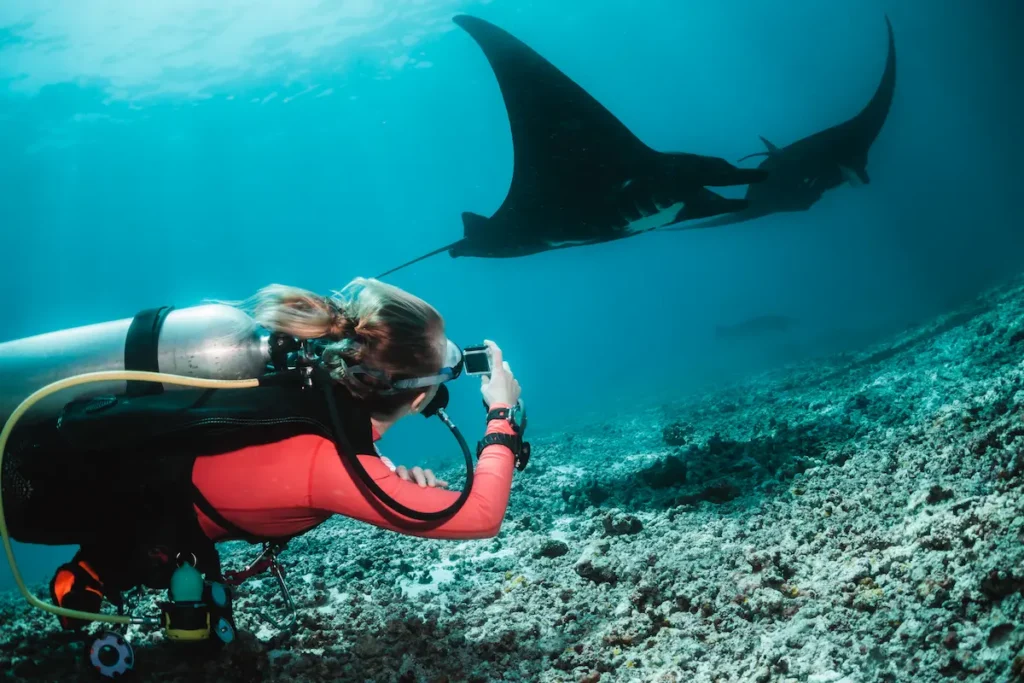
7. Boats Operate Too Close to Swimmers or Wildlife
Boat management is a major consideration during whale shark, manta ray and other marine wildlife tours.
Multiple vessels approaching the same animal can create congestion, particularly when swimmers are spread across the surface.
Poorly coordinated boat movements may increase collision risks for both animals and people.
Responsible operators should have clear procedures for approaching wildlife, managing propellers, monitoring swimmers and coordinating with other vessels.
→ These procedures should reflect the location’s conditions and applicable regulations.
Before booking, ask: How do you manage boat approaches and swimmer safety when several vessels are at the same wildlife encounter?
8. The Tour Damages Coral Reefs or Sensitive Habitats
Responsible marine wildlife encounters aren’t only about protecting the animals people came to see.
The surrounding ecosystem matters just as much.
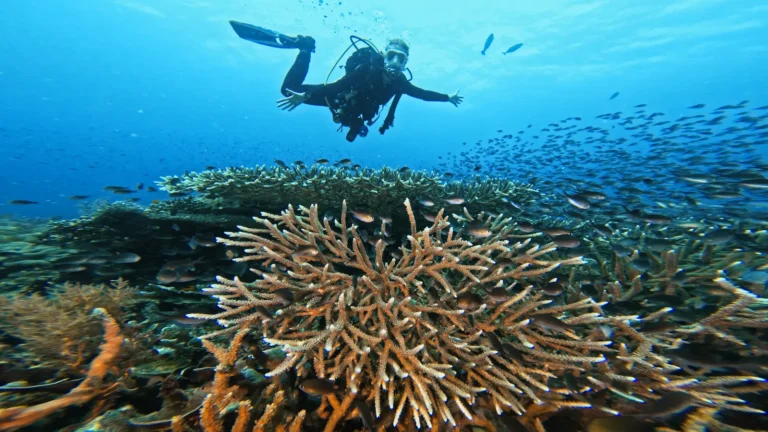
Corals can be damaged by careless fin kicks, people standing on the reef, equipment dragging across the seabed or poorly managed groups.
This is particularly relevant for snorkelling tours involving inexperienced swimmers.
Operators should provide suitable flotation support where needed, explain how to avoid contact with the reef and select sites appropriate for their guests’ abilities.
→ Guides should also respond when participants struggle to maintain a safe position above sensitive habitats.
Before booking, ask: How do you prevent inexperienced snorkellers from damaging coral or disturbing marine life?
9. The Website Says 'Ethical' but Doesn't Explain What That Means
Words such as ethical, eco-friendly, sustainable and responsible appear frequently in tourism advertising.
They’re not meaningless, but they’re also not proof of good practice.
Look beyond the marketing language.
→ Does the operator publish a wildlife interaction policy? Does it explain group sizes, safety procedures or applicable local regulations?
→ Does it identify credible conservation partnerships or training programmes?
Be cautious of businesses making broad conservation claims without explaining what they actually do.
A responsible operator should be able to describe its practices clearly, rather than relying entirely on attractive photographs and vague promises.
Before booking, ask: What specific wildlife interaction standards does your company follow?
10. The Operator Won't Answer Basic Questions Before You Book
Perhaps the most useful red flag is also the simplest.
If you ask a tour operator reasonable questions about wildlife interaction rules, safety or group sizes and receive vague, dismissive or contradictory answers, think carefully before booking.
You don’t need to interrogate every business or expect a lengthy technical report.
But an operator that takes responsible tourism seriously should be comfortable explaining how it runs its tours.
Look for clear, practical answers rather than guarantees that everything will be perfect.
Before booking, ask: Can you explain how your tour manages wildlife interactions and what happens if conditions become unsuitable?
Planning a Whale Shark, Manta Ray or Turtle Encounter?
→ Download Our Free Checklist
Researching different tour operators can quickly become overwhelming, especially when every company seems to promise the same incredible experience.
We’ve put together a practical Ocean Wildlife Tour Checklist to make the process easier.
It includes:
- 12 questions to ask before booking.
- Warning signs to look for in tour descriptions and operator responses.
- A simple way to compare your options.
- Practical considerations for whale shark, manta ray, turtle and snorkelling tours.
Save it to your phone and use it when comparing experiences.
What Responsible Encounters Look Like for Different Marine Animals
The general principles are similar, but each species has different behaviours and vulnerabilities.
Understanding those differences can help you choose a better experience.
Ethical Whale Shark Tours
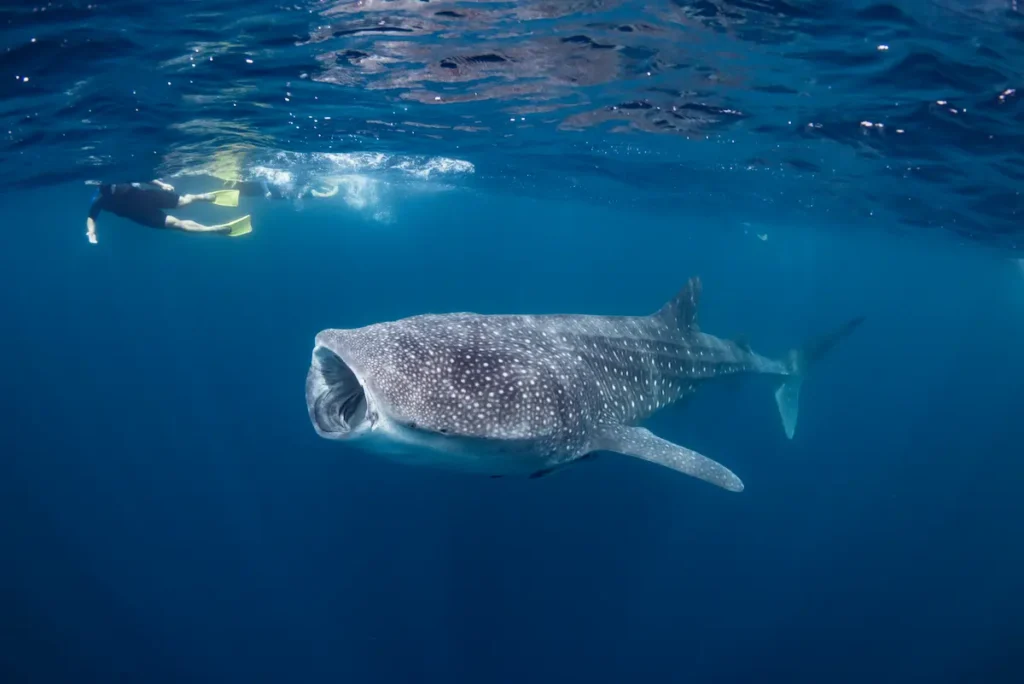
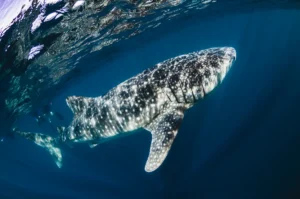
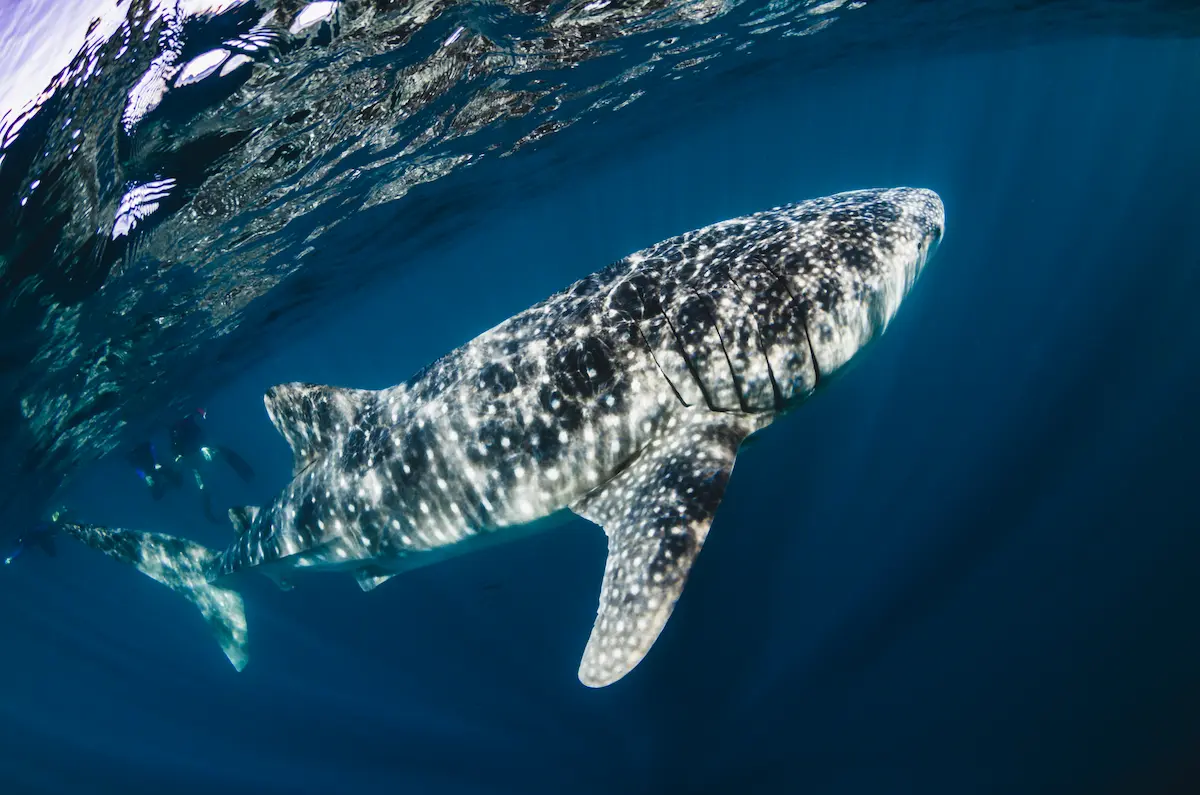
Whale sharks are enormous filter-feeding fish that can attract large numbers of snorkellers and boats.
Good whale shark encounters should allow the animals to move freely, without swimmers blocking their path or boats crowding them.
Different destinations have different regulations.
In the Maldives, official whale shark interaction guidance includes minimum separation distances and restrictions on behaviours such as touching and obstructing the animals.
At Ningaloo Reef in Western Australia, whale shark tourism operates under a structured management framework with specific interaction requirements.
These examples illustrate why it’s important to check the rules for the destination you’re visiting rather than assuming every operator follows the same standards.
When comparing ethical whale shark tours, consider the number of swimmers, boat management, whether encounters are provisioned and how guides respond when multiple groups arrive.
Ethical Manta Ray Snorkelling and Diving
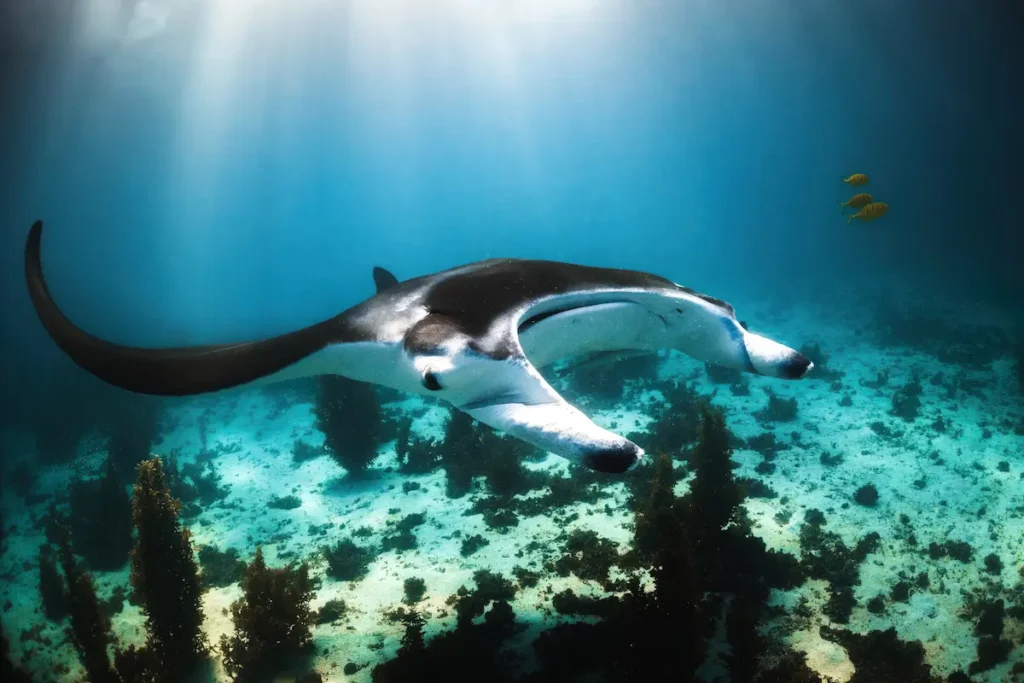
Manta rays often visit cleaning stations, where smaller fish remove parasites and other material from their bodies.
These sites can attract snorkellers and scuba divers, sometimes in considerable numbers.
Responsible manta ray tourism should minimise interference with cleaning behaviour and allow mantas to approach and leave freely.
Guides should explain where visitors should position themselves and how to avoid blocking an animal’s movement.
At popular sites such as Nusa Penida, conditions can also involve swell, currents and substantial boat traffic.
A good operator must consider both the welfare of the mantas and whether the conditions are suitable for its guests.
Responsible Sea Turtle Encounters
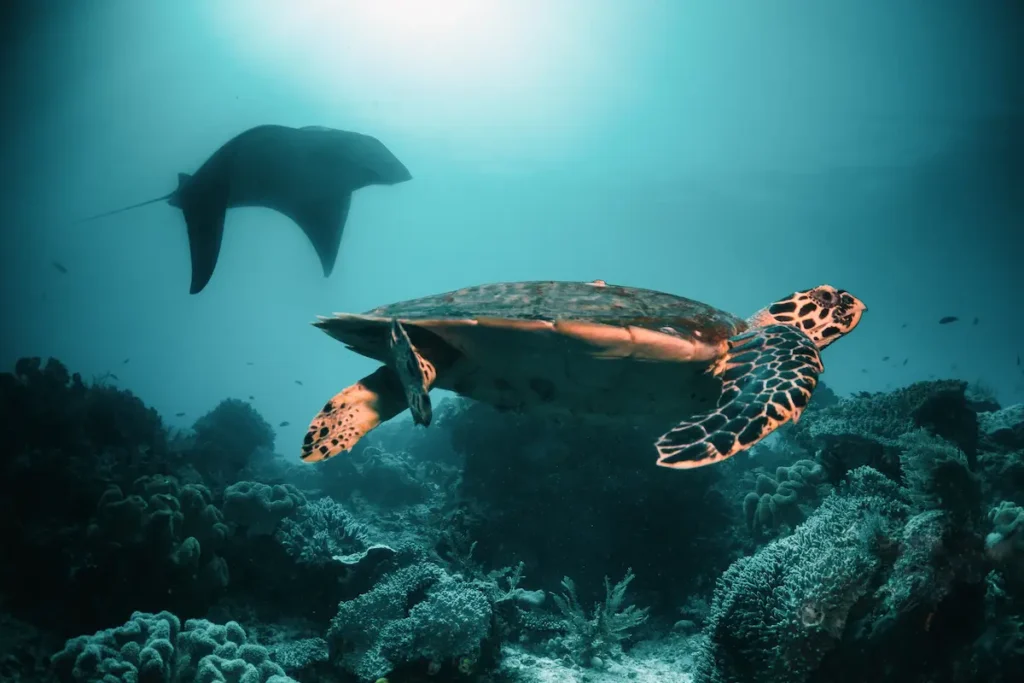
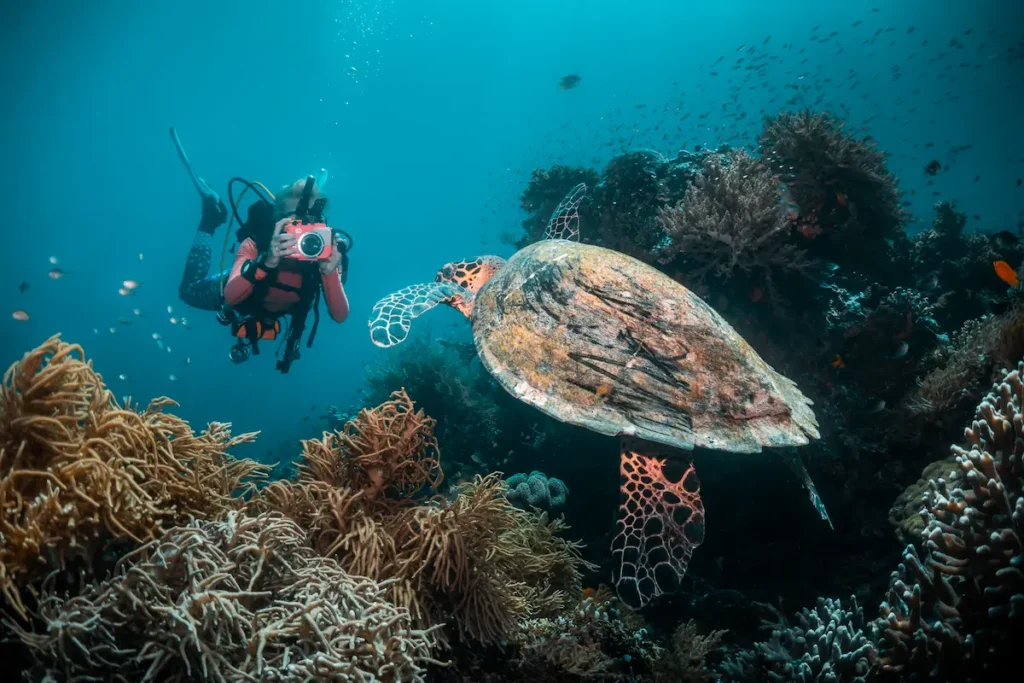
Sea turtles need access to the surface to breathe, so swimmers should avoid surrounding them or blocking their ascent.
Never touch, restrain, ride or attempt to move a wild turtle for photographs.
When snorkelling above reefs, keep your fins clear of coral and avoid following turtles into confined spaces.
Responsible turtle encounters are often the simplest: stay calm, give the animal room and let it continue its natural behaviour.
Can You Trust Online Reviews and Social Media Videos?
Reviews and social media posts can be useful, but they don’t always tell the whole story.
A spectacular photograph of someone swimming close to a whale shark might reflect an unexpected natural encounter — or an animal being deliberately approached too closely.
Similarly, a tour with hundreds of five-star reviews may still have weaknesses in how it manages wildlife interactions.
Look for patterns in reviews rather than relying on a single rating.
Useful details include whether guests received clear briefings, whether the guides managed group behaviour, whether the experience felt crowded and whether the operator respected wildlife interaction rules.
Pay attention to reviews describing the actual experience, not just whether someone saw the animal they hoped to see.
And remember: an operator cannot guarantee the behaviour or presence of genuinely wild animals.
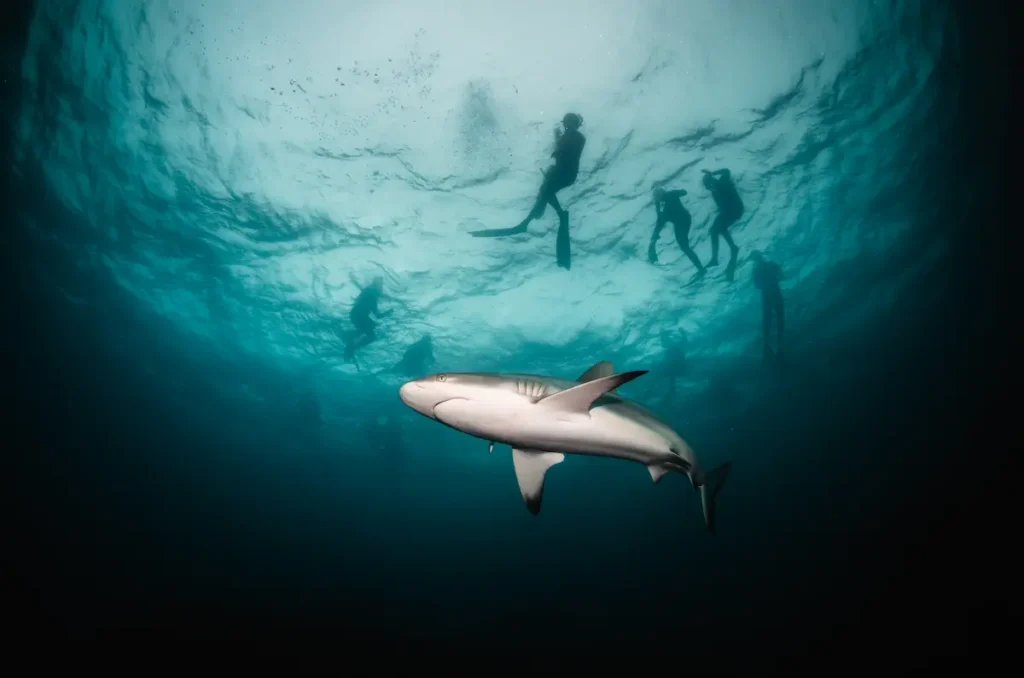
What Should You Do If a Wildlife Tour Becomes Unsafe or Irresponsible?
Sometimes you can research carefully and still find yourself on a tour that doesn’t meet your expectations.
If that happens, your first responsibility is your own safety.
Avoid entering the water if conditions appear unsafe or you’re uncomfortable with the operator’s procedures.
If you’re already in the water, avoid chasing animals or joining overcrowded interactions simply because everyone else is doing so.
Communicate concerns to your guide or boat crew when it’s safe to do so.
If you believe a serious wildlife violation has occurred, consider documenting the relevant details and reporting them to the appropriate local authority or protected-area management organisation.
Avoid confrontations that could put you or other guests at risk.
→ After the trip, a factual review describing what you personally observed may also help other travellers make informed decisions.
Our Advice: Choose the Experience, Not Just the Wildlife Sighting
We understand why people want to swim with whale sharks, see manta rays up close or photograph sea turtles.
These encounters can be extraordinary.
But there’s a difference between witnessing a wild animal and being part of a crowd competing for access to it.
In our experience, well-managed encounters are often more enjoyable precisely because guests aren’t constantly trying to get closer.
You have more opportunity to observe the animal’s natural behaviour, enjoy the moment and appreciate the environment around you.
Choosing ethical marine wildlife tours isn’t about avoiding wildlife tourism altogether.
It’s about supporting operators that take their responsibilities seriously — and giving yourself the best chance of an enjoyable, safe and respectful experience.
Before booking your next marine wildlife adventure, take a few minutes to ask the right questions.
It could make all the difference.
Frequently Asked Questions
How can I tell if a wildlife tour is ethical?
Look for clear wildlife interaction policies, appropriate group sizes, knowledgeable guides, safety briefings and evidence that animals can move freely. Ask operators how they manage crowding, feeding and guest behaviour before booking.
Is it ethical to swim with whale sharks?
Whale shark swimming can be conducted responsibly when operators follow applicable regulations, manage boats and swimmers appropriately, and minimise disturbance. The quality of management matters more than the activity’s name alone.
Are manta ray snorkelling tours ethical?
They can be, provided operators manage visitor behaviour, respect cleaning stations, consider local conditions and avoid obstructing the animals. Research the operator and the specific encounter site before booking.
Is feeding whale sharks unethical?
Wildlife provisioning is a complex issue with different practices and impacts across destinations. Feeding or attracting whale sharks raises important welfare and conservation questions, so travellers should investigate the practice, local rules and scientific evidence rather than accepting marketing claims at face value.
What are the biggest red flags on snorkelling tours?
Poor safety briefings, unmanaged crowds, wildlife chasing or touching, careless boat movements, reef damage and operators unwilling to explain their procedures are all reasons to investigate further.
Should I avoid tours that guarantee wildlife sightings?
Treat guarantees cautiously. Some destinations have highly predictable seasonal wildlife encounters, but no operator controls the behaviour of truly wild animals. Ask how the company defines its guarantee and whether animals are fed or attracted to make sightings more predictable.
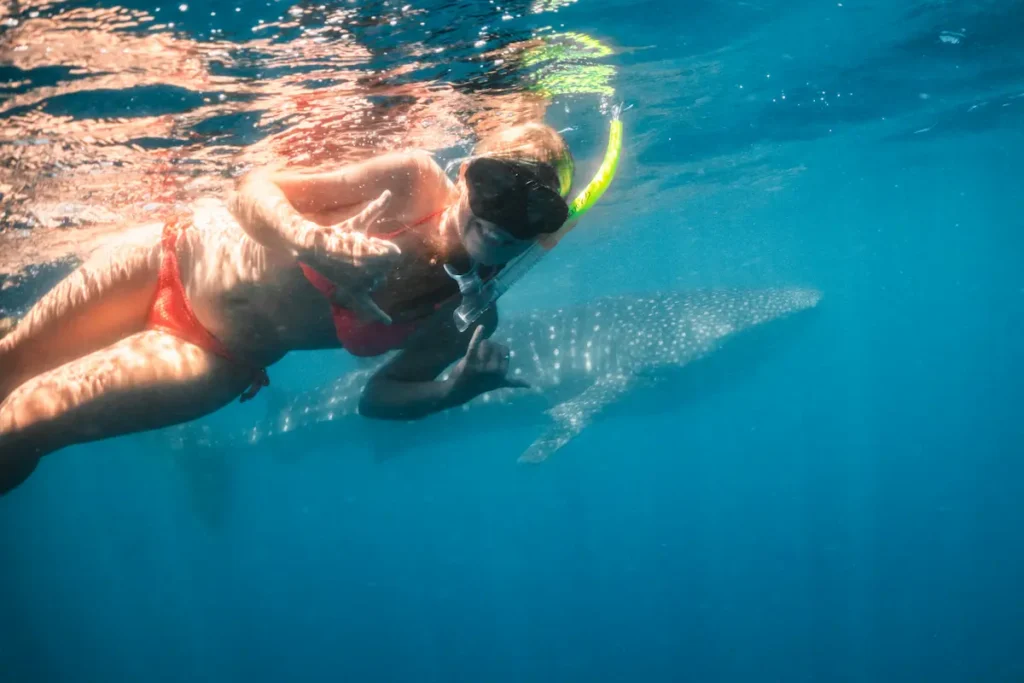
Useful Resources:
- Marine Megafauna Foundation — manta ray research and responsible encounters.
- Madagascar Whale Shark Project — whale shark interaction guidance.
- International Whaling Commission — practical operator-selection questions.
- Save Our Seas Foundation — shark conservation and tourism research.