
7 Scuba Gear Purchases You’ll Regret (And What to Buy Instead)
By Aaron & Cassie | Professional Dive Instructors & Underwater Content Creators
Scuba diving equipment isn’t cheap. Between regulators, dive computers, masks, fins and all the accessories that promise to make your dives easier, it’s surprisingly easy to spend hundreds on gear you don’t actually need.
And some of the most expensive scuba gear mistakes aren’t obvious until you’ve taken the equipment underwater.
After years of working as dive instructors and completing more than 5,000 dives between us, we’ve seen plenty of divers arrive with equipment that looks impressive on the surface but creates unnecessary complications once they’re underwater.
We’ve made some questionable purchases ourselves, too.
That doesn’t mean every piece of equipment on this list is universally bad. Some products have legitimate uses in particular environments or for divers with specific needs. The problem is buying them without understanding their limitations.
So, before you spend your money, here are seven scuba gear purchases we’d encourage you to reconsider — and the alternatives we’d look at instead.
Disclosure: This article may contain affiliate links. If you purchase through them, we may earn a commission at no additional cost to you. Our recommendations are based on practical suitability, not commission rates.
Prefer to watch? In our accompanying video, we explain all seven equipment mistakes, including the problems we’ve encountered underwater and the alternatives we’d choose.
At a Glance: 7 Scuba Gear Mistakes and Better Alternatives
| Equipment we’d reconsider | Main concern | Better option to consider |
|---|---|---|
| Oversized calf-mounted dive knife | Bulk, awkward access and snagging | Compact line cutter |
| Mirrored or heavily tinted dive mask | Reduced light and less visible eye contact | Clear-lens, well-fitting dive mask |
| Wireless air transmitter as your only pressure display | Electronic dependency and possible connection issues | Reliable mechanical SPG, or an appropriate backup |
| Split fins for demanding environments | Limited suitability for some finning techniques and conditions | Well-matched paddle fins |
| Tiny emergency air cylinder | Limited usable gas at depth | Proper gas planning and an adequately sized redundant system |
| Coiled or double-pronged reef hook | Potential snagging, poor deployment or difficult release | Suitable single hook with properly rated line, where permitted |
| Cheap retractable gear lanyard | Mechanical failure and dangling equipment | Bolt snaps or a purpose-built camera tether |
The best scuba equipment is rarely the most complicated. It’s the equipment that works reliably, suits your diving and allows you to respond confidently when something goes wrong.
1. Oversized Calf-Mounted Dive Knives:
Bigger Isn't Always Better
There’s something undeniably dramatic about a huge dive knife strapped to your calf.
Unfortunately, recreational scuba diving rarely resembles an underwater action film.
Most divers aren’t carrying a knife to defend themselves against marine life. A cutting tool’s real purpose is to help deal with entanglement hazards such as discarded fishing line, nets or rope.
And for many recreational dives, an oversized knife can introduce problems of its own.
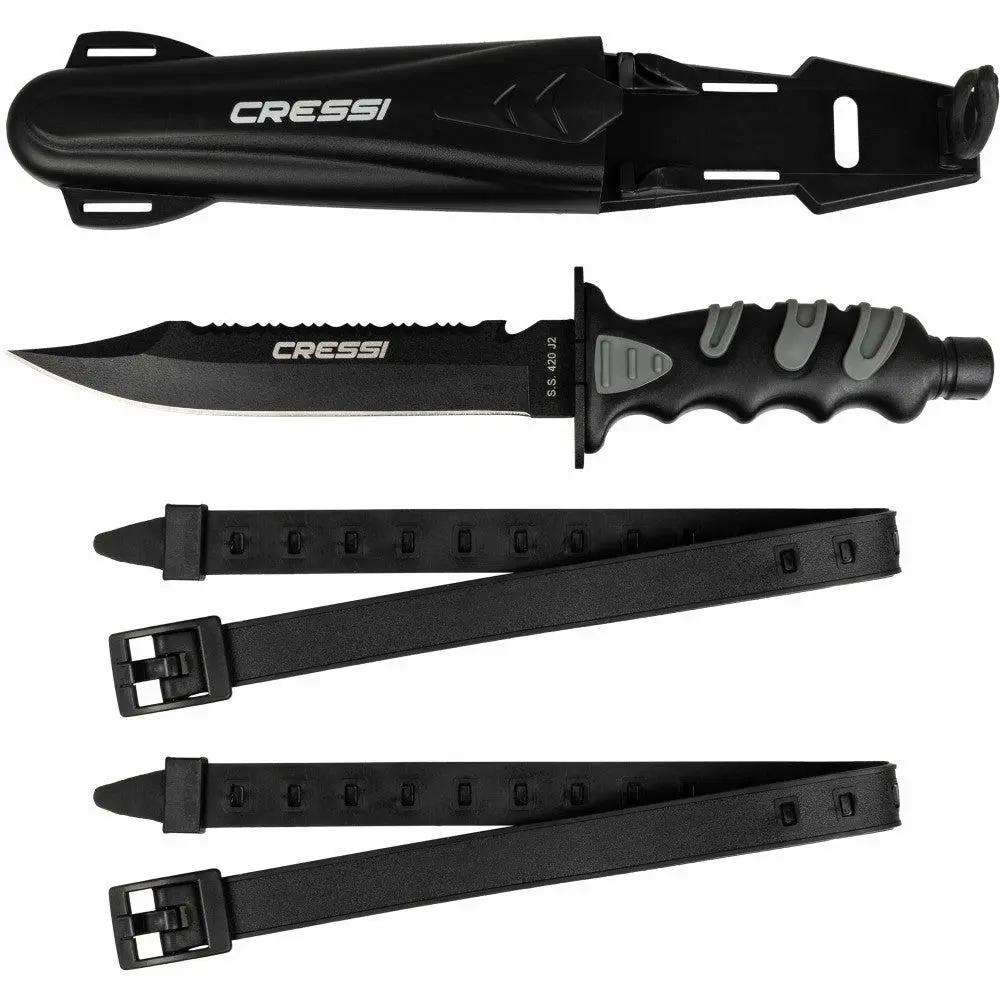
Why we wouldn't choose a large calf knife for everyday diving
A bulky knife can catch on loose equipment, line or other objects. Depending on where it’s mounted, it may also be difficult to reach if you become entangled or have limited movement.
Then there’s the blade itself.
Trying to draw and use a large knife in poor visibility or while stressed creates a risk of damaging your own equipment or injuring yourself.
The placement matters just as much as the blade. A cutting tool isn’t particularly useful if you can’t reach it when you need it.
That doesn’t mean large dive knives are always unnecessary. Certain commercial, public-safety and specialised diving activities may require different cutting capabilities.
But for a typical recreational diver concerned about fishing-line entanglement, a compact tool is often more practical.
What we'd buy instead:
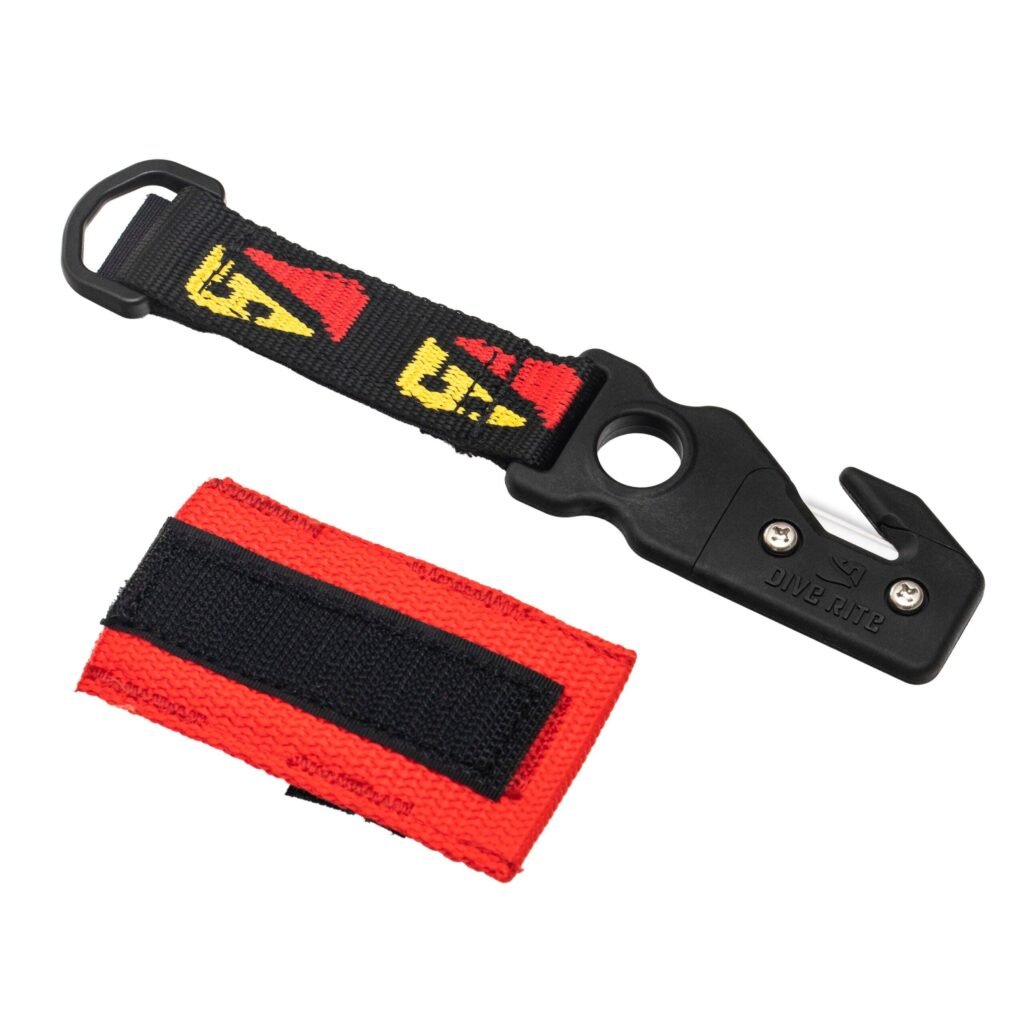
a compact line cutter
A good line cutter is small, easy to stow and designed to cut suitable line without requiring you to handle a long exposed blade.
We prefer equipment that can be secured neatly to a BCD or another accessible location without creating additional snagging points.
When choosing one, look for corrosion-resistant construction, a secure sheath, accessible placement and a cutting opening appropriate for the hazards you might encounter.
Remember that no single cutting tool handles every material. A line cutter designed for fishing line may not be suitable for heavy rope, cable or netting.
Our recommendation: Choose your cutting equipment for the environment, practise accessing it and inspect it regularly. If your diving involves more serious entanglement risks, seek appropriate training and consider carrying complementary cutting tools.
For further reading, Divers Alert Network has a useful article on choosing and carrying underwater cutting tools.
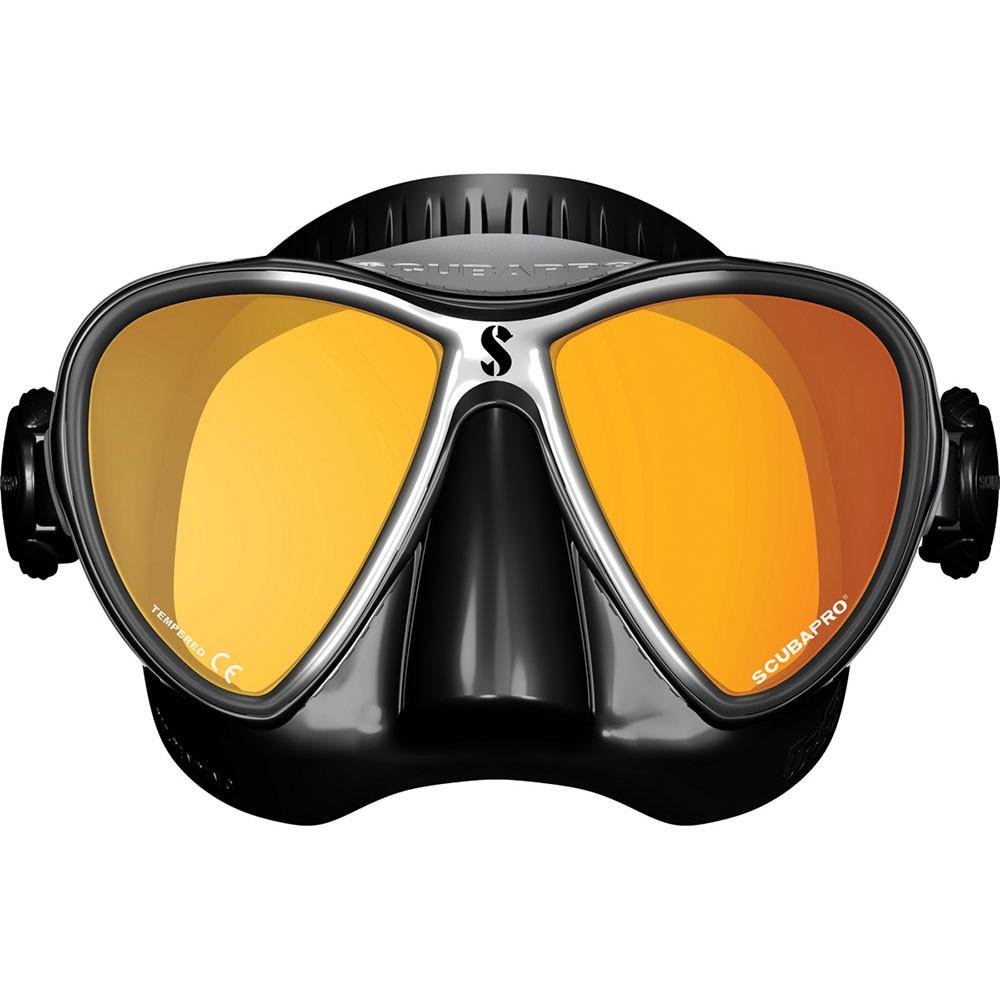
2. Mirrored and Tinted Dive Masks: Style Versus Visibility
Mirrored dive masks look fantastic in product photographs.
Some are designed to reduce glare in bright conditions, while particular lens tints may alter the appearance of colours underwater.
But there’s an important difference between a mask that looks impressive on the surface and one that suits the conditions of your dive.
The problem with darker lenses underwater
Natural light decreases with depth, and underwater visibility can change dramatically depending on cloud cover, suspended particles and the environment.
A heavily tinted lens may reduce the light reaching your eyes when you would prefer as much available light as possible.
There is also a communication consideration.
As instructors, we’ve learned how much information you can pick up from another diver’s facial expression.
A diver might signal that everything is fine while their eyes and behaviour suggest they’re becoming uncomfortable.
When a mask makes eye contact harder, you lose one potentially useful cue.
Of course, you should never rely on eye contact alone to assess another diver. Positioning, breathing, movement, communication and regular buddy checks are all important.
Are mirrored dive masks always a bad idea?
No.
Some freedivers, spearfishers and recreational divers enjoy particular lens tints, especially in bright, shallow conditions.
The issue is choosing them for appearance without considering visibility and communication.
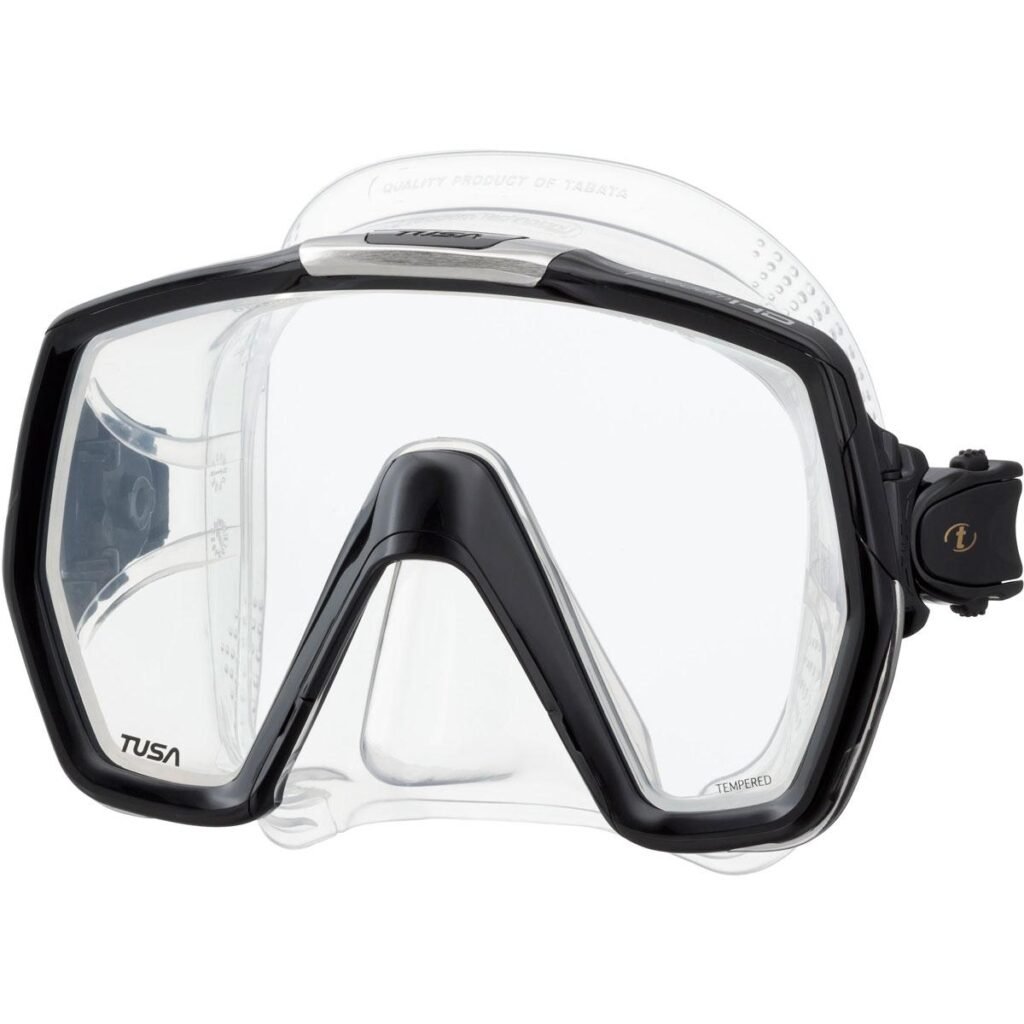
What we'd buy instead:
a clear-lens dive mask
For most recreational scuba diving, we’d prioritise a well-fitting mask with a clear lens, good field of view and comfortable skirt.
Fit matters more than branding or colour.
A premium mask that leaks or presses painfully against your face is a poor investment, however attractive it looks.
Try different masks before purchasing, check the manufacturer’s lens specifications and choose one appropriate for your diving conditions.
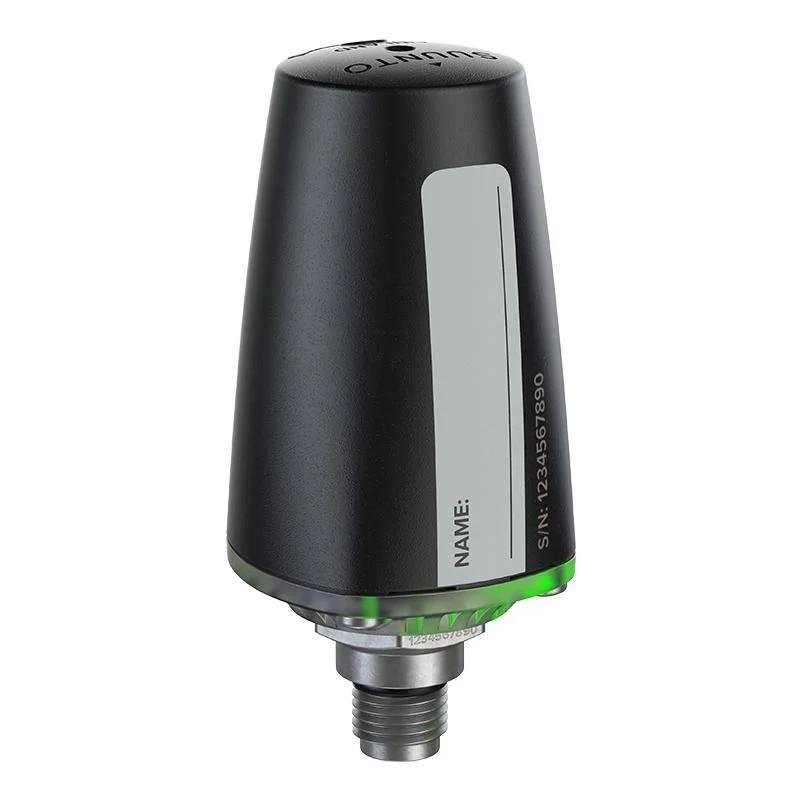
3. Wireless Air Transmitters: Are They Worth the Extra Money?
Wireless air integration is one of those scuba equipment upgrades that sounds almost irresistible.
Instead of checking a traditional submersible pressure gauge (SPG), you can view your cylinder pressure directly on a compatible dive computer.
Depending on the system, you may also get additional information about gas consumption and estimated remaining gas time.
Those features can be genuinely useful.
But does every recreational diver need them?
We don’t think so.
The practical limitations of wireless air integration
During our years of diving, we’ve encountered transmitters that were difficult to pair before a dive or temporarily lost their connection underwater.
It’s frustrating when you’re trying to prepare for a dive and your equipment suddenly demands troubleshooting.
A wireless system also introduces additional components to maintain, including batteries, electronic connections and compatibility requirements.
And, like any pressure-monitoring equipment, it needs appropriate inspection and servicing.
There have also been documented manufacturer recalls involving certain older wireless transmitters. That doesn’t mean modern wireless air integration is inherently unsafe, but it reinforces the importance of checking model-specific safety notices and following manufacturer instructions.
What about the advantages?
Wireless air integration can make gas information more convenient to monitor and may be particularly valuable for divers who appreciate integrated dive data.
Some experienced divers use it very successfully.
The important question isn’t whether wireless transmitters are good or bad. It’s whether their benefits justify the additional cost and complexity for your diving.
If you’re a new diver working within a limited equipment budget, there may be more valuable purchases to prioritise first.
What we'd buy instead:
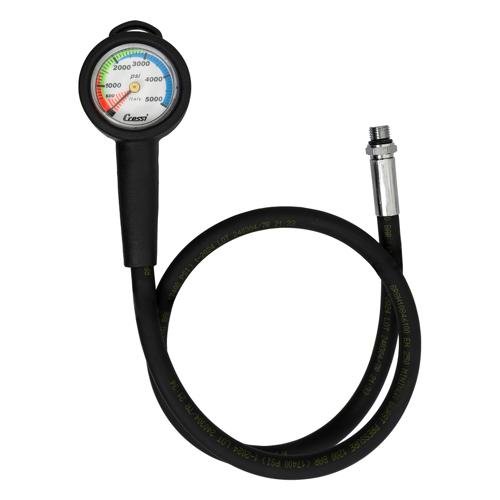
a reliable mechanical SPG
A traditional SPG provides a straightforward way to monitor cylinder pressure without requiring a wireless connection or electronic battery.
It still requires inspection, correct installation and maintenance, but it is a simple and well-established option.
If you prefer wireless air integration, consider what backup pressure information is appropriate for your equipment configuration, training and dive plan.
Our recommendation: Don’t buy a wireless transmitter simply because it looks like the next technological upgrade. Understand its benefits, limitations and compatibility before spending the money.
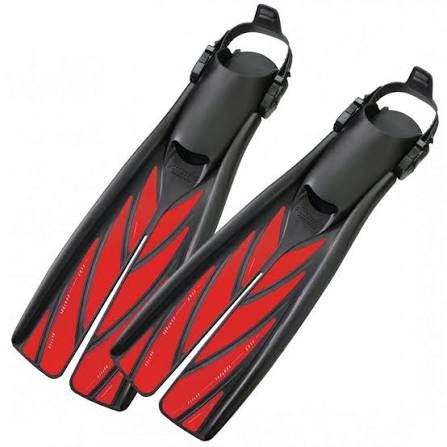
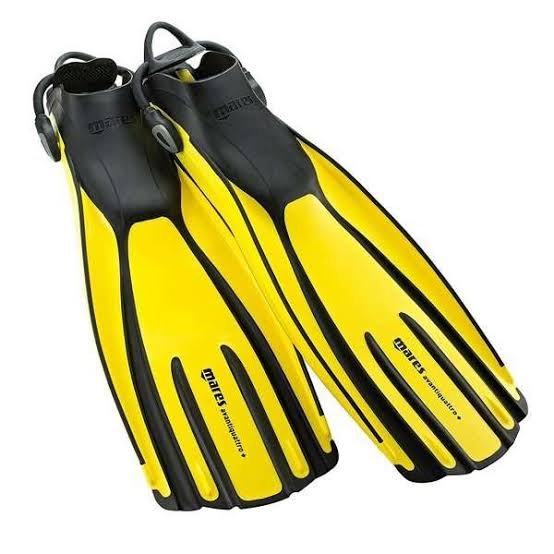
4. Split Fins: Comfortable, But Are They Right for Your Diving?
Split fins are one of the most divisive pieces of scuba equipment we’ve encountered.
Their design can reduce resistance during certain kicking movements, and some divers find them particularly comfortable.
If you experience joint discomfort or fatigue with traditional fins, that may be a meaningful advantage.
But comfort isn’t the only consideration when choosing fins.
Where split fins can become limiting
Split fins often work well with a relatively small, continuous flutter kick.
However, fin design affects how efficiently you can perform different movements.
For divers who regularly use frog kicks, back-finning or helicopter turns, some split-fin designs may provide less control than a suitable paddle fin.
This becomes particularly relevant when diving close to fragile environments or in confined spaces where precise movement matters.
You don’t want to stir up sediment in a wreck or damage coral because your equipment makes controlled positioning unnecessarily difficult.
What about strong currents?
Fin performance in current depends on the specific fin, the diver’s technique, fitness, equipment configuration and the conditions.
We prefer fins that provide confident propulsion and manoeuvrability in the demanding environments where we regularly dive.
For us, that generally means a well-matched paddle fin.
But we wouldn’t claim that every split fin is unsuitable for current diving. Different models perform differently, and some divers use them effectively.
The better question is whether the fins give you the control and propulsion you need for your typical dives.
What we'd buy instead:
open-heel paddle fins
For divers expecting varied conditions, we’d look at a pair of open-heel paddle fins with suitable boots.
Choose the blade stiffness, length, weight and foot-pocket fit for your strength, kicking technique and diving environment.
A very stiff fin isn’t automatically better. If it exhausts your legs, it may be the wrong choice.
Our recommendation: Try different fins in the water before committing. Comfort, propulsion and precise control matter more than marketing claims.
If you’re planning to dive in challenging conditions, read our guide to diving safely in strong currents for more advice on positioning, streamlining and conserving energy.
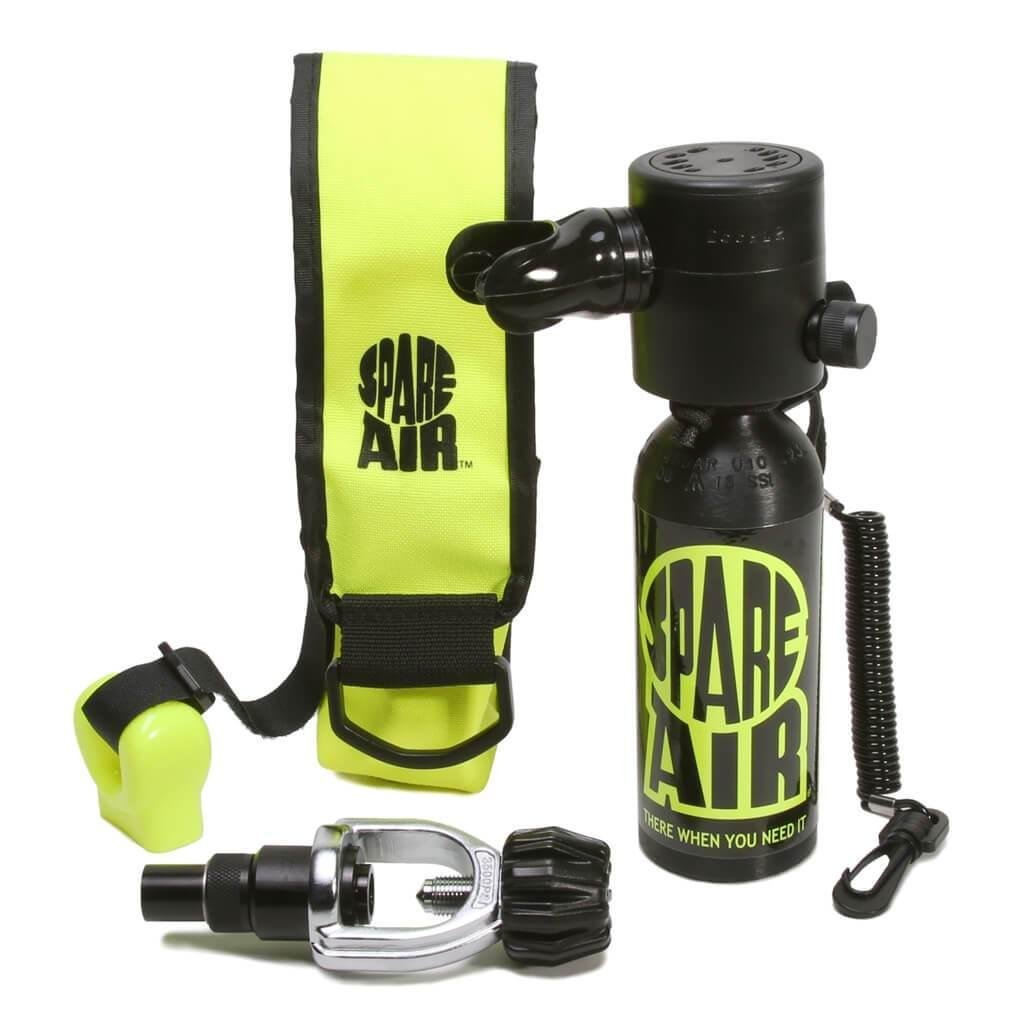
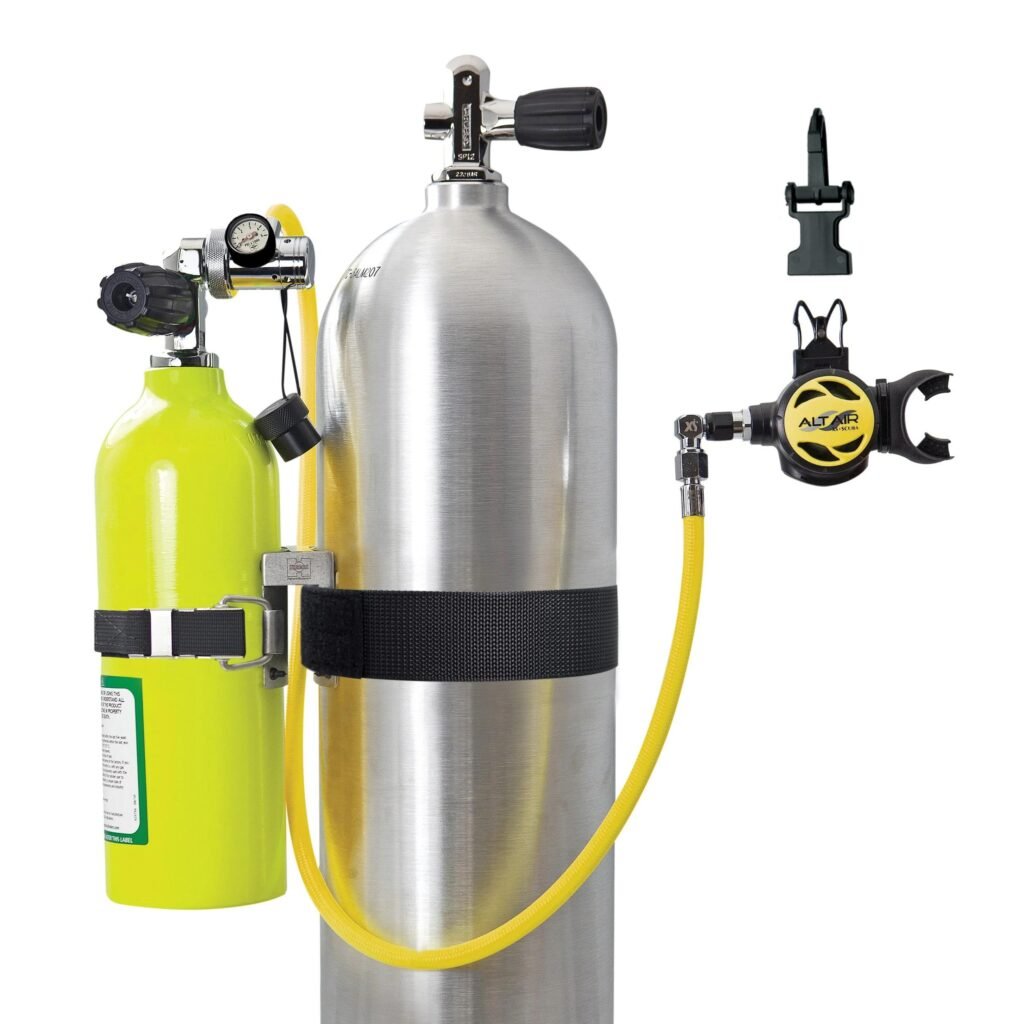
5. Tiny Spare Air Cylinders: How Much Breathing Gas Do You Really Get?
A tiny emergency breathing cylinder can look like an ingenious solution.
It’s compact, relatively easy to carry and promises an independent supply of breathing gas if something goes wrong.
But there’s a major question every diver should ask before buying one:
How much usable gas will it actually provide at depth?
Why cylinder size matters
Let’s use a simplified example.
A cylinder with a water capacity of 0.5 litres filled to 170 bar contains approximately 85 litres of free gas.
That might sound reassuring until you account for depth.
At 30 metres in seawater, ambient pressure is approximately four times surface pressure.
If your surface-equivalent breathing rate is 20 litres per minute, you would consume approximately 80 litres per minute at that depth.
In this simplified example, the cylinder would contain just over one minute of gas at 30 metres.
And that’s before allowing for unusable residual pressure, regulator performance, the gas needed during ascent or an increased breathing rate under stress.
If your breathing rate doubles during an emergency, the available time becomes considerably shorter.
These figures are illustrative, not an emergency ascent plan. Actual usable gas depends on the cylinder’s rated capacity, fill pressure, regulator, breathing rate and dive profile.
The danger of false reassurance
Our biggest concern isn’t that a small independent cylinder can never provide useful breathing gas.
It’s that divers may mistake a small emergency supply for an adequately planned redundant gas system.
An out-of-gas emergency can involve stress, exertion, delayed problem recognition and the need to manage a controlled ascent.
A cylinder should contain enough usable gas for the emergency scenario it is intended to address, with appropriate reserves.
That calculation must be based on your dive plan, breathing rates and training — not simply the claim that a product offers several minutes of air.
What we'd recommend instead:
best practices & self-reliance
For ordinary buddy diving, prioritise sound gas planning, regular pressure checks, suitable reserves, effective buddy procedures and emergency skills.
For divers undertaking activities that require independent redundancy, an appropriately sized pony cylinder or another trained redundant configuration may be suitable.
Cylinder size cannot be recommended universally. It must be calculated for the planned depth, ascent, breathing demand and other relevant factors.
If you’re considering independent diving, seek proper self-reliant diving training rather than assuming that carrying an additional cylinder makes you self-sufficient.
Our recommendation: Buy emergency breathing equipment only when you understand how to calculate the gas you need and have the training to deploy it safely.
Divers Alert Network provides further reading on independent emergency gas supplies and choosing suitable configurations.
6. Coiled Reef Hooks and Double-Pronged Hooks: Choose Carefully
Reef hooks are specialist equipment used in certain current-diving environments.
When appropriate and permitted, they can help a diver maintain position without continuously swimming against the current.
But not every reef-hook design is equally practical.
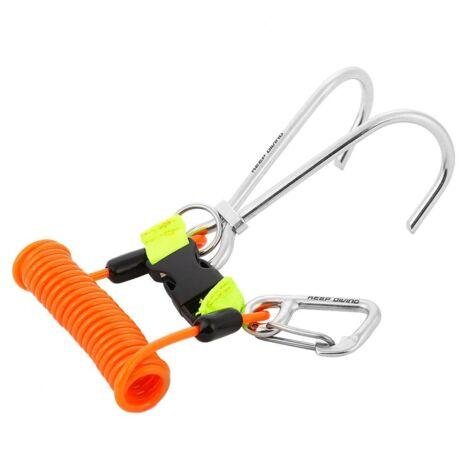
We’ve encountered problems with both coiled lanyards and bulky double-pronged hooks.
Why we're cautious about coiled lanyards
Some coiled lanyards are marketed as convenient because they retract neatly when not in use.
But we’ve seen unsuitable designs stretch, deteriorate or fail during demanding dives.
A lanyard must be appropriate for the forces involved, and its construction, attachment points and condition matter.
Don’t assume that a coiled accessory intended for securing small equipment is suitable for holding a diver in current.
The problem with double-pronged hooks
A double-pronged design might appear more secure.
In practice, we’ve found that the additional hook can make positioning or removing the equipment more awkward.
In particular, a bulky hook may be difficult to place or release cleanly in a suitable rocky crevice.
That’s not a situation where you want unnecessary complications.
What we'd buy instead:
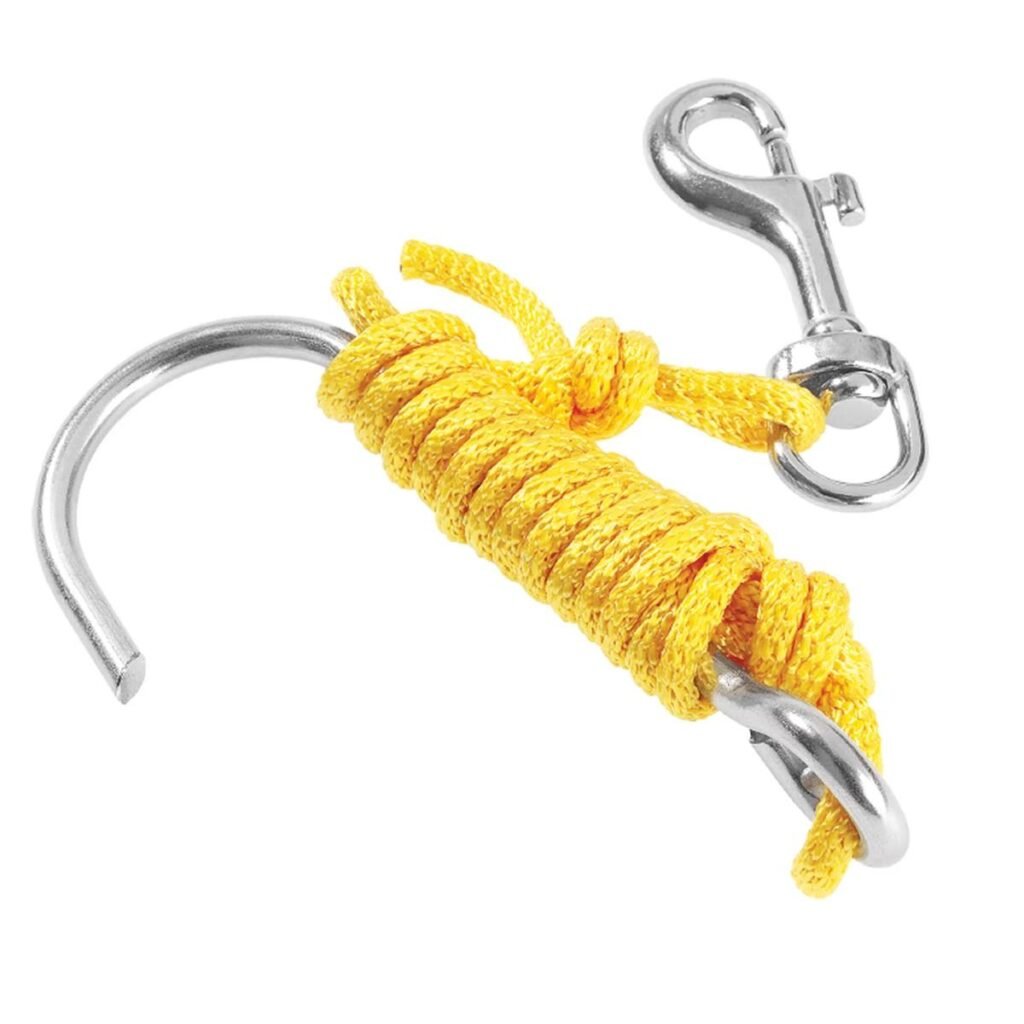
a single hook & plaited line
Where reef hooks are permitted and appropriate, we prefer a straightforward single-hook configuration with suitable line and secure attachment hardware.
However, the strength and suitability of any system depend on its complete design, not simply whether it uses rope or a coil.
Inspect the line and hardware before use, and follow the guidance of an experienced local operator.
Never attach a reef hook to living coral.
Reef-hook use is not appropriate everywhere, and some operators or protected areas prohibit it altogether.
It also requires the ability to maintain buoyancy, position your body correctly and release the equipment safely.
Our recommendation: Don’t buy a reef hook before you know whether it’s permitted at your intended dive sites and have received appropriate instruction.
For more on navigating currents and understanding when specialist equipment is appropriate, see our strong-current diving resources.
7. Retractable Gear Lanyards: Convenient Until They Fail
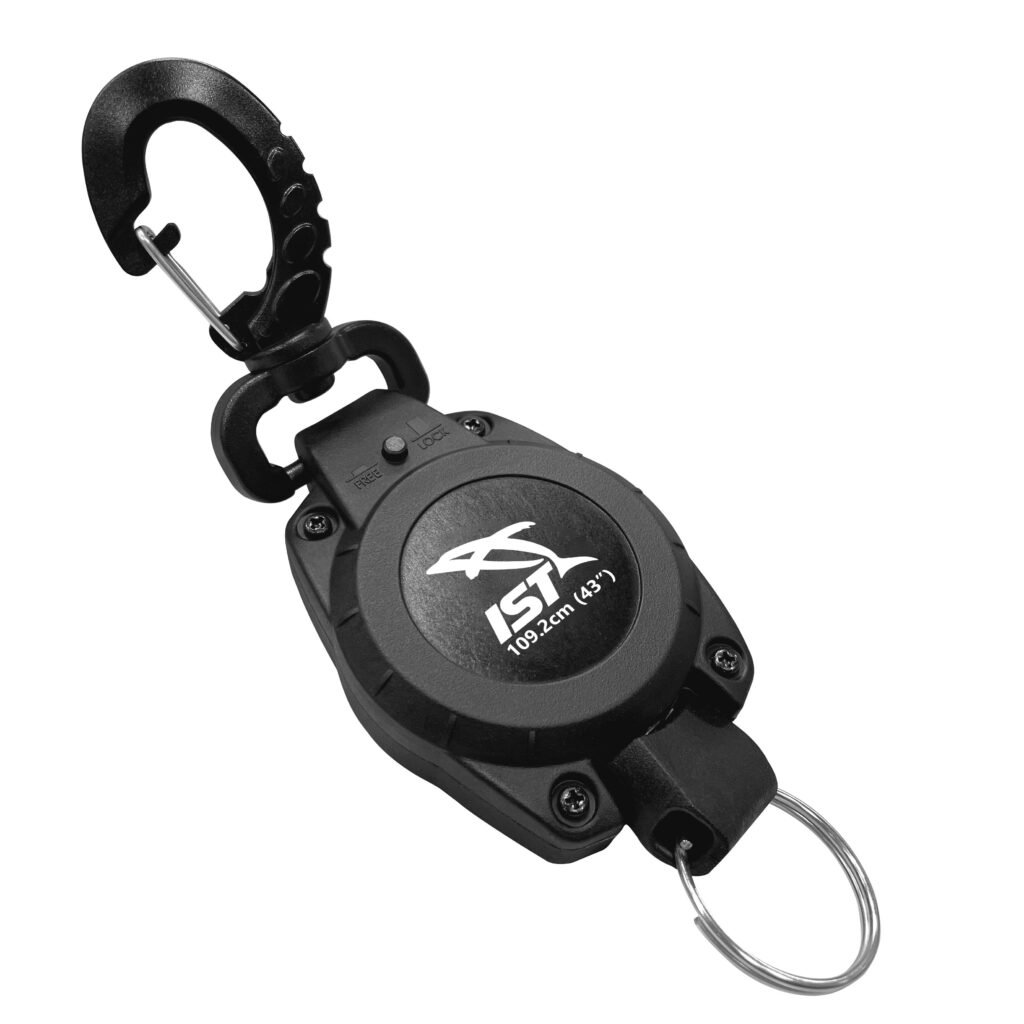
Retractable lanyards are designed to solve a familiar problem.
You want to secure your compass, torch or other small accessory without leaving it dangling from your BCD.
A spring-loaded retractor seems like an elegant solution: pull the equipment out, use it and let it return automatically.
Unfortunately, the mechanism can become another point of failure.
What we've experienced underwater
We’ve had retractors deteriorate after repeated exposure to saltwater and fine sediment.
When the mechanism stops retracting properly, the accessory may be left hanging where it can catch on other equipment or the environment.
A damaged cord can also compromise the security of whatever you’ve attached to it.
Of course, not all retractors are built to the same standard. Some are designed for demanding marine environments and perform reliably when properly maintained.
But for many accessories, we prefer simpler attachment methods.
What we'd buy instead:
bolt snaps and dedicated tethers
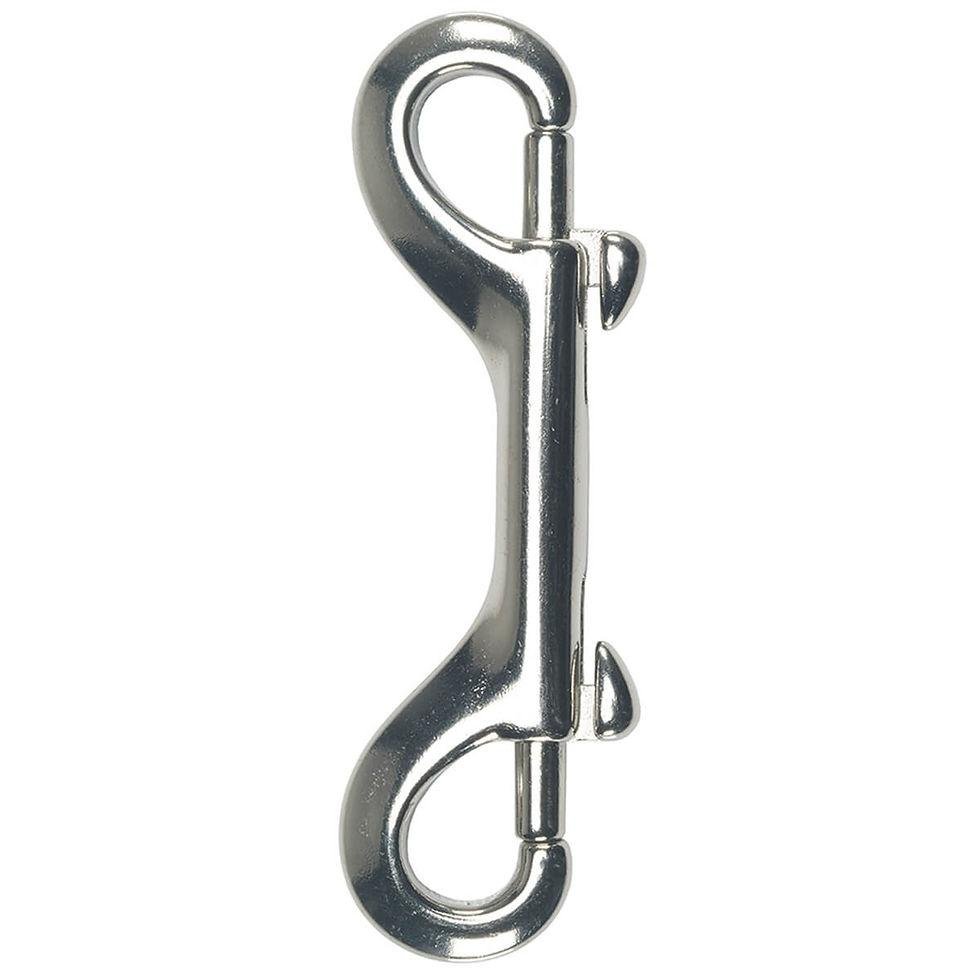
A stainless-steel bolt snap or double-ended clip can provide a simple, compact attachment point when configured correctly.
The aim is to keep equipment secure, streamlined and accessible without creating loose loops or snagging hazards.
For underwater cameras, we prefer purpose-built camera retention systems with appropriate attachment points and secure release mechanisms.
A camera tether should suit the weight and configuration of the rig, and any quick-release arrangement should be chosen with the diving environment in mind.
Our recommendation: Keep accessory attachment systems as simple as practical, but don’t compromise security or accessibility to save a few pounds.
What Scuba Gear Should Beginners Buy First?
After reading this list, you might be wondering which equipment is actually worth spending money on.
Our advice is to prioritise equipment that fits properly, suits the diving you intend to do and helps you develop good underwater habits.
For many new divers, that means starting with a comfortable mask, appropriate fins and boots, and suitable exposure protection before buying an extensive collection of accessories.
As you gain experience, you’ll have a better understanding of the dive computer, regulator, BCD and other equipment features that matter to you.
Where possible, try equipment before purchasing and ask a qualified instructor or reputable dive centre about compatibility, servicing and local diving conditions.
Better buoyancy, gas awareness and emergency skills will often make a greater difference to your diving than an expensive accessory.
How to Avoid Wasting Money on Scuba Equipment
Before buying your next piece of dive gear, ask yourself five questions:
- What problem does this equipment solve? Is it something you’ve actually encountered, or simply an attractive marketing claim?
- Will it suit your usual diving conditions? Equipment designed for calm tropical reefs may not be ideal for current, cold water or confined environments.
- Does it introduce additional complexity? Think about batteries, maintenance, attachments and compatibility.
- Can you use it confidently? Specialist equipment may require instruction and practice.
- Could a simpler alternative work just as well? Sometimes the most useful purchase is the least complicated one.
There is no universally perfect scuba equipment setup.
The right choices depend on your training, physical needs, diving environment and personal preferences.
Frequently Asked Questions
What scuba gear should a beginner buy first?
A comfortable, well-fitting mask and appropriate fins are common starting points. The best purchase order depends on your training, where you dive and whether rental equipment is readily available. Avoid rushing into expensive accessories before you understand what you need.
Are wireless air-integrated dive computers worth it?
They can be worthwhile for divers who value integrated gas information and additional dive data. However, they cost more and introduce electronic components and compatibility requirements. A traditional SPG remains a practical pressure-monitoring option.
Are split fins good for scuba diving?
Split fins can work well for some divers, particularly those who prefer a light flutter kick or find them more comfortable. Their suitability depends on the model, diving conditions and finning techniques you need.
Do scuba divers need a dive knife?
Divers should assess the cutting tools appropriate to their environment and dive plan. A compact line cutter may be suitable for common fishing-line hazards, while other environments require different tools. Accessibility and training are essential.
Is a small Spare Air cylinder enough for an emergency?
Not necessarily. The available breathing gas decreases rapidly with depth and increased breathing demand. Any independent emergency supply must be evaluated against a realistic gas plan and the diver’s training.
Should every diver carry a reef hook?
No. Reef hooks are specialist tools that are not appropriate or permitted at every site. Their use should be guided by local rules, environmental considerations, diving conditions and appropriate training.
Is expensive scuba gear always better?
No. More expensive equipment may offer valuable features, but price alone doesn’t determine suitability. Reliability, fit, maintenance, training and the intended diving environment are more important than buying the most feature-rich option.
Final Thoughts: Buy Equipment for the Diving You Actually Do
The seven products we’ve covered have one thing in common: they can look more useful in a shop than they turn out to be underwater.
Some have legitimate applications. Others may simply be unnecessary for the average recreational diver.
Our philosophy is to choose equipment that is reliable, easy to use, appropriately maintained and suited to the conditions we expect to encounter.
You don’t need every new accessory to become a better diver.
You need equipment you understand and skills you can rely on.
Want to see these seven purchases explained in more detail? Watch our accompanying YouTube video, where we share the experiences behind our recommendations.
And we’d love to hear from you: what’s the worst piece of scuba equipment you’ve ever bought?
Leave a comment below or join the discussion on our YouTube channel.
About the authors: Aaron & Cassie are experienced dive professionals and underwater content creators with more than 5,000 dives between them. Their work focuses on practical scuba diving advice, underwater photography and video, dive safety and destination guides across some of the world’s most exciting diving regions.