
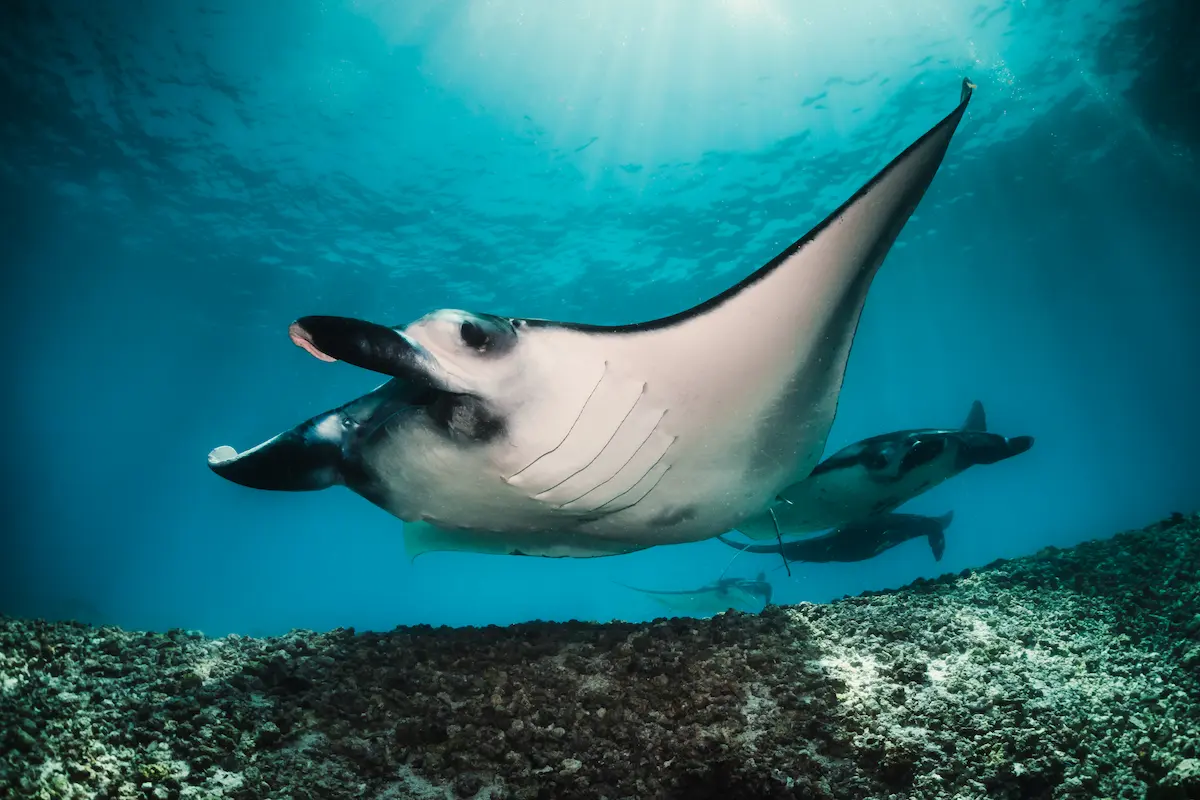
Best Dive Sites in Komodo Ranked: From Beginner Reefs to Legendary Drift Dives
The best dive sites in Komodo National Park range from beginner-friendly coral gardens to some of the world’s most exciting drift dives, shark encounters and adrenaline-filled underwater adventures.
This guide ranks the best dive sites in Komodo based on hundreds of dives across Central and Northern Komodo.
Komodo National Park is famous for three things:
Dragons.
Manta rays.
And currents powerful enough to humble even experienced divers.
After diving throughout Komodo across multiple trips spanning almost a decade, we’ve experienced everything from gentle turtle dives and manta encounters to adrenaline-fuelled drift dives, reef hooks, down currents and some of the strongest water movement we’ve encountered anywhere in the world.
The beauty of Komodo is that no two dives are ever quite the same.
A site that feels calm and beginner-friendly one day can become an advanced drift dive the next depending on tides, current direction and weather conditions.
That’s one of the reasons we keep returning.
In this guide, we’re ranking the best dive sites in Komodo’s Central and Northern regions based on:
- Marine life
- Coral health
- Difficulty
- Adrenaline factor
- Overall experience
This isn’t a scientific ranking.
It’s our personal opinion based on hundreds of dives, conversations with local guides and our own experiences exploring Komodo National Park.
For official park updates and information including closures and pricing visit the Komodo National Park official website for information
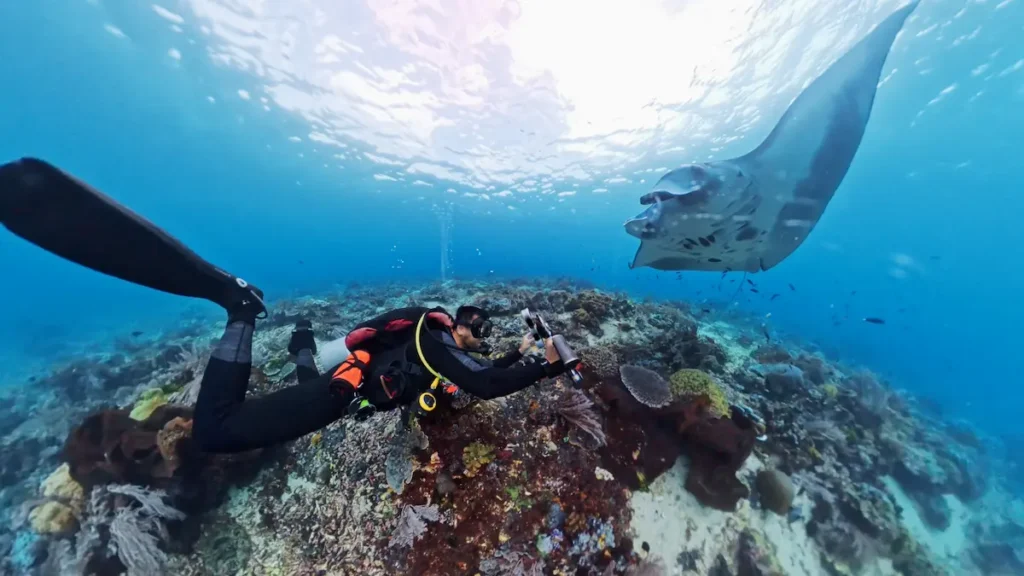
Watch: Our Komodo Dive Site Rankings Explained
Prefer to watch rather than read?
After hundreds of dives in Komodo National Park, we ranked the most famous dive sites from beginner-friendly coral gardens to adrenaline-filled drift dives. In this video, we explain exactly why sites like Batu Bolong, Castle Rock, Crystal Rock, The Cauldron and Tatawa Kecil made the list—and which sites we’d happily skip.
Watch the full breakdown below, then continue reading for our detailed rankings, dive site ratings and trip-planning advice.
Planning a Komodo Trip?
This article expands on the video with:
- Detailed site rankings
- Marine life ratings
- Difficulty scores
- Drift diving considerations
- Current and safety advice
- Insider tips from hundreds of dives in Komodo
New to drift diving?
Before diving Komodo’s famous current-swept sites such as Castle Rock, Crystal Rock, Siaba Kecil or The Cauldron, we recommend:
✓ Understanding drift diving
✓ Learning negative entries
✓ Carrying specialist dive insurance
✓ Practising SMB deployment
👉 Download our Strong Current & Drift Diving Guide
How We Ranked Komodo’s Dive Sites
Before we start, it’s important to understand that these rankings compare sites against other Komodo dive sites—not against dive sites elsewhere in the world.
An average dive in Komodo would be considered exceptional in many destinations.
That’s what makes ranking the best dive sites in Komodo so difficult.
Quick Answer: What Are The Best Dive Sites In Komodo?
Our highest-rated dive sites in Komodo National Park are:
1. Tatawa Kecil
2. Batu Bolong
3. Police Corner
4. The Cauldron
5. Crystal Rock
These sites offer the best combination of marine life, coral health, drift diving, pelagic encounters and overall diving experience.
Ranking Factors
| Factor | What We Consider |
|---|---|
| Marine Life | Biodiversity, sharks, mantas, schooling fish and macro life |
| Coral Health | Hard coral, soft coral and overall reef condition |
| Difficulty | Currents, entries, buoyancy demands and experience required |
| Adrenaline | Drift speed, current strength and excitement factor |
| Overall Experience | How memorable and unique the dive feels |
Komodo Dive Site Rankings Overview
| Tier | Dive Sites |
| S Tier – The Legends | Tatawa Kecil, Batu Bolong, Police Corner |
| A Tier – Cannot Misses | The Cauldron, Crystal Rock, Castle Rock, Golden Passage |
| B Tier – Solid Standards | Siaba Kecil, Tatawa Besar, Mawan |
| C Tier – Warm-Ups | Siaba Besar, China Shop |
| F Tier – The Skips | Sebayur Kecil, Makassar Reef |
Best Dive Sites in Komodo National Park Ranked
| Dive Site | Marine Life | Difficulty | Adrenaline | Best For |
|---|---|---|---|---|
| Tatawa Kecil | 5 | 3-5 | 3-5 | Experienced Drift Divers |
| Batu Bolong | 5 | 4 | 5 | Coral & Biodiversity |
| Police Corner | 5 | 4 | 3 | Macro & Coral Lovers |
| The Cauldron | 3 | 4 | 5 | Current Addicts |
| Crystal Rock | 4 | 4 | 5 | Sharks & Action |
| Castle Rock | 4 | 5 | 5 | Pelagics & Reef Hooks |
| Golden Passage | 4 | 3 | 4 | Variety |
| Siaba Kecil | 4 | 4 | 5 | Fast Drift Diving |
| Tatawa Besar | 3 | 3 | 3 | Intro To Drift Diving |
| Mawan | 4 | 1 | 2 | Manta Rays |
| Siaba Besar | 4 | 1 | 1 | Turtles |
| China Shop | 3 | 1 | 1 | Coral Gardens |
| Makassar Reef | 4 | 2 | 3 | Mantas |
| Sebayur Kecil | 2 | 1 | 1 | Check Dives |
F Tier: The Skips
Calling any Komodo dive site “skippable” feels harsh.
Even the sites in this category would rank among the best dives in many destinations around the world.
But compared to the heavyweights of Komodo, these are the sites we’d be most willing to miss.
Sebayur Kecil
Located just outside the national park boundary, Sebayur Kecil is often used as a check dive or warm-up dive at the start of a trip.
And to be fair, it does that job well.
You’ll find healthy coral patches, reef fish and occasional larger marine life.
However, compared to what awaits inside Komodo National Park, it lacks the wow factor.
During our most recent visit, it was also one of the few sites where we noticed visible signs of coral bleaching.
That doesn’t mean the reef is dead—far from it.
But when you’re comparing it against some of the healthiest reefs in Indonesia, it struggles to compete.
Sebayur Kecil Ratings
| Category | Score |
| Marine Life | 2/5 |
| Difficulty | 1/5 |
| Adrenaline | 1/5 |
Best For
- Check dives
- Buoyancy practice
- First dive of a trip
Makassar Reef (Manta Point)
This may be our most controversial ranking.
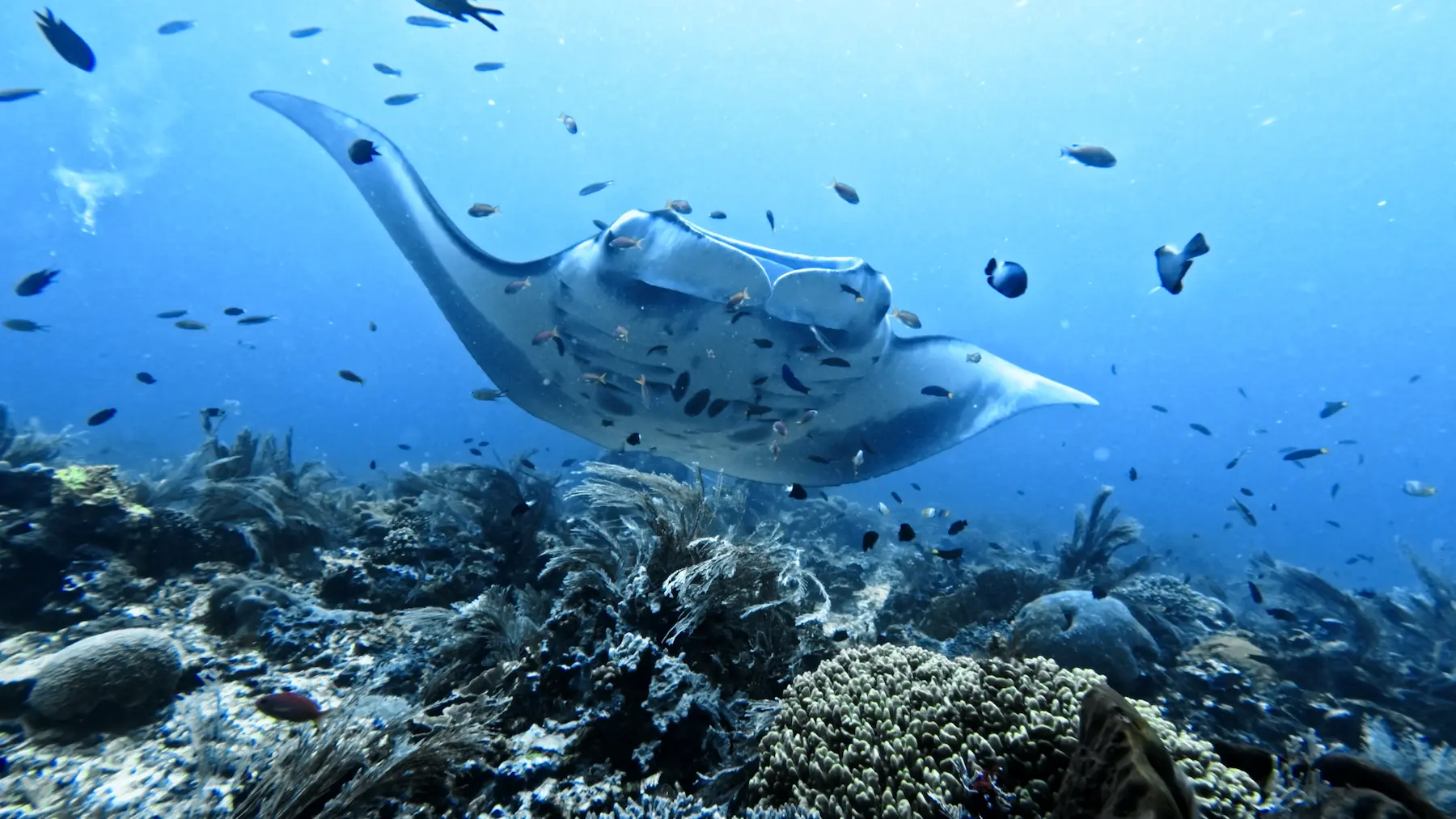
Makassar Reef—often referred to as Manta Point—is one of Komodo’s most famous dive sites.
And for good reason.
Years ago, we experienced our best manta dive ever here with more than fifty manta rays circling overhead.
But here’s the problem:
Without mantas, this site can feel surprisingly average.
The dive itself is essentially a drift over a largely rubble-based seabed punctuated by cleaning stations where mantas gather.
When the mantas show up, the dive becomes unforgettable.
When they don’t, there are stronger alternatives elsewhere in Komodo.
That’s why we’ve placed it lower than many divers might expect.
Makassar Reef Ratings
| Category | Score |
| Marine Life | 4/5 |
| Difficulty | 2/5 |
| Adrenaline | 3/5 |
Best For
- Manta ray encounters
- Beginner drift diving
- Central Komodo itineraries
C Tier: The Warm-Ups
These are some of the most beginner-friendly dive sites in Komodo.
They may not deliver the heart-racing excitement of the northern drift dives, but they showcase why Komodo’s biodiversity is world-famous.
Siaba Besar (Turtle City)
Siaba Besar is one of those sites that appears on almost every Komodo itinerary, because, despite it’s relatively easy conditions, it’s undoubtedly one of the best dive sites in Komodo
And honestly?
It deserves to be on the itinerary.
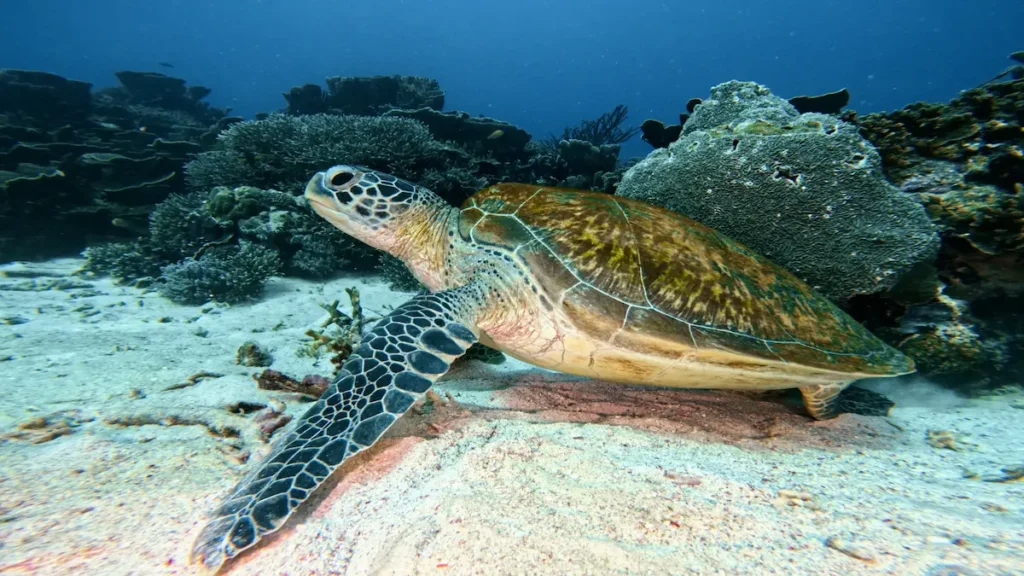
Nicknamed “Turtle City”, this gentle reef is one of the most reliable places in Komodo to encounter green turtles.
What impressed us most on our latest visit was how healthy the reef still looked nearly a decade after we first dived here.
The hard coral coverage remains excellent, and the biodiversity is remarkable.
You won’t find ripping currents or adrenaline-pumping descents.
Instead, you’ll enjoy a relaxed dive packed with life.
Siaba Besar Ratings
| Category | Score |
| Marine Life | 4/5 |
| Difficulty | 1/5 |
| Adrenaline | 1/5 |
Best For
- Beginners
- Underwater photography
- Turtle encounters
- Relaxed reef diving
China Shop
China Shop often lives in the shadow of its more famous neighbour, The Cauldron.
That’s a shame.
Because on its own merits, it’s a beautiful dive site.
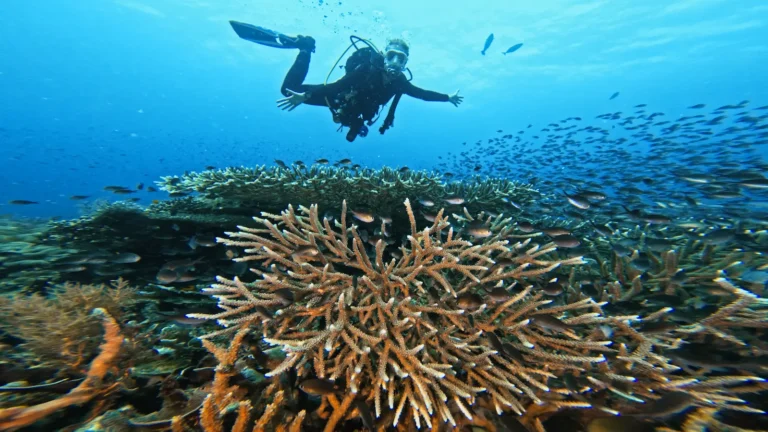
The reef slopes gently away from the islands and is covered with healthy coral gardens, schooling reef fish and plenty of macro life.
Most divers experience China Shop as the final section of a Cauldron dive after being fired through The Shotgun.
When visited independently, however, it offers a peaceful and enjoyable contrast to some of Komodo’s more extreme sites, which to us makes it one of the best dives sites in Komodo and not to be missed.
It also serves as a great dive site for those who aren’t confident enough for the challenge of the cauldron and shotgun – and often provides an more extended dive time amongst the beautiful coral gardens in comparison.
China Shop Ratings
| Category | Score |
| Marine Life | 3/5 |
| Difficulty | 1/5 |
| Adrenaline | 1/5 |
Best For
- Coral lovers
- Macro photographers
- Beginner divers
- Combined dives with The Cauldron
B Tier: The Solid Standards
This is where Komodo starts to reveal its true personality.
These are the dive sites that most divers will encounter during a typical trip and where you’ll begin to understand why Komodo has earned its reputation as one of the world’s premier current-diving destinations.
They’re not quite in the “fly across the world for this one dive” category.
But they’re very likely to become highlights of your trip.
Mawan
Mawan is often overshadowed by the more famous Manta Point (Makassar Reef), but these days we’d choose Mawan almost every time.
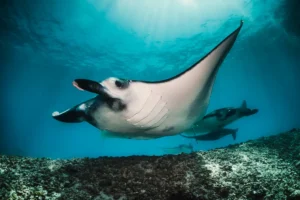
Like Makassar Reef, Mawan is a manta cleaning station where reef mantas regularly visit to have parasites removed by cleaner fish.
The difference is that Mawan offers a more complete dive.
Even when the mantas don’t appear, you’ll still find healthy coral bommies, reef fish, macro life and a surprisingly diverse ecosystem. If that doesn’t make this one of the best dive sites in Komodo – we don’t know what else you could be hoping for on a dive!
That’s important because manta encounters are never guaranteed.
We’ve had spectacular dives here with multiple mantas circling overhead and we’ve also had dives where they never arrived.
When that happens, Mawan still delivers.
Mawan Ratings
| Category | Score |
|---|---|
| Marine Life | 4/5 |
| Difficulty | 1/5 |
| Adrenaline | 2/5 |
Best For
- Manta rays
- Beginner divers
- Underwater photography
- Central Komodo itineraries
Current Conditions
Typically mild to moderate.
Most divers will find Mawan significantly more approachable than the northern sites.
Tatawa Besar
Tatawa Besar is one of the dives that perfectly introduces divers to the excitement of Komodo drift diving.
At first glance it doesn’t look particularly dramatic.
The reef slopes gently away into the blue and is covered with healthy hard coral, soft coral and schooling fish.
But when the current starts moving, the site transforms.
Instead of swimming from point to point, you’ll drift effortlessly along the reef while marine life appears around every corner.
We’ve always loved the sheer scale of this dive.
The reef seems to go on forever, which is what makes it one of the best dive sites in Komodo
The downside?
Current.
Tatawa Besar is often promoted as an intermediate site, but under the wrong conditions it can quickly become an advanced dive.
Strong currents, negative entries and occasional down currents mean divers need to be comfortable following their guide closely.
If you’re new to current diving, this is often where you’ll discover whether you love drift diving or hate it.
Most people end up loving it.
Tatawa Besar Ratings
| Category | Score |
| Marine Life | 3/5 |
| Difficulty | 3/5 |
| Adrenaline | 3/5 |
When Conditions Are Ripping
| Category | Score |
| Difficulty | 5/5 |
| Adrenaline | 5/5 |
Best For
- Drift diving
- Coral reefs
- Intermediate divers
- Learning current awareness
Current Conditions
Moderate to strong.
Can occasionally produce significant down currents.
Read Next
Planning a trip to Komodo?
Before diving current-heavy sites like Tatawa Besar, it’s worth understanding how drift diving actually works and how to manage stronger currents safely.
👉 Read: What Is Drift Diving? A Beginner’s Guide to Diving in Current
Siaba Kecil
If Tatawa Besar is Komodo’s introduction to current diving…
Siaba Kecil is where things get serious.
This is one of the fastest drift dives in Komodo National Park and can feel more like an underwater rollercoaster than a traditional reef dive.
The site is famous for its dramatic overhangs that line the reef edge.
When the current is running, these structures create all sorts of interesting water movement including:
- Accelerated current
- Down currents
- Upwellings
- Washing machine effects
The first section of the dive is often exhilarating.
You’ll fly along the reef while the scenery rushes past at remarkable speed.
For experienced divers, it’s incredibly fun.
For inexperienced divers, it can be overwhelming.
The key is remaining calm and staying close to the reef where the current is often weaker.
Once you reach the protected side of the island, the dive changes completely.
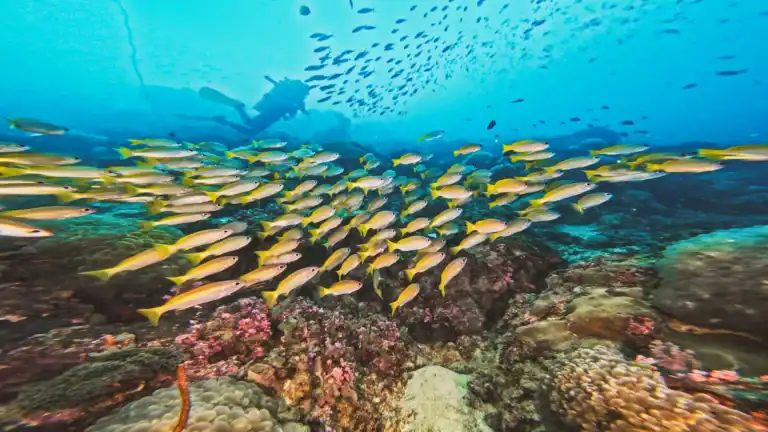
The current relaxes and you’re rewarded with healthy coral gardens, schooling fish, reef sharks and some excellent macro opportunities.
We’ve also encountered manta rays here several times.
Local guides occasionally report dugong sightings too, although we’ve never been lucky enough to see one ourselves.
Siaba Kecil Ratings
| Category | Score |
| Marine Life | 4/5 |
| Difficulty | 4/5 |
| Adrenaline | 5/5 |
For Less Experienced Divers
| Category | Score |
| Difficulty | 5/5 |
| Adrenaline | 5/5 |
Best For
- Experienced drift divers
- Adrenaline seekers
- Advanced current diving
- Fast drift dives
Current Conditions
Strong to very strong.
Negative entries are often required.
Not recommended for divers who are uncomfortable in current.
Which Komodo Sites Have The Strongest Currents?
At this point, many divers ask:
“Which dive sites in Komodo have the strongest currents?”
Based on our experience, these are among the most current-intensive sites in the park:
| Dive Site | Typical Current Strength |
| Siaba Kecil | Extreme |
| Tatawa Kecil | Extreme |
| Castle Rock | Strong to Extreme |
| Crystal Rock | Strong to Extreme |
| The Cauldron | Moderate to Extreme |
| Tatawa Besar | Moderate to Strong |
The important thing to understand is that current strength changes daily.
A site that feels relatively straightforward one day may become completely different the next.
That’s why listening to your dive guide is so important in Komodo.
Local guides understand:
- Tide cycles
- Current direction
- Entry timing
- Diver ability levels
- How to spot and navigate down currents
Far better than any guidebook or blog ever can.
And it’s also why Komodo remains one of the most exciting places we’ve ever dived.
For greater comfort and understanding of how to do drift dives, consider taking the PADI Drift Diver Speciality Course before diving high current destinations like Komodo.
A Tier: The Cannot Misses
These are the dive sites that define Komodo diving.
The sites that appear on bucket lists.
The sites that divers travel halfway around the world to experience.
Every one of these dives can deliver a world-class experience under the right conditions. These are all deservedly listed amongst the best dive sites in Komodo.
Golden Passage
Golden Passage is one of Komodo’s most underrated dive sites and undoubtedly, for us, one of the best dive sites in Komodo.
While many divers obsess over Castle Rock, Crystal Rock and Batu Bolong, Golden Passage quietly delivers one of the most varied dives in the entire national park.
What makes it special is the variety.
The dive often begins on a relatively gentle reef before transitioning into a fast-moving channel drift that eventually opens onto one of the most beautiful coral gardens in Komodo.
It feels like three completely different dives combined into one.
We’ve been fortunate enough to dive Golden Passage around sunset from a liveaboard and it remains one of our favourite Komodo memories. For us, this will always be one of the best dive sites in Komodo.
When the light hits the reef at the right angle, the site genuinely lives up to its name.
Golden Passage Ratings
| Category | Score |
|---|---|
| Marine Life | 4/5 |
| Difficulty | 3/5 |
| Adrenaline | 4/5 |
Best For
- Drift diving
- Coral lovers
- Liveaboard itineraries
- Sunset dives
Castle Rock
Castle Rock is one of the most iconic dive sites in Indonesia. If you ask people to name one of the best dives sites in Komodo – you’ll no doubt hear this dive site come up!
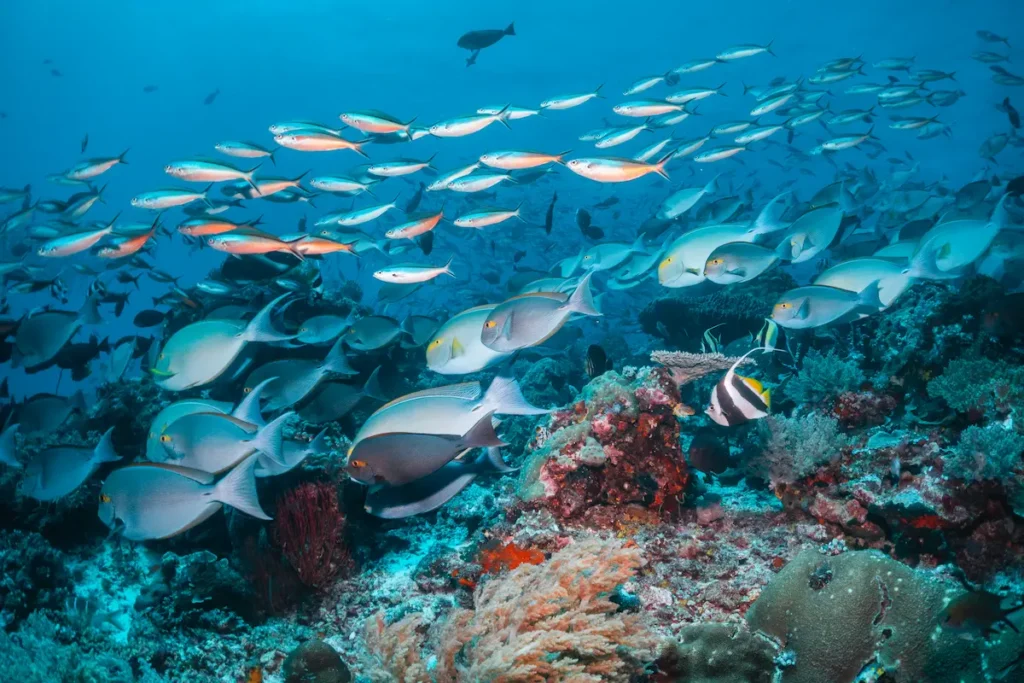
This exposed pinnacle sits in open water and is famous for powerful currents, sharks and enormous schools of fish.
Unlike many drift dives, Castle Rock is all about arriving at the pinnacle and holding position.
You’ll typically descend quickly and use a reef hook on the split side of the pinnacle while watching nature unfold in front of you.
When conditions are right, the action can be spectacular.
Massive schools of fusiliers.
Giant trevally.
Hunting tuna.
White-tip reef sharks.
Grey reef sharks.
The stronger the current, the more life tends to appear.
However, Castle Rock is highly dependent on conditions.
We’ve experienced incredible dives here.
We’ve also experienced dives that felt surprisingly quiet.
For that reason alone, it just misses out on our S Tier rankings.
Castle Rock Ratings
| Category | Score |
| Marine Life | 4/5 |
| Difficulty | 5/5 |
| Adrenaline | 5/5 |
Best For
- Shark encounters
- Reef hook diving
- Advanced divers
- Pelagic action
Important
Castle Rock is not the place to learn how to use a reef hook.
You should already be comfortable with:
- Negative entries
- Current awareness
- Buoyancy control
- Reef hook procedures
before attempting this site.
Crystal Rock
If Castle Rock has a twin sister, it’s Crystal Rock.
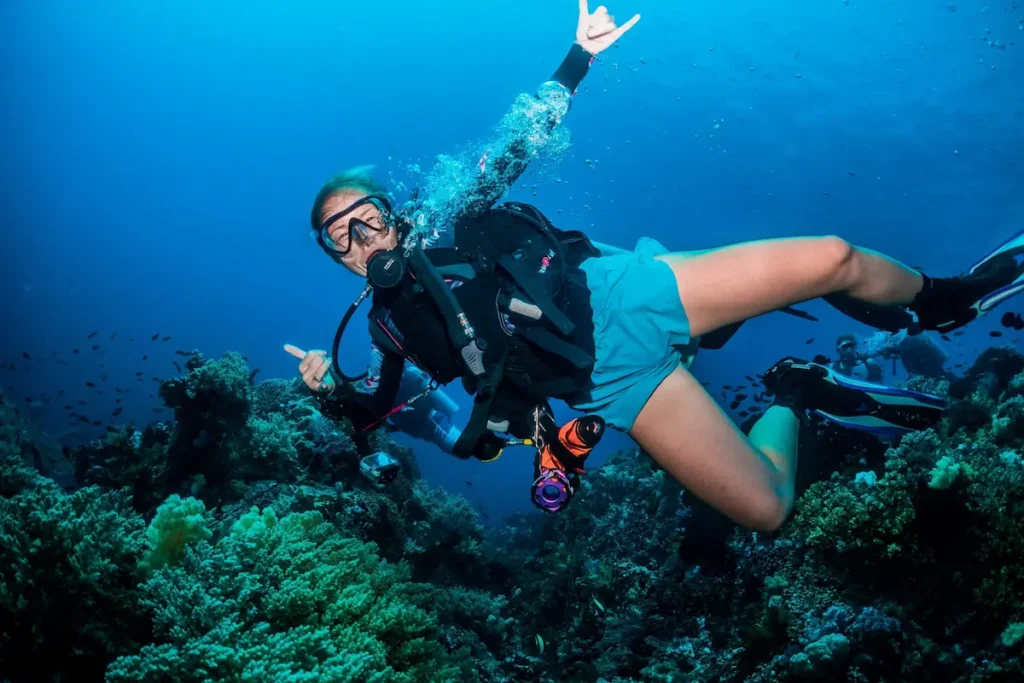
Located nearby, Crystal Rock offers a similar pinnacle-style dive but with one major advantage:
It’s more consistent.
We find Crystal Rock delivers excellent diving even when the currents aren’t at their strongest.
The coral coverage is generally better than Castle Rock and the reef feels more vibrant overall.
You’ll still encounter strong currents, schooling fish and shark action.
But we often find the dive slightly more forgiving.
For many divers, Crystal Rock ends up becoming their favourite pinnacle dive and one of the best dive sites in Komodo.
Crystal Rock Ratings
| Category | Score |
| Marine Life | 4/5 |
| Difficulty | 4/5 |
| Adrenaline | 5/5 |
Best For
- Sharks
- Reef hooks
- Schooling fish
- Advanced drift diving
The Cauldron (The Shotgun)
Few dive sites in the world offer an experience quite like The Cauldron, and if you can handle it’s intensity, there’s no doubt that this is one of the best dive sites in Komodo and an experience like no other.
Located between Gili Lawa Laut and Gili Lawa Darat, this site begins innocently enough.
The first section feels like a relatively normal reef dive.
Then you arrive at the crater.
This enormous bowl-shaped depression funnels water into a narrow channel known as The Shotgun.
And that’s where things become interesting.
As water is squeezed through the channel, it accelerates dramatically.
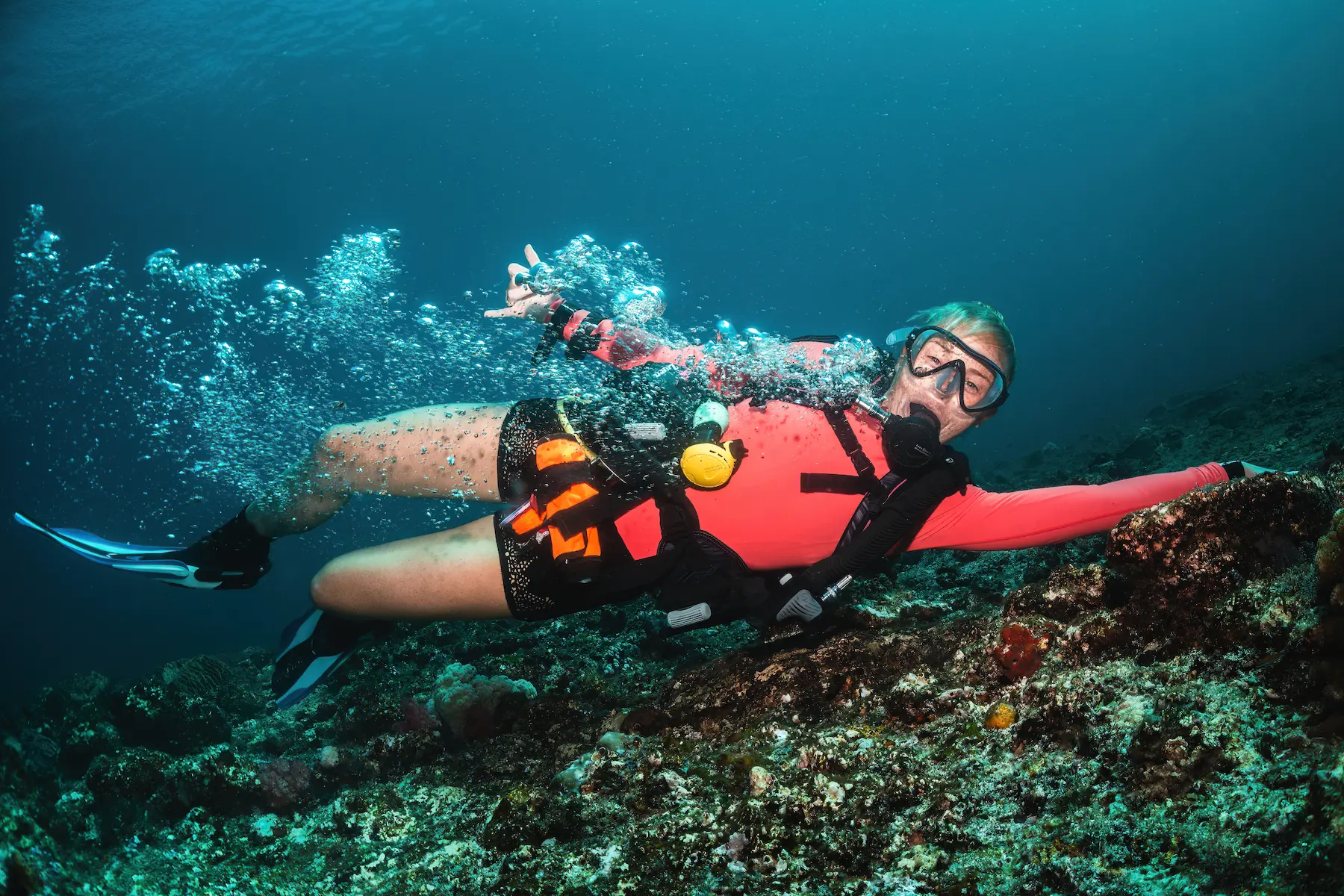
Divers typically hook into the edge of the channel and watch the spectacle unfold before being launched through The Shotgun itself.
At peak flow, the sensation is unforgettable.
Manta rays occasionally visit to take advantage of the plankton-rich water.
The final section usually drifts into China Shop, where the current relaxes and the dive finishes among beautiful coral gardens.
The Cauldron Ratings
| Category | Score |
| Marine Life | 3/5 |
| Difficulty | 4/5 |
| Adrenaline | 5/5 |
Best For
- Unique topography
- Strong current diving
- Manta encounters
- Adventure seekers
S Tier: The Legends
These are the sites that define Komodo.
The dives we still think about long after surfacing.
The dives that keep drawing us back.
Police Corner
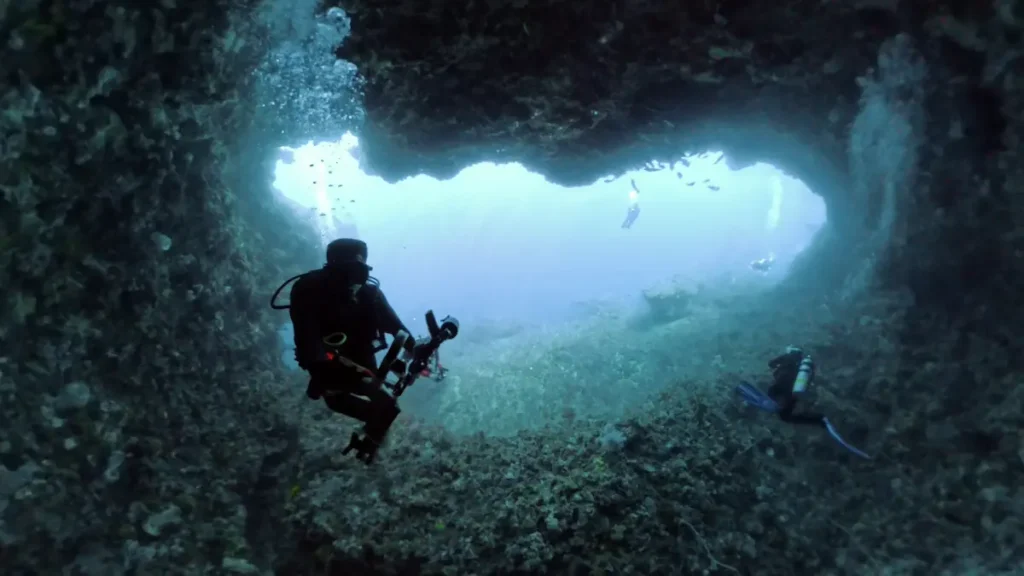
Police Corner is one of Komodo’s hidden masterpieces.
Many visiting divers never get the opportunity to dive it because conditions need to align perfectly.
Ironically, unlike many Komodo sites, Police Corner is often best when the current is relatively calm.
The reef itself is extraordinary.
Two towering overhangs extend into deeper water, the deepest second ledge is at 30m+.
Healthy coral blankets the upper sections.
Macro life hides among every crack and crevice.
Schooling fish move through the reef while pelagics occasionally patrol the blue.
Despite experiencing one of our most intimidating dives ever at Police Corner, it remains one of our favourite sites and undoubtedly one of the best dive sites in Komodo.
That’s how good it is.
Never dive without speciality dive insurance – check out DAN Insurance, professional divers top choice and the industry standard for safety.
Police Corner Ratings
| Category | Score |
| Marine Life | 5/5 |
| Difficulty | 4/5 |
| Adrenaline | 3/5 |
Best For
- Coral reefs
- Macro life
- Photography
- Experienced divers
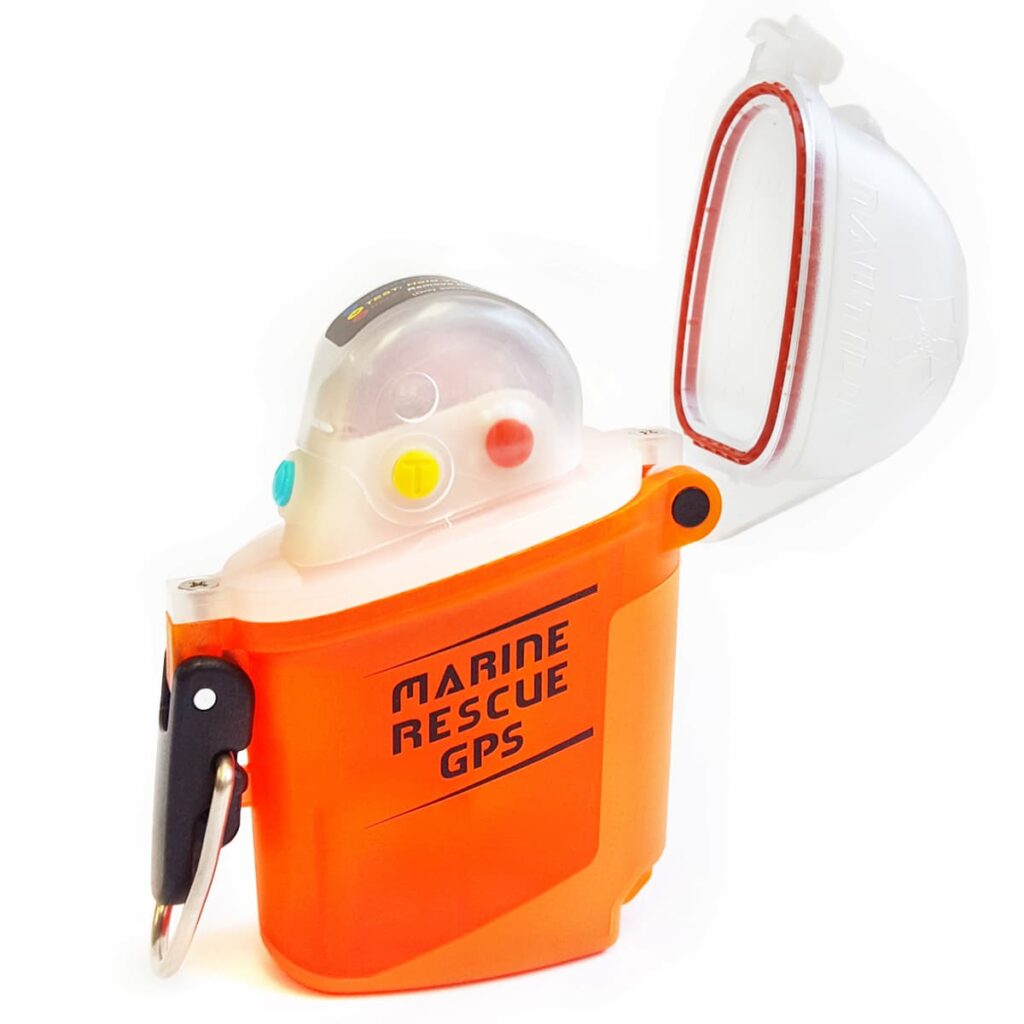
Many experienced divers visiting Komodo also carry a personal marine rescue GPS such as the Nautilus Lifeline when diving in remote, high-current environments.
Use code: aaronandcassie for 10% Off
Batu Bolong
If you’ve researched Komodo diving, you’ve almost certainly heard of Batu Bolong.
There’s a reason.
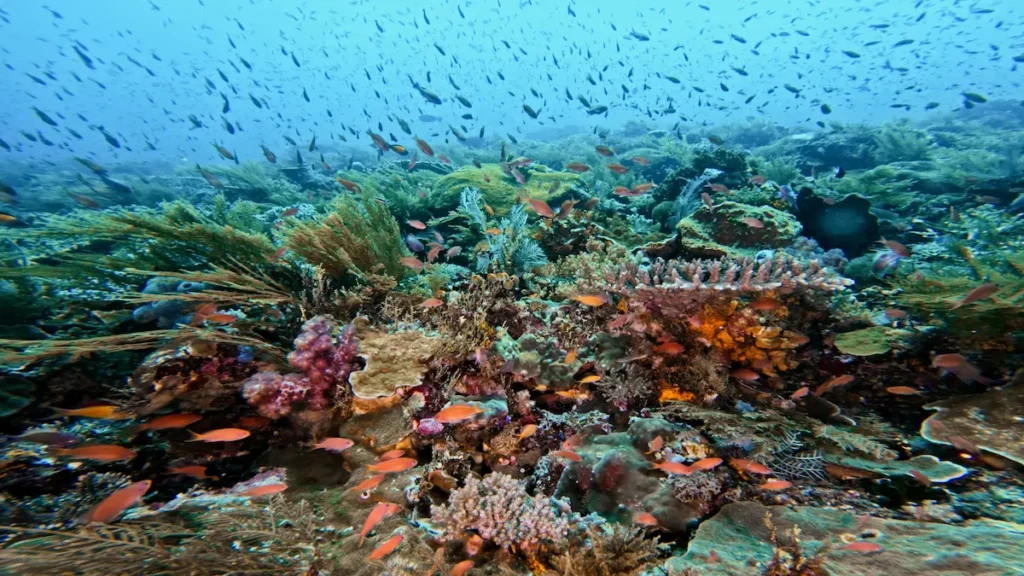
This tiny rock rising from the depths of the Lintah Strait may be one of the most famous dive sites in Southeast Asia.
The site sits in a powerful channel and is constantly fed by nutrient-rich water.
As a result, marine life explodes from every surface.
Most dives begin with a negative entry and a descent through a dramatic chimney-like section of reef.
From there, divers carefully zig-zag their way along the protected side while avoiding the powerful currents and whirlpools that exist around the exposed edges.
Timing is everything.
Dive Batu Bolong during overcrowded conditions and it can feel chaotic.
Dive it at the right moment and you’ll experience not just one best dive sites in Komodo, but one of the most spectacular reefs in the world.
Batu Bolong Ratings
| Category | Score |
| Marine Life | 5/5 |
| Difficulty | 4/5 |
| Adrenaline | 5/5 |
Best For
- Coral reefs
- Biodiversity
- Photography
- Advanced recreational divers
Tatawa Kecil
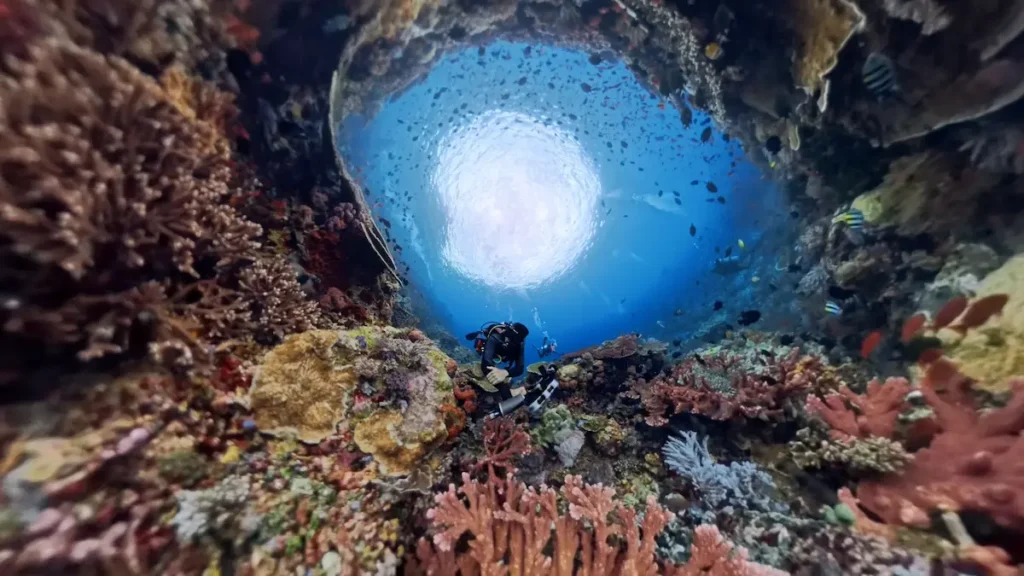
If we could only choose one dive site in Komodo today, Tatawa Kecil might be it.
And that’s saying something.
This site combines everything we love about Komodo:
- Exceptional coral
- Powerful currents
- Dramatic topography
- Swim-throughs
- Pelagic encounters
- Healthy reefs
The exposed side of the site features towering coral-covered pinnacles where current accelerates through narrow gaps.
Depending on conditions, divers can experience strong drift diving, down currents and some incredibly dynamic water movement.
Then everything changes.
Move to the protected side and you’ll discover one of the most vibrant reefs, which makes this undoubtedly one of the best dive sites in Komodo.
We’ve dived Tatawa Kecil in both calm and aggressive conditions.
Both experiences were exceptional.
Very few dive sites can claim that.
Tatawa Kecil Ratings
| Category | Score |
| Marine Life | 5/5 |
| Difficulty | 3–5/5 |
| Adrenaline | 3–5/5 |
Best For
- Advanced drift diving
- Reef lovers
- Underwater photography
- Experienced Komodo divers
Is Komodo Suitable For Beginner Divers?
This is one of the most common questions we receive.
Technically, yes.
There are beginner-friendly sites in Komodo.
However, many of the sites that make Komodo famous involve:
- Current
- Negative entries
- Reef hooks
- Down currents
- Blue-water ascents
In our opinion, Komodo is best enjoyed once you’ve developed:
- Good buoyancy
- Calm breathing
- Basic current experience
- Confidence underwater
Can beginners dive Komodo?
Absolutely.
Will experienced divers get more from it?
Almost certainly.
Planning A Drift Diving Trip To Komodo?
Many of the best dive sites in Komodo involve strong current.
Before visiting, we recommend understanding:
- Negative entries
- Reef hook procedures
- SMB deployment
- Current awareness
- Down-current management
Download our Strong Current & Drift Diving Guide for practical techniques, safety advice and a printable pre-trip checklist.
Planning to Dive Komodo?
Our Strong Current & Drift Diving Guide includes current awareness, reef hook tips, drift diving procedures and a printable pre-trip checklist.
Final Thoughts
One of the reasons Komodo remains so special is that conditions constantly change.
Current direction.
Tide strength.
Visibility.
Marine life.
Every dive feels different.
That’s also why local guides are so important.
The best dive plans are built around conditions, not rigid itineraries.
Trust your guides.
Listen carefully during briefings.
Understand your limits.
And remember that there is absolutely no shame in sitting out a dive if conditions exceed your comfort level.
The reef will still be there tomorrow.
And you’ll enjoy it far more when you’re ready.
We hope this guide to the best dive sites in Komodo helps you choose the right sites for your experience level.
Safe diving.
Frequently Asked Questions About Komodo Diving
What are the best dive sites in Komodo?
The best dive sites in Komodo include Batu Bolong, Tatawa Kecil, Crystal Rock, Castle Rock, Police Corner and The Cauldron. Each offers a different experience, from world-class coral reefs to powerful drift dives and shark encounters.
Is Komodo diving suitable for beginners?
Some sites in Komodo are suitable for beginners, including Siaba Besar and China Shop. However, many of Komodo’s most famous sites involve strong currents, negative entries and advanced drift diving techniques.
What is the most difficult dive site in Komodo?
Castle Rock, Siaba Kecil and Tatawa Kecil are among the most challenging dive sites in Komodo due to strong currents, down currents and advanced entry procedures.
When is the best time to dive Komodo?
The dry season from April to October typically offers the best visibility and access to Northern Komodo dive sites such as Crystal Rock, Castle Rock and The Cauldron.
Do you need a reef hook in Komodo?
Many advanced Komodo dive sites are safer and more enjoyable with a reef hook. Sites such as Castle Rock and Crystal Rock often require reef hook use when currents are strong.
Can you see manta rays in Komodo?
Yes. Manta rays can be seen year-round in Komodo, particularly at Mawan and Makassar Reef (Manta Point), although sightings depend on conditions and seasonality.

One Comment