How To Equalize When Scuba Diving: 5 Proven Tips To Avoid Ear Pain



By Cassie – PADI MSDT & SSI OWSI
Diving since 2016 | Teaching since 2019 in Komodo, Raja Ampat, Gili Islands & the Maldives
Updated May 2026: This guide has been expanded with additional instructor advice, equalisation troubleshooting tips, safety notes and dive-trip preparation guidance.
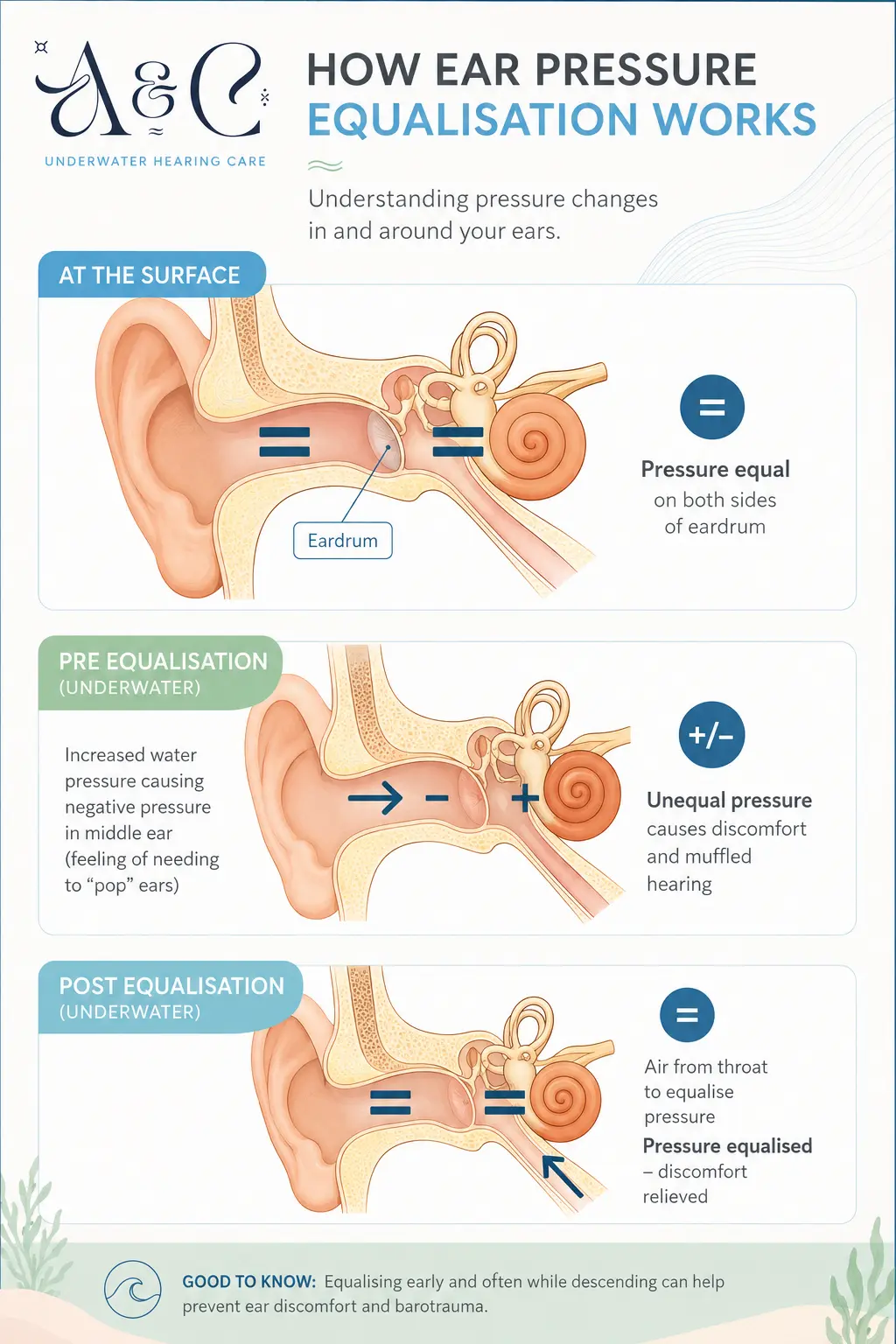
Learning how to equalize ear pressure when scuba diving is one of the most important skills every diver needs to master… Equalizing your ears is one of the most essential — and often most frustrating — parts of scuba diving. Even the most experienced divers occasionally struggle with it. As a dive instructor who’s taught hundreds of students across Asia (and someone with tiny Eustachian tubes myself), I’ve experienced the challenge firsthand.
Over the years, I’ve learned that equalisation isn’t just about technique — it’s about preparation, relaxation, and awareness of your own body. Here are five proven equalisation tips that can make a world of difference underwater.
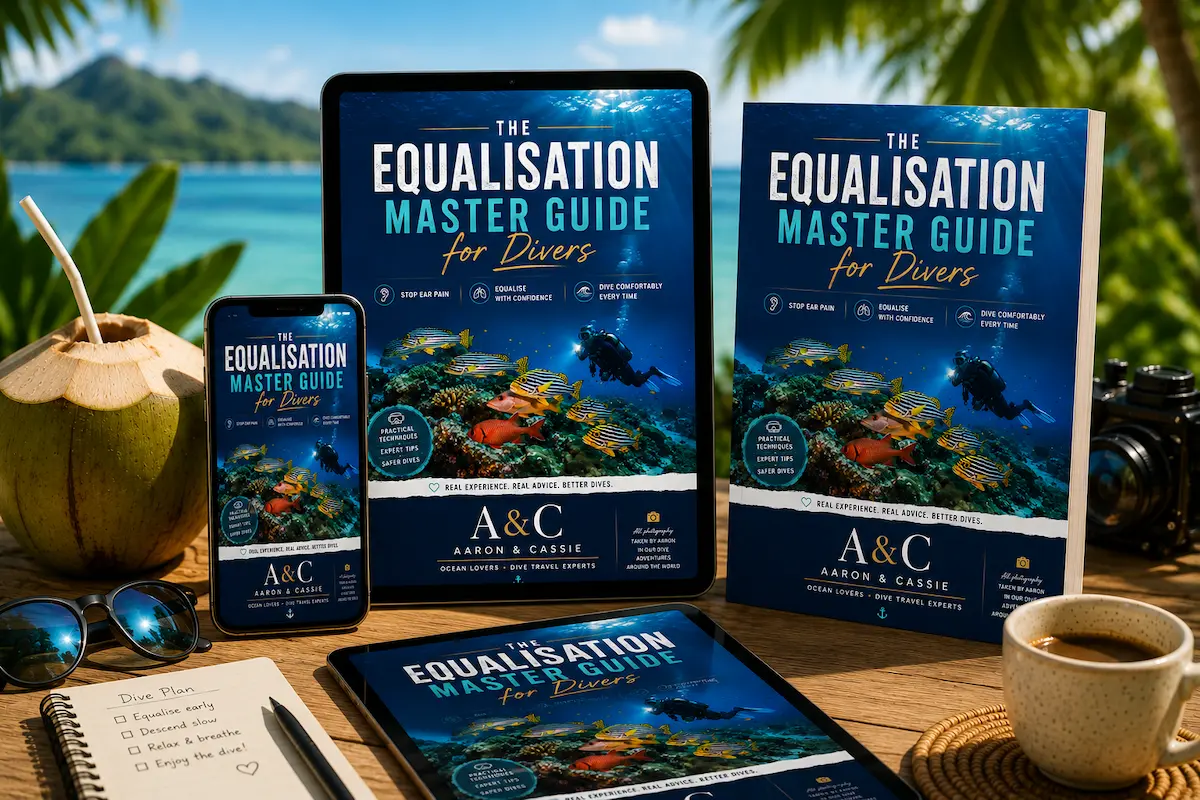
💡 Note: This is a simplified version of my full “Equalisation Master Guide,” which includes advanced drills, anatomical visuals, and pre-dive exercises. You can grab it at the end of this article.
Equalization does not happen in isolation. Your body, your stress levels, the dive conditions and the way you descend can all affect how easily your ears clear underwater.
After teaching divers across Komodo, Raja Ampat, the Gili Islands and the Maldives, I noticed the same pattern repeatedly: divers who had no major issues in calm, easy conditions would suddenly struggle during multi-day dive trips or in more advanced environments.
This is especially common in destinations with stronger currents, deeper sites, negative entries or repetitive diving schedules.
In places like the Maldives and Komodo, some dives require a faster descent so the group can get below the surface current together. This can be challenging for divers who need more time to equalise.
The biggest pressure change happens in the first 10 metres, so if you descend too quickly without equalising early and often, your ears can quickly become painful or blocked.
Stress has a huge impact on equalisation. When divers feel rushed, cold or anxious, they often clench their jaw without realising it.
This tension can make it harder for the Eustachian tubes to open properly, which may make equalization feel inconsistent or impossible.
Multi-day dive trips can also make equalisation harder because the body is under more strain. Dehydration, tiredness, sinus irritation, minor inflammation and repeated pressure changes can all build up over several dives.
This is one reason some divers find the first dive of the day easier than the second or third.
Cold water can also trigger jaw clenching and facial tension, especially when divers are not wearing enough exposure protection. Even a small amount of tension around the jaw and ears can make equalisation feel more difficult.
If you know equalisation is sometimes slow for you, speak to the dive centre before booking challenging dives. A good operator can help choose suitable sites, avoid unnecessary stress and give you more time during descent.
Equalisation begins before you even reach the dive site.
Foods like dairy, alcohol, refined sugar, and processed meals can increase mucus production and inflammation — making your Eustachian tubes swell and block airflow. For divers prone to ear issues, eliminating dairy for two weeks before your trip can dramatically improve results.
🧠 Scientific note: Studies show inflammation in the upper respiratory tract increases barotrauma risk (source: Divers Alert Network).
If you can’t give everything up, just skip the cheese and ice cream — your ears will thank you.
Sleeping or relaxing with a fan or air conditioner blowing directly on your head might feel great after a hot dive day, but it can quickly cause sinus irritation and swelling.
If you’ve ever had one ear that equalises more slowly than the other, this could be why.
Try turning your pillow or sleeping position away from airflow to give your sinuses time to rest and recover.
A tight jaw can literally block your Eustachian tubes.
Before every dive, I do a simple masseter massage (the large jaw muscle just in front of your ears) and a few gentle neck rolls. You can also mimic chewing gum or yawning to relax the muscles that help regulate ear pressure.
Small habit — big difference.
If the traditional Valsalva manoeuvre doesn’t work for you, try this variation that’s saved countless dives for my students.
When descending:
This motion opens the side of your neck and stretches the Eustachian tubes, allowing air to pass more easily. It also helps prevent reverse squeeze when ascending.
This trick alone has helped divers who thought they’d never equalise comfortably again.
Don’t wait until your ears hurt. Start gently equalizing them with the Valsalva manoeuvre before your descent — even before your giant stride.
As you descend, equalise gently with every breath. It keeps the pressure differences small and easier to manage.
If one ear blocks, never force it. Ascend slightly, relax, and try again. The key is calm breathing and patience. Equalisation is about finesse, not force.
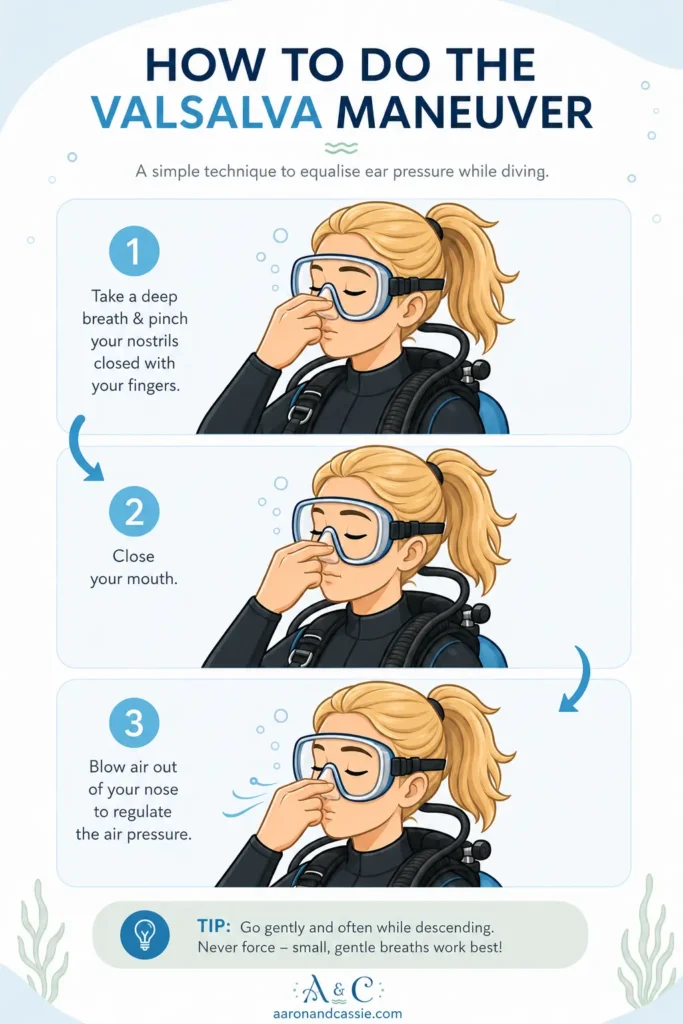
The Valsalva manoeuvre is the equalisation method most divers learn during their Open Water course. Here’s a simple visual guide showing how it works.
Download our Equalisation Master Guide for Divers and learn the exact drills, breathing exercises and troubleshooting methods I’ve developed after teaching divers across Komodo, Raja Ampat, the Gili Islands and the Maldives.
Important: Equalisation should always be gentle. If you experience pain, stop descending immediately and ascend slightly until the pressure resolves.
If equalising becomes painful or impossible, stop your descent immediately. Continuing can risk eardrum damage or barotrauma. Persistent issues may indicate sinus inflammation, allergies, or earwax buildup — all worth checking with an ENT or dive physician.
🩺 See: DAN Europe – Ear and Sinus Barotrauma.
As instructors, we see ear issues far more often than you’d think — from beginners to divemasters. The truth? Most cases aren’t caused by “bad ears,” but by stress, poor prep, and rushing descents.
Relaxation and patience solve more equalisation issues than any other technique.
Take your time, stay calm, and remember: the ocean isn’t going anywhere.
Download my Full Equalisation Master Guide for Divers for in-depth:
And if you prefer to watch and learn, check out our YouTube channel Aaron & Cassie for tutorials, dive destination guides, and real underwater tips filmed across Asia.
Whether you’re diving in Thailand, Indonesia, the Maldives or beyond, we strongly recommend travelling with specialist dive insurance.
Designed specifically for scuba divers and one of the most trusted names in dive emergency support worldwide. We have been using it for years as both diving professionals and recreational divers and they are consider to be the industry standard for a reason!
Flexible travel medical insurance popular with long-term travellers, digital nomads and adventure travellers. Our personal choice as travellers always on the go, we’ve made multiple claims over the past year with ease by submitting your claim using their app.
Cassie Foley – PADI MSDT & SSI OWSI
Cassie is a professional dive instructor and underwater filmmaker with over eight years of experience diving across Southeast Asia, including Komodo, Raja Ampat, the Gili Islands, and the Maldives. Teaching since 2019, she specialises in helping students overcome equalisation challenges, ear issues, and diving-related confidence barriers.
Together with her partner Aaron, Cassie runs Aaron & Cassie, a YouTube channel and blog dedicated to cinematic dive travel and real-world scuba advice for divers of all levels.
This article is based on personal experience and professional scuba instruction experience. It should not be considered medical advice.
If you experience recurring equalisation issues, hearing loss, severe pain, dizziness, persistent congestion or suspected barotrauma, seek advice from a qualified ENT specialist or diving physician before returning to the water.
👉 7 Cheap & Overlooked Scuba Safety Items Every Diver Should Own
👉 How Drift Diving Works & Why Currents Catch Divers Out
(coming soon)
👉 Is Diving In The Maldives Dangerous? What Divers Should Know
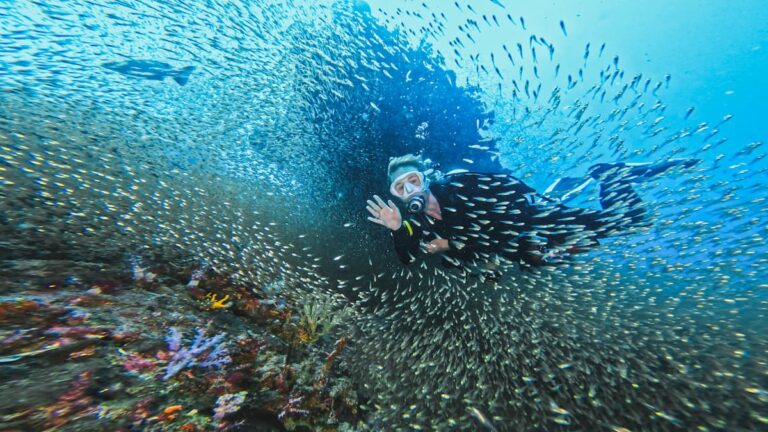
The Andaman Sea is home to some of the most spectacular diving in Southeast Asia — a true underwater paradise that keeps even the most experienced divers coming back again and again. We’ve logged over 5,000 dives across Indonesia, the Maldives, the Pacific Islands and the Red Sea. And yet, Thailand’s Andaman Sea consistently holds

Raja Ampat is often called the “last paradise” — a place of incredible reefs, rare species, huge biodiversity both on the reefs and on-land, all set amongst stunning limestone karsts and white sand-rimmed rainforest islands. But if you’re planning a trip, you’ll quickly find there are several ways to dive here: liveaboards, dive safaris, base
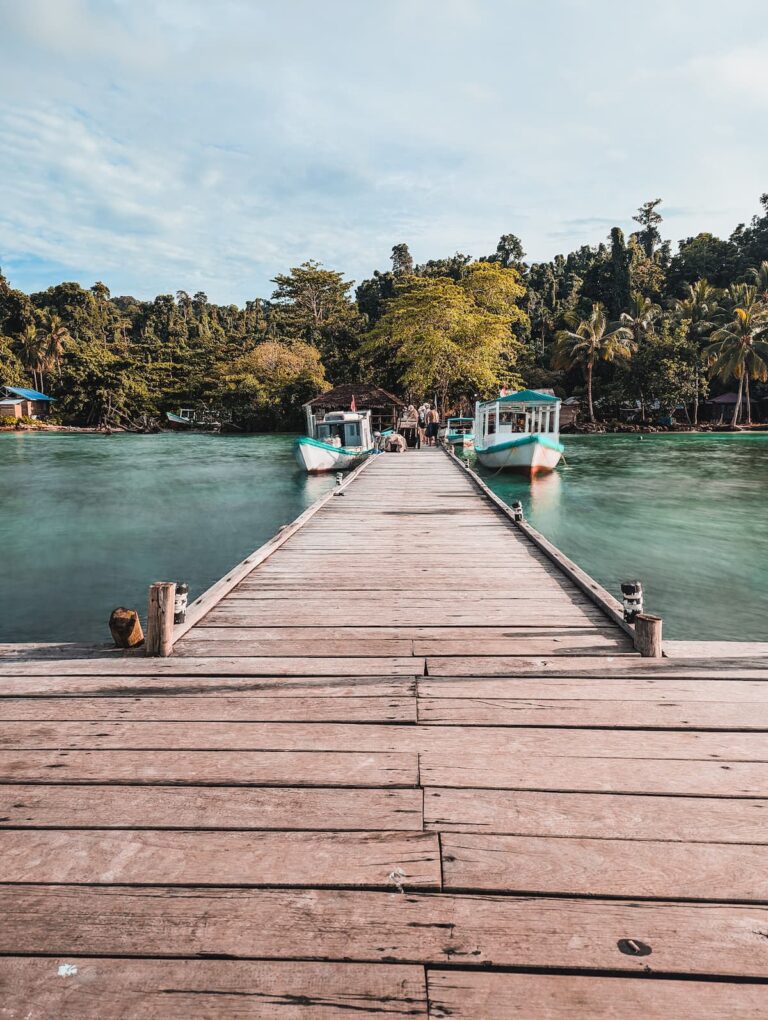
Raja Ampat is one of the most extraordinary dive destinations on the planet — but with so many options, how do you decide whether to explore it by liveaboard, dive safari, or from a land-based base camp? We’ve been lucky enough to dive with Scuba Republic across all three formats over the years: sailing on
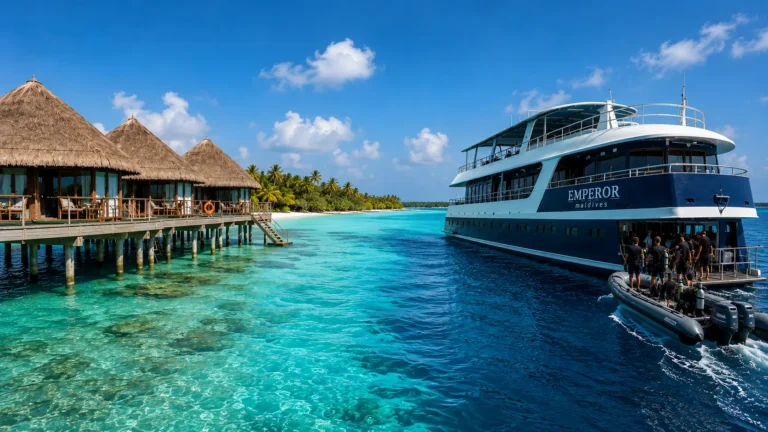
Maldives Diving Guide: If you’re trying to decide between a Maldives liveaboard, dive resort or local island, this guide compares costs, marine life, luxury, safety and overall value to help you decide the best way to dive the Maldives in 2026. 🎥 Prefer Watching Instead? We break down the pros and cons of Maldives liveaboards,
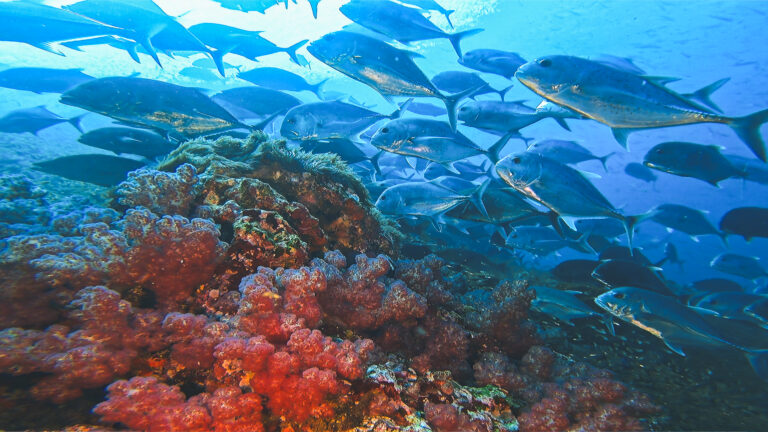
Richelieu Rock isn’t just Thailand’s most famous dive site — it’s one of the most biodiverse underwater locations in all of Southeast Asia. Rising dramatically from the seafloor in the middle of the Andaman Sea, this submerged pinnacle attracts marine life like few other places on Earth. As dive professionals with over 5,000 dives across
Komodo National Park is widely regarded as one of the most exciting diving destinations on Earth. Komodo’s dive sites are some of the most diverse in the world, offering everything from manta ray encounters to fast-paced drift dives. This guide covers the best dive sites in Komodo National Park — including conditions, marine life, and
We use cookies to improve your experience on our site. By using our site, you consent to cookies.
Manage your cookie preferences below:
Essential cookies enable basic functions and are necessary for the proper function of the website.
These cookies are needed for adding comments on this website.
Statistics cookies collect information anonymously. This information helps us understand how visitors use our website.
Google Analytics is a powerful tool that tracks and analyzes website traffic for informed marketing decisions.
Service URL: policies.google.com (opens in a new window)
4 Comments