What Is Drift Diving? A Beginner’s Guide to Diving in Current
Underwater Photography & Videography

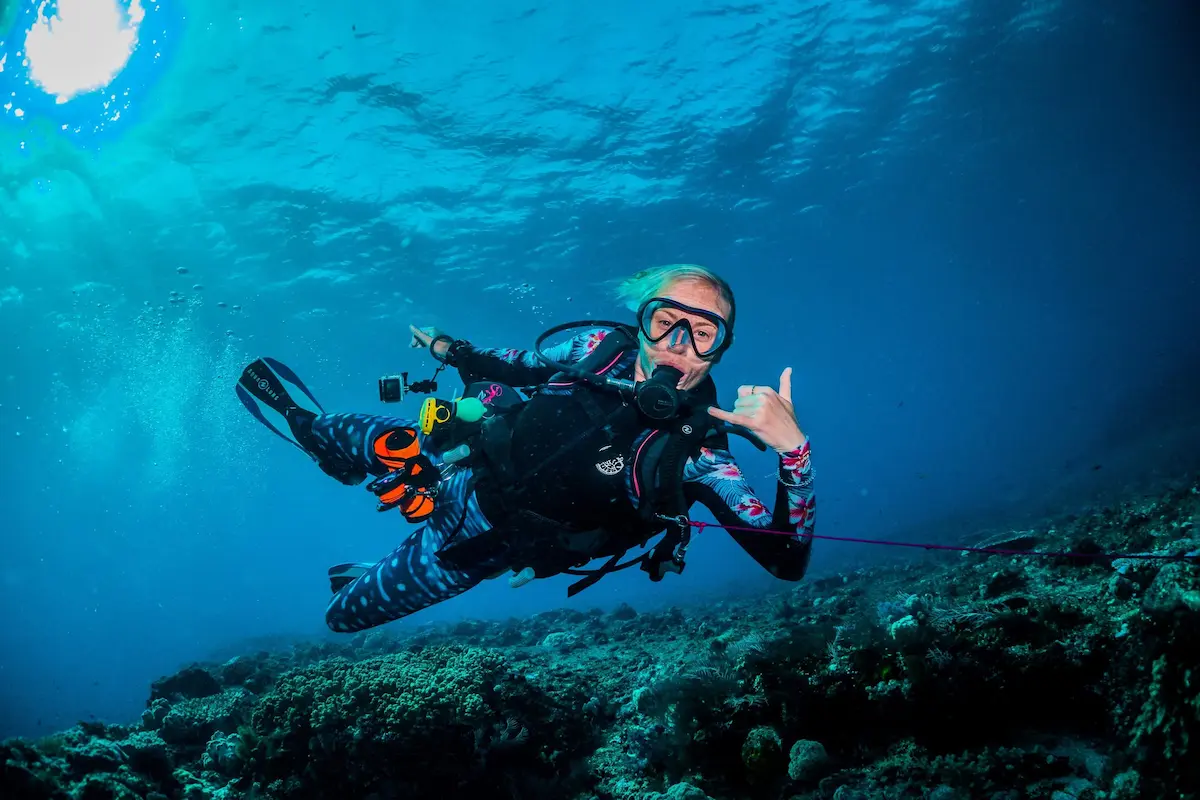
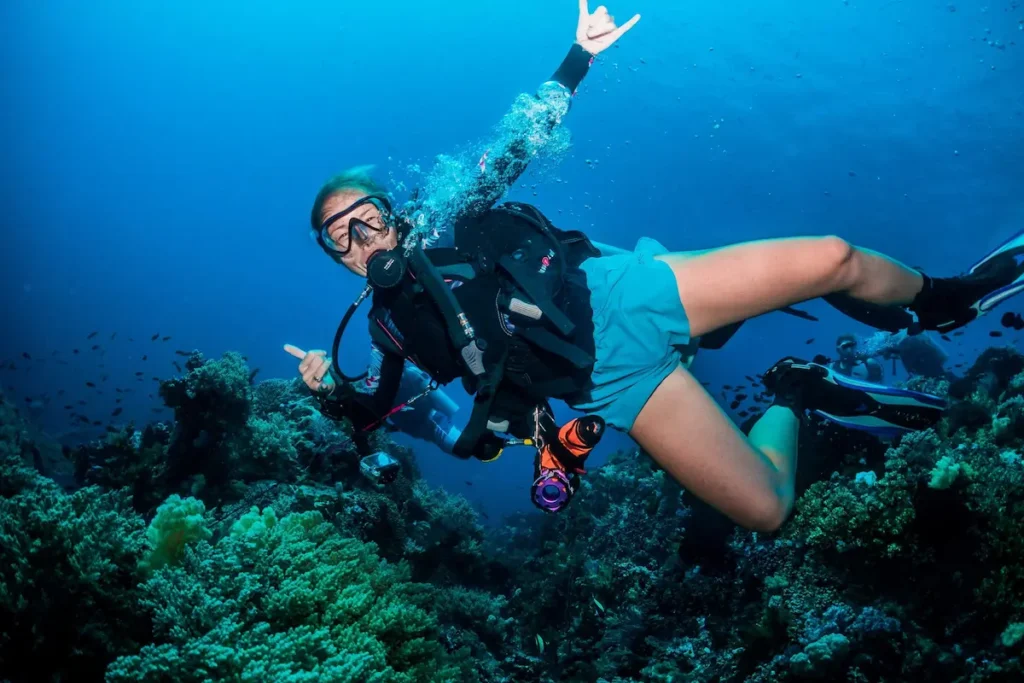
We’ve spent years diving in current-heavy destinations including Komodo National Park, Raja Ampat, the Maldives and South Lombok. While strong currents can feel intimidating at first, understanding how drift diving works is often the difference between a stressful dive and one of the most exhilarating underwater experiences you’ll ever have.
For many divers, drift diving is one of the most exciting experiences in the ocean.
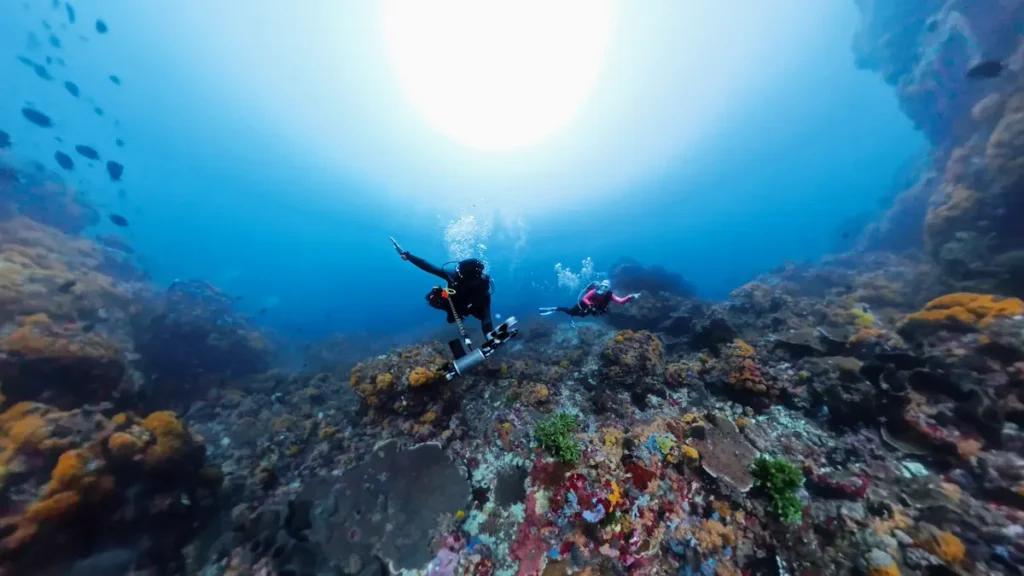
Flying effortlessly alongside reefs.
Hooking into current while sharks patrol the blue.
Covering huge distances with minimal effort.
But drift diving can also be one of the most misunderstood types of recreational scuba diving.
Because while current diving can feel exhilarating when everything goes well…
it can become stressful — and occasionally dangerous — very quickly when divers underestimate the conditions or panic underwater.
As dive professionals who’ve worked in destinations like the Maldives, Komodo and Raja Ampat, we’ve seen firsthand how currents catch divers out — including experienced divers.
So in this guide, we’ll break down:
| Factor | Details |
|---|---|
| What Is Drift Diving? | Diving while being carried by current |
| Best Known Destinations | Maldives, Komodo, Raja Ampat, Cozumel |
| Main Risks | Separation, rapid descent, panic, exhaustion |
| Experience Level | Beginner to advanced depending on conditions |
| Essential Equipment | SMB, reef hook, whistle, signalling device |
| Key Skill | Remaining calm and neutrally buoyant |
We’ve experienced drift diving in some of the world’s strongest current environments — including Komodo National Park and the Maldives.
In this video, you’ll see what drift diving actually looks like in real conditions, including:
🌊 Love diving, ocean travel and underwater cinematography?
Subscribe to our channel for:
Many divers think current is random.
It isn’t.
Currents are usually caused by:
In places like Komodo and the Maldives, water is often funnelled through narrow channels between islands or atolls.
This creates faster-moving water — similar to putting your thumb over the end of a hose.
These currents are also one of the reasons these destinations have such incredible marine life:
the moving water carries nutrients that attract larger species.
Unfortunately…
the same currents that attract manta rays and sharks can also overwhelm unprepared divers.
One of the biggest misconceptions in scuba diving is:
“I’m certified, so I’m ready.”
But current diving requires far more than simply being certified.
We’ve seen divers with hundreds of dives struggle badly in strong current because they lacked:
Meanwhile, we’ve also seen relatively new divers perform extremely well because they stayed calm and listened carefully.
The ocean doesn’t care how many dives are in your logbook.
It responds to:
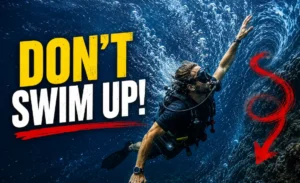
One of the most common mistakes is trying to swim directly against strong current.
This quickly causes:
In many cases, the smarter option is:
Many drift dives require a negative entry.
This means divers descend immediately without inflating their BCD fully at the surface.
Why?
Because if divers remain floating too long, the current can separate the group before descent, and you can swiftly drift past the best spot on the dive side where all the action is – and get left stuck on the lee-side for the entire dive.
Newer divers often struggle here because:
Read next: How To Equalize When Scuba Diving: 5 Proven Tips To Avoid Ear Pain
Current magnifies bad buoyancy.
A diver constantly inflating and deflating wildly in current can quickly lose control of:
Strong buoyancy skills make drift diving dramatically easier and safer.
This is the biggest one.
Current often feels psychologically worse than it actually is.
Many divers panic because:
But panic underwater rapidly worsens:
The calmer you remain, the easier current diving becomes.
In stronger current environments, divers sometimes use reef hooks.
A reef hook allows divers to:
This is common in:
However:
reef hooks should be used responsibly.
Never hook into:
And always follow local guide instructions.
Ironically…
once divers become comfortable with current, drift diving often feels easier than swimming constantly against still water.
Done properly:
Some of the most magical dives we’ve ever experienced involved simply hovering neutrally buoyant while the reef drifted past beneath us.
| Item | Why It Matters |
|---|---|
| SMB + Reel | Surface visibility during ascent |
| Whistle | Surface signalling |
| Torch | Night or low-light signalling |
| Reef Hook | Holding position safely in current |
| Cutting Tool | Entanglement protection |
| Nautilus Lifeline | Emergency GPS signalling |
The best way to improve in current is gradual exposure.
Not jumping immediately into advanced drift dives.
We recommend:
Current diving should feel exciting.
Not terrifying.
There is absolutely no shame in:
In fact, those decisions often make divers safer long-term.
Many divers understand the theory of drift diving, but still feel nervous when it comes to real current, negative entries, reef hooks, blue-water ascents or fast-moving dive sites.
If you’re planning to dive somewhere known for stronger currents — such as Komodo, Raja Ampat, the Maldives, South Lombok, Palau or Cozumel — we created a practical downloadable guide to help you feel calmer, safer and more prepared before your trip.
Our Strong Current & Drift Diving Guide expands on this article with:
This is designed for recreational divers who want to understand current better, make smarter decisions underwater and feel more confident before entering challenging dive environments.
Perfect for divers planning trips to:
Both destinations are famous for drift diving…
but they feel very different underwater.
Typically involves:
The current often feels smoother but can still be extremely powerful.
Often involves:
Komodo is widely considered one of the most advanced recreational dive destinations in the world.
👉 Read next:
Is Diving in the Maldives Dangerous? What Divers Should Know Before Diving Advanced Destinations
👉 Explore:
Best Dive Sites in Komodo National Park
The most important current diving skill isn’t physical strength.
It’s composure.
Strong divers aren’t necessarily:
The safest divers are usually the ones who:
Because current isn’t something you “beat.”
It’s something you learn to work with.
Current-heavy dive destinations are often remote.
Which means evacuation and medical costs can become extremely expensive very quickly if something goes wrong.
We personally recommend:
👉 Recommended Dive Insurance: DAN (Diver’s Alert)
👉 Recommended Travel Insurance: SAFETYWING
Planning a trip to Komodo, Raja Ampat or the Maldives?
Our Strong Current & Drift Diving Guide contains additional safety checklists and practical techniques to help you feel more confident before entering the water.
If you’re planning a drift diving destination like Komodo, Raja Ampat or the Maldives, we also recommend researching:
Drift diving is a type of scuba diving where divers move naturally with ocean current rather than swimming against it.
Drift diving can be very safe when conducted within appropriate experience levels and conditions. However, strong currents and poor buoyancy control can increase risk.
Not necessarily. Many drift dives are beginner-friendly, while others are highly advanced. Conditions vary enormously between destinations and dive sites.
Reef hooks allow divers to hold position safely in strong current while observing marine life.
Komodo is often considered more technically challenging because of rapidly changing currents, surge and unpredictable conditions.
Why Kuta Lombok Is a Great Place to Learn to Dive in Indonesia Indonesia is widely considered one of the best countries in the world
Maldives Diving Guide: If you’re trying to decide between a Maldives liveaboard, dive resort or local island, this guide compares costs, marine life, luxury, safety
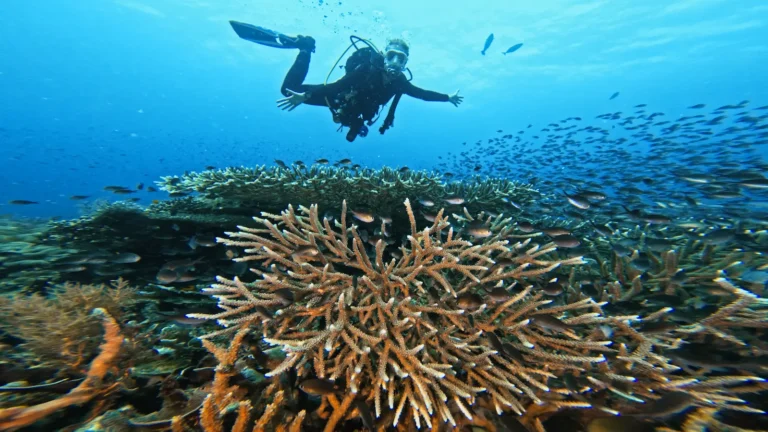
Aerial view of the Dampier Strait in Central Raja Ampat Advanced Divers Edition — What You Really Need to Know Before Diving Central Raja Ampat

Raja Ampat is one of the most extraordinary dive destinations on the planet — but with so many options, how do you decide whether to
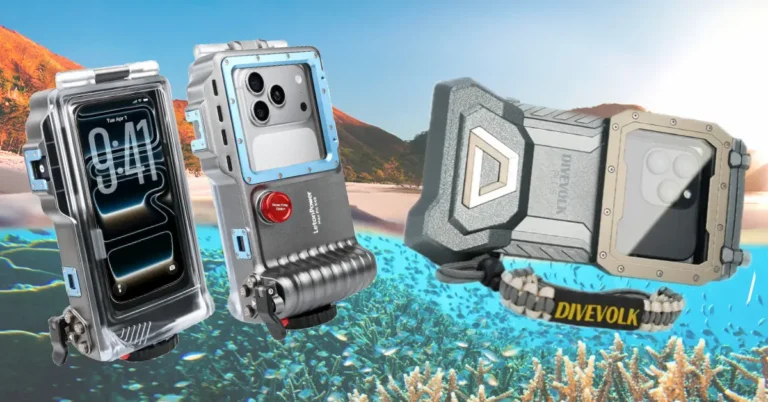
Aaron & Cassie | Scuba Diving Gear & Underwater Photography Your smartphone might already be one of the best cameras you own. But is putting
Content note: This article discusses allegations of sexual harassment, coercion and assault. Confidential support resources are provided below. Table of Contents Dive trip safety isn’t
We use cookies to improve your experience on our site. By using our site, you consent to cookies.
Manage your cookie preferences below:
Essential cookies enable basic functions and are necessary for the proper function of the website.
These cookies are needed for adding comments on this website.
Statistics cookies collect information anonymously. This information helps us understand how visitors use our website.
Google Analytics is a powerful tool that tracks and analyzes website traffic for informed marketing decisions.
Service URL: policies.google.com (opens in a new window)


3 Comments